Itching, redness, and a rash that just won’t go away are symptoms many of us have dealt with at some point. You might assume it’s eczema or a simple allergic reaction, but there is a chance you are dealing with a fungal skin infection. These conditions are incredibly common, affecting roughly 20-25% of the global population at any given time. While they can be stubborn, understanding what causes them-and how to treat them-is the key to getting rid of them for good.
The two main culprits behind most fungal skin issues are Candida, a type of yeast, and dermatophytes, the molds responsible for ringworm (tinea). Although they share similar symptoms like itching and redness, they thrive in different environments and require distinct treatment approaches. Misdiagnosing one for the other often leads to frustration when over-the-counter creams fail to work. Let’s break down exactly how to tell them apart and which antifungal options actually deliver results.
Ringworm vs. Candida: Spotting the Difference
Despite its name, ringworm contains no worms at all. It is a fungal infection caused by dermatophytes, specifically from genera like Trichophyton, Microsporum, and Epidermophyton. These fungi feed on keratin, the protein found in your skin, hair, and nails. The term "ringworm" dates back to the 19th century because the lesions often form a circular, ring-like shape as the infection spreads outward while clearing in the center.
In contrast, Candida is a yeast that naturally lives on our bodies and inside our mouths and guts without causing harm. Problems arise when this balance is disrupted, allowing Candida albicans to overgrow. Unlike ringworm, which prefers dry, flaky surfaces, Candida thrives in warm, moist areas like skin folds, the groin, under the breasts, or in diaper areas for infants.
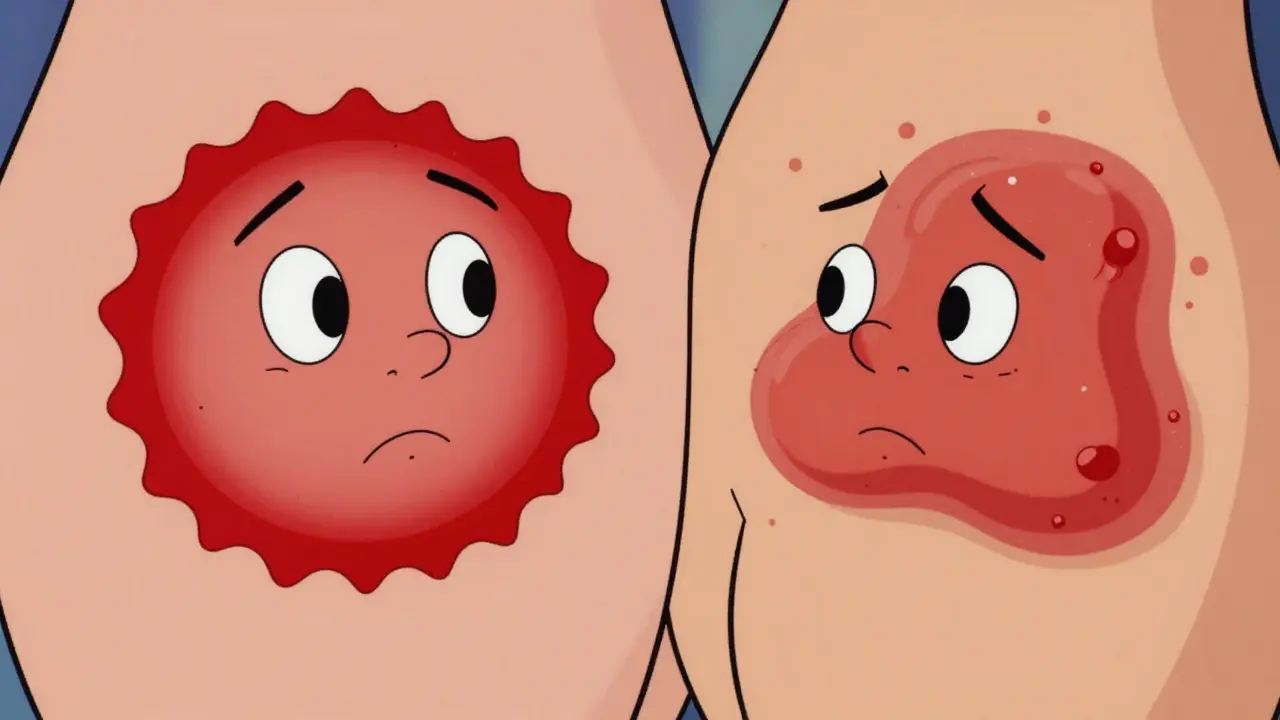
Visual identification is your first line of defense. A classic case of tinea corporis (body ringworm) presents as an annular, erythematous plaque with a raised, scaly border and central clearing. It looks like a target. On the other hand, a Candida infection typically appears as a beefy red, moist, macerated patch. A key giveaway for Candida is the presence of "satellite pustules"-small red spots or pimples scattered just outside the main rash area. If you see those satellite lesions, you are likely dealing with yeast, not a dermatophyte.
| Feature | Ringworm (Dermatophytosis) | Candidiasis (Yeast) |
|---|---|---|
| Causative Agent | Dermatophytes (Trichophyton, etc.) | Yeast (Candida albicans) |
| Preferred Environment | Keratin-rich areas (skin, hair, nails) | Warm, moist skin folds (intertrigo) |
| Visual Appearance | Ring-shaped, scaly border, central clearing | Beefy red, moist, satellite pustules |
| Common Locations | Feet (athlete's foot), scalp, groin, body | Groin, armpits, under breasts, diaper area |
| Transmission | Contact with people, animals, or contaminated surfaces | Overgrowth of existing flora; less contagious |
How Fungal Infections Spread and Who Is at Risk
Fungi are opportunistic. They wait for the right conditions to take hold. For ringworm, transmission is often direct. You might pick it up from a pet-zoophilic transmission accounts for 20-30% of cases in children-or from another person through shared towels or gym equipment. Anthropophilic transmission (person-to-person) dominates adult cases, particularly for athlete's foot (tinea pedis), where 85-90% of infections spread this way.
Candida, however, is usually already present on your skin. It turns problematic when your immune system is compromised or when moisture gets trapped against the skin. People with diabetes mellitus face a 2.5 times higher risk of susceptibility to these infections. Immunocompromised individuals, such as those undergoing chemotherapy or living with HIV, face an even steeper risk, with severe or recurrent infections being 3-5 times more likely.
Age also plays a role. In prepubertal children, tinea capitis (scalp ringworm) and tinea corporis make up 65-75% of fungal infections. Meanwhile, tinea pedis becomes much more common as we age, affecting about 15% of the global population overall, but jumping to 25-30% prevalence in adults over 60. Infants are particularly prone to Candida diaper dermatitis, which affects 7-25% of babies in their first year of life.

Diagnosis: When to See a Doctor
While many fungal infections are obvious, misdiagnosis is surprisingly common. A 2022 study in the Journal of the American Board of Family Medicine found that primary care physicians correctly identified tinea corporis in only 50-60% of cases, compared to dermatologists' 85-90% accuracy rate. Why does this matter? Because treating eczema with steroids can actually worsen a fungal infection, masking the symptoms temporarily while the fungus grows deeper-a condition known as tinea incognito.
If your rash doesn't respond to over-the-counter treatments within two weeks, or if it spreads rapidly, you need professional confirmation. Doctors typically use a potassium hydroxide (KOH) preparation exam. This involves scraping a small amount of skin and viewing it under a microscope. It’s quick, inexpensive, and positive in 70-80% of cases. For tougher cases, a fungal culture may be taken, though this takes 2-4 weeks to yield results. Molecular testing is becoming more available since 2020, offering faster and more precise identification of specific fungal species.
Treatment Options: Topical vs. Oral Antifungals
The standard of care depends heavily on the type and severity of the infection. For most superficial ringworm and Candida cases, topical antifungals are the first line of defense. However, not all creams are created equal.
Topical Allylamines: Medications like terbinafine (Lamisil) work by inhibiting ergosterol synthesis, effectively starving the fungus. They are fungicidal, meaning they kill the fungus rather than just stopping its growth. For tinea corporis, applying terbinafine twice daily for 1-2 weeks achieves cure rates of 70-90%, according to a 2023 Cochrane Review. User data from Reddit’s r/Dermatology community supports this, with 68% of patients reporting complete resolution within 2-3 weeks using OTC terbinafine.
Topical Azoles: Clotrimazole and miconazole are broad-spectrum antifungals effective against both dermatophytes and Candida. They are fungistatic, so they require longer treatment durations-typically 2-4 weeks for ringworm. Clotrimazole is particularly favored for Candida intertrigo, with a 78% satisfaction rate in a 2023 Patient.info survey. Nystatin is another option specifically for Candida, especially in diaper rashes.
Oral Antifungals: When topicals fail, or when the infection involves hair follicles or nails, oral medication is necessary. Tinea unguium (nail fungus) has a poor response to creams (only 40-60% cure rate) because the drug cannot penetrate the nail plate effectively. Here, oral terbinafine (250mg daily for 1-3 months) is the gold standard, achieving 80-90% cure rates. Fluconazole is often used for severe or mucosal Candida infections. However, oral antifungals carry risks. Terbinafine requires liver function monitoring due to a 1-2% incidence of transient transaminase elevation. Always consult a doctor before starting systemic therapy.
| Medication | Type | Best For | Typical Duration | Cure Rate |
|---|---|---|---|---|
| Terbinafine (Topical) | Allylamine | Ringworm (Tinea Corporis/Pedis) | 1-2 weeks | 70-90% |
| Clotrimazole (Topical) | Azole | Candida, Mild Ringworm | 2-4 weeks | 60-80% |
| Terbinafine (Oral) | Allylamine | Nail Fungus, Scalp Ringworm | 1-3 months | 80-90% |
| Fluconazole (Oral) | Azole | Severe/Mucosal Candida | Variable | High for susceptible strains |
| Ibrexafungerp (Brexafemme) | Glycogen Synthase D inhibitor | Recurrent Vulvovaginal Candidiasis | Single dose monthly | 50% reduction in recurrence |

Emerging Challenges: Resistance and New Threats
One of the most concerning trends in mycology today is antifungal resistance. Dr. Boni Elewski, Chair of Dermatology at the University of Alabama at Birmingham, noted in 2022 that approximately 5-7% of Trichophyton rubrum isolates in North America show reduced susceptibility to terbinafine. This means standard treatments may stop working for some patients, leading to chronic, hard-to-treat infections.
Additionally, the rise of Candida auris represents a significant threat. This multidrug-resistant yeast has been detected in healthcare settings across 27 U.S. states as of June 2023. While primarily affecting hospitalized patients, its ability to colonize skin (15% of cases) raises alarms for broader public health. The World Health Organization included fungal pathogens in its priority list in 2022, accelerating research into new drugs. One promising development is ibrexafungerp (Brexafemme), approved by the FDA in April 2023 for recurrent vaginal candidiasis, which showed a 50% reduction in recurrence at 48 weeks in clinical trials.
Prevention and Lifestyle Adjustments
Treating the infection is only half the battle; preventing recurrence is crucial. Since fungi love moisture, keeping skin dry is your best defense. Change out of sweaty workout clothes immediately, wear breathable cotton socks, and ensure your feet are thoroughly dried after showering. For those prone to Candida in skin folds, using absorbent powders can help reduce friction and moisture.
Hygiene practices matter immensely. Do not share towels, razors, or clothing with someone who has a fungal infection. If you have pets, check them regularly for bald patches or scaly skin, as zoophilic transmission is a major source of childhood ringworm. Finally, address underlying health issues. Managing blood sugar levels in diabetics significantly reduces the risk of recurrent fungal infections.
Can I use steroid cream on a fungal rash?
No, you should avoid using pure steroid creams (like hydrocortisone) on a suspected fungal infection unless prescribed alongside an antifungal. Steroids suppress the local immune response, which can allow the fungus to grow unchecked. This often masks the typical symptoms, making the infection harder to diagnose later-a phenomenon called tinea incognito.
How long does it take for ringworm to go away with treatment?
With consistent use of topical allylamines like terbinafine, most cases of body ringworm resolve within 1-2 weeks. However, you should continue applying the medication for a few days after the rash disappears to prevent recurrence. Nail fungus takes much longer, often requiring 1-3 months of oral medication.
Is Candida contagious?
Candida is less contagious than ringworm because it is part of the normal human flora. However, it can be transmitted through direct skin-to-skin contact, especially in moist areas. Poor hygiene, sharing damp towels, or sexual contact can facilitate transmission, particularly if the recipient has compromised skin barriers or immunity.
Why did my over-the-counter antifungal not work?
There are several reasons: you may have misdiagnosed the condition (it could be eczema or psoriasis), you may not have completed the full course of treatment, or the specific fungus may be resistant to the active ingredient in the cream. Additionally, azole creams require longer usage than allylamines; stopping too early allows the fungus to rebound.
Are probiotics helpful for recurring Candida infections?
Anecdotal evidence suggests yes. A 2023 Instagram poll of users with recurrent Candida infections found that 65% reported reduced recurrence when combining antifungal treatments with Lactobacillus probiotics. While more rigorous clinical studies are needed, maintaining a healthy microbiome may help keep yeast populations in check.