When your prescription runs out and no pharmacy has it in stock, it’s not just inconvenient-it’s dangerous. Drug shortages aren’t rare anomalies anymore. They’re a growing, persistent problem. In the U.S. alone, over 1,900 prescription drugs entered shortage between 2018 and 2023. And nearly 60% of those shortages lasted two years or longer. If you’re taking insulin, chemotherapy drugs, antibiotics like amoxicillin, or even basic medications like acetaminophen injection, you’ve probably felt the panic when your usual pill or shot disappears from the shelf.
Why Are Medications Running Out?
It’s not one single cause. Drug shortages happen because of a mix of broken supply chains, manufacturing failures, and economic pressures. Most generic drugs-about 85%-are made by just five companies. If one of them has a quality issue, like contaminated vials or equipment breakdowns, it can knock out supply for months. The FDA started inspecting critical drug facilities monthly in January 2025, which has already cut new manufacturing shortages by 15%. But that’s just slowing the problem, not fixing it.What Can You Do Right Now?
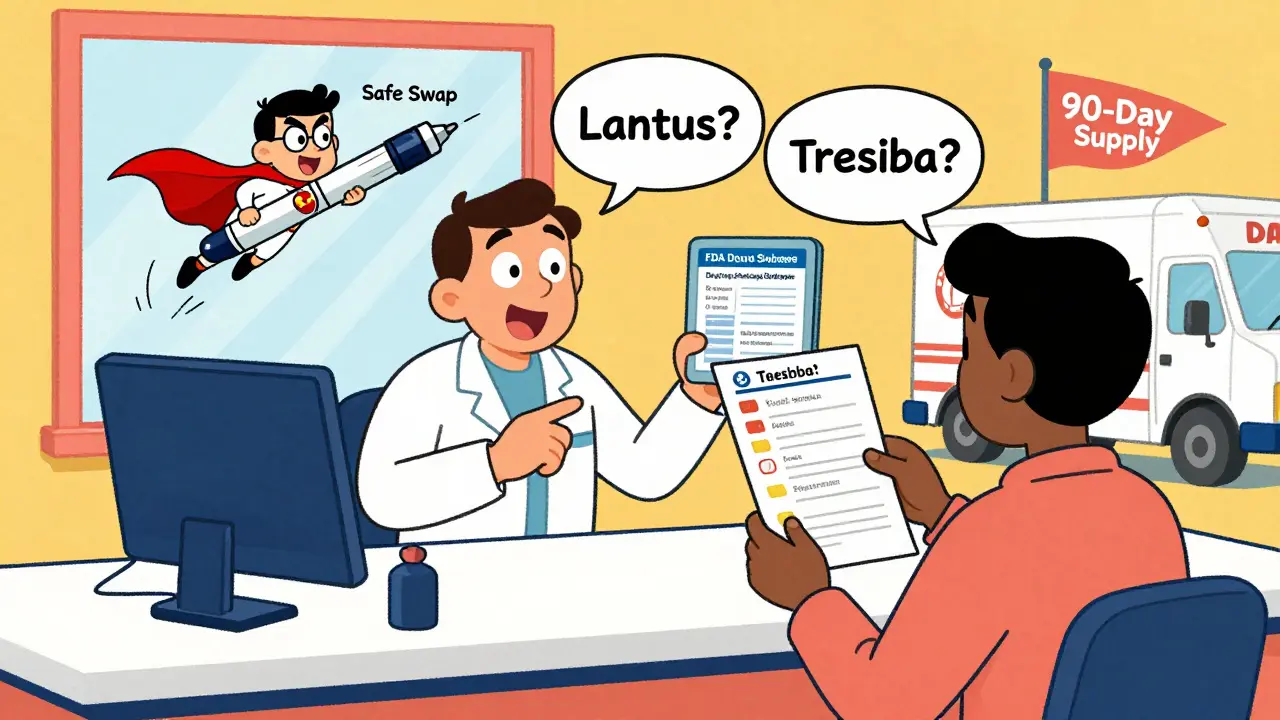
Don’t stop your medication. Don’t try to stretch doses. Don’t search random websites for “alternatives.” Here’s what actually works:- Check the FDA Drug Shortage Database. This is the official source. It lists current shortages and often suggests therapeutic alternatives. For example, when Semglee (a biosimilar insulin) ran out in March 2025, the FDA confirmed Lantus was a direct substitute-no new prescription needed.
- Call multiple pharmacies. One pharmacy might be out, but another 10 miles away might have stock. Mail-order pharmacies often have better inventory than local stores. One patient spent three days calling seven pharmacies to find Semglee for their child. That’s exhausting, but it worked.
- Contact your doctor. They can switch you to another drug in the same class. For insulin, that might mean switching from Semglee to Lantus, Toujeo, or Tresiba. For antibiotics, azithromycin might replace amoxicillin-but only if your doctor confirms it’s safe for your infection.
- Ask your pharmacist. Most major chains now offer free shortage navigation services. Pharmacists know which drugs are in stock, which substitutions are allowed, and which ones require a new prescription. In one Blue Cross NC survey, 89% of patients who used pharmacist help found a solution.
Not All Alternatives Are Created Equal
Just because two drugs treat the same condition doesn’t mean they’re interchangeable. Insulin is a perfect example. Semglee and Lantus are biosimilars-meaning they’re nearly identical in how they work. Switching between them is safe and doesn’t need a new prescription. But switching to Toujeo or Tresiba? Those are different formulations. They work slower or longer. You can’t swap them without a doctor’s order.Same goes for oncology drugs. If you’re on a chemotherapy agent that’s in short supply, switching to another drug might seem logical-but it could change your entire treatment plan. In 2023-2025, 15 cancer drugs faced shortages, 12 of them critical. Many of these have no true substitute. In those cases, doctors may delay treatment, adjust dosing, or use off-label alternatives under strict supervision.
What About Insurance?
Insurance companies often make shortages worse. Even when a safe alternative exists, your plan might not cover it-or it might require prior authorization you didn’t need before. During the Semglee shortage, Blue Cross NC removed prior authorization for Lantus on some plans and lifted non-formulary restrictions. But not all insurers acted that fast. Patients reported being denied coverage for alternatives they were told were safe. Always ask your insurer: “Is this substitute covered under my plan, and do I need prior approval?”State-Level Solutions Are Changing the Game
Some states are stepping in where federal action is slow. New Jersey proposed letting pharmacists dispense emergency insulin supplies without a prescription during shortages. Hawaii’s Medicaid program now allows drugs approved in other countries-like those from Canada or the EU-if they’re on the WHO’s essential medicines list. California, New York, and Massachusetts are stockpiling critical drugs, including abortion medications, to guard against political disruptions to supply.These aren’t just political moves. They’re practical responses to real harm. In Finland and the UK, when the autoimmune drug sarilumab went into shortage, average treatment duration dropped from 104 days to just one day. Patients stopped treatment entirely. That’s not a choice-it’s a failure of the system.
What Patients Are Saying
Reddit threads from the r/pharmacy community in early 2025 are full of stories. One user, ‘DiabeticDad87,’ spent days tracking down insulin. Another said they ran out of GLP-1 weight loss meds in 2024 and switched to mail-order pharmacies covered by insurance-only to find the new supplier delivered the wrong dosage. A third admitted they stopped taking their blood pressure pill for two weeks because they couldn’t find it. Their BP spiked. They ended up in the ER.But there are success stories too. In a Sterling Institute survey of 1,200 patients during shortages, 68% found a safe alternative after talking to their doctor. Those who contacted manufacturers directly often got timelines. Pfizer, for example, shared exact dates for when amoxicillin production would resume-helping families plan ahead.
What You Should Never Do
- Don’t split pills. Especially with extended-release meds. It can change how the drug is absorbed.
- Don’t use leftover prescriptions from someone else. Even if it’s the same name, the dosage or formulation might be different.
- Don’t trust social media advice. A TikTok post saying “use this herb instead” could be dangerous.
- Don’t assume your pharmacy knows everything. Pharmacists are overworked. Ask them to check the FDA database with you.
How to Prepare for the Next Shortage
If you’re on a long-term medication, especially one with a history of shortages (like insulin, antibiotics, or chemotherapy drugs), take action now:- Ask your doctor: “Is there a backup drug I can switch to if this one runs out?” Get it in writing.
- Keep a list of all your medications, dosages, and the manufacturer’s name. If your drug is made by one of the five big generic companies, you’re at higher risk.
- Sign up for alerts from the FDA Drug Shortage Database. You can get email notifications when a drug you take goes into shortage.
- Ask your pharmacy if they offer a medication supply alert service. Some will notify you when your drug is running low or out of stock.
- If your insurance allows it, get a 90-day supply instead of 30. That gives you breathing room.
The Bigger Picture
This isn’t just about you. Drug shortages hit children hardest. Seven of the 15 cancer drugs in shortage between 2023 and 2025 were pediatric treatments. Elderly patients on multiple meds are at risk of dangerous interactions if forced to switch. Rural areas have fewer pharmacies and less access to specialists.Experts say without major changes to how drugs are made and distributed, shortages will keep getting worse. But right now, you don’t need to wait for policy fixes. You can act today. Talk to your doctor. Call your pharmacist. Check the FDA site. Know your options. You’re not powerless-even when the system fails, you still have choices.
What should I do if my insulin is in shortage?
First, check the FDA Drug Shortage Database to confirm the shortage. If your insulin is Semglee, Lantus is a direct substitute and doesn’t require a new prescription. Toujeo or Tresiba are different formulations-you’ll need your doctor to approve a switch. Call your pharmacy to see if they have Lantus in stock, and ask your doctor to write a new prescription if needed. Don’t skip doses or try to stretch your supply.
Can I use a drug approved in another country if it’s not available here?
In most cases, no-unless your state or insurer allows it. Hawaii’s Medicaid program now permits foreign-approved drugs during shortages, but this requires special FDA waivers. For individuals, importing drugs from overseas is technically illegal and risky. The quality and safety can’t be guaranteed. Talk to your doctor first. They may know of an approved alternative already available in the U.S.
Are biosimilars safe to use as substitutes?
Yes, if they’re designated as interchangeable by the FDA. Semglee and Lantus are interchangeable biosimilars-meaning they can be swapped without any loss of safety or effectiveness. But not all biosimilars are interchangeable. Always check the FDA’s designation and confirm with your pharmacist or doctor before switching.
How do I know if a drug shortage is temporary or long-term?
The FDA database shows how long a shortage has lasted and whether it’s expected to resolve. If a drug has been in shortage for over a year, it’s likely to continue. In fact, 75% of shortages from 2018-2023 lasted more than a year. If your drug is on that list, start planning for a long-term alternative now.
Should I stockpile extra medication?
Only if your doctor agrees and your insurance allows it. Most medications have expiration dates, and storing them improperly can reduce effectiveness. Getting a 90-day supply instead of 30 is a safer approach than hoarding. Never stockpile controlled substances or injectables without medical guidance.
What if my doctor doesn’t know about the shortage?
Bring the information to them. Print out the FDA shortage page for your drug and show it to your doctor. Many providers rely on pharmacy alerts and may not know about a shortage until a patient brings it up. Pharmacists are often the first to know-ask yours to help educate your doctor.