Medication Value Calculator
Evaluate Your Medication Decision
Use this tool to understand if an expensive medication offers meaningful value based on your specific situation.
Key Insight: This tool shows the trade-offs between treatment benefits and costs based on your inputs.
According to the article, expensive medications often make sense when the disease side effects are worse than treatment side effects.
The article explains that for conditions like rheumatoid arthritis or hepatitis C, patients often choose medications that cause mild side effects but significantly improve quality of life.
Compare the side effects of your current treatment with the potential side effects of the new medication.
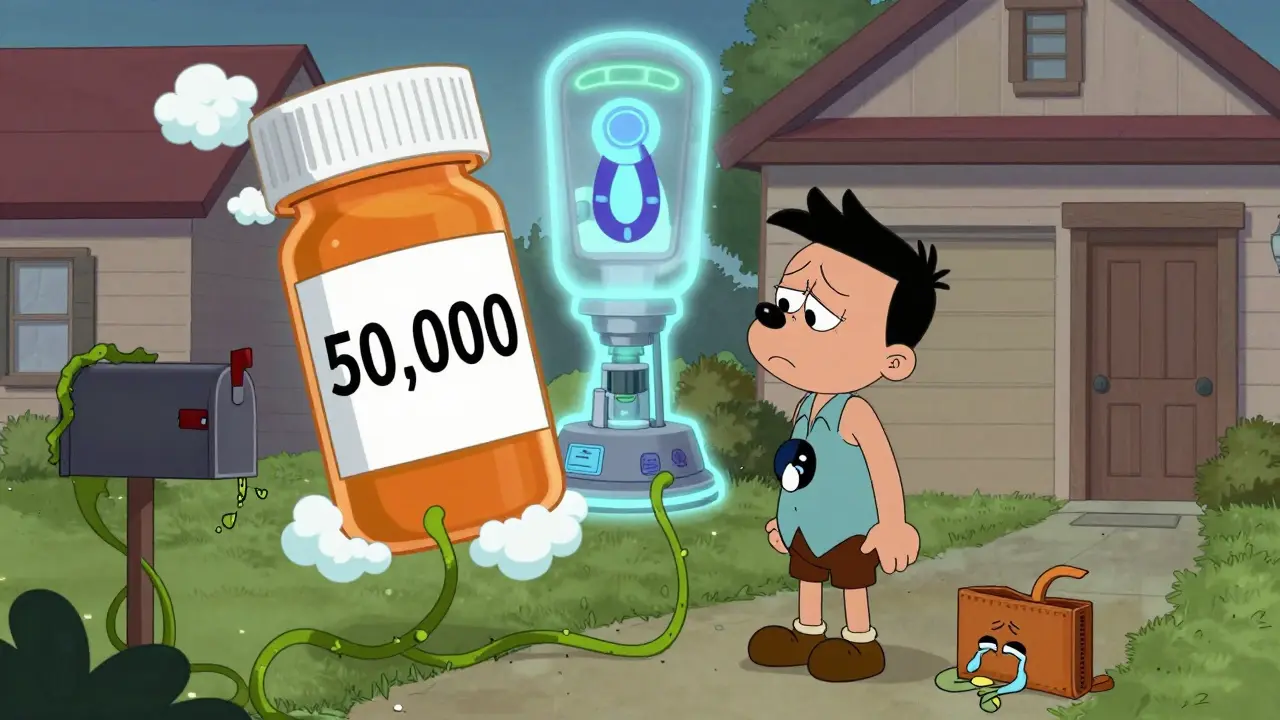
It’s 2025, and you’re staring at a $50,000 prescription. Your doctor says it could save your life. But the side effects? Nausea so bad you can’t eat. Fatigue that makes walking to the mailbox feel like climbing a mountain. And the price tag? More than your annual rent. You’re not alone. Thousands of people in the U.S. face this same impossible choice every day: pay for a drug that might work, or skip it and hope for the best.
Why Do Some Drugs Cost So Much?
Not all expensive drugs are created equal. The most costly ones - like gene therapies, CAR-T cell treatments, and biologics for rare diseases - aren’t just fancy pills. They’re engineered with precision. One treatment, tisagenlecleucel, costs $475,000 per dose. That’s not because the pill itself is expensive to make. It’s because it’s custom-built for your body. Your T-cells are pulled out, genetically reprogrammed in a lab, and put back in. It’s like rewiring your immune system to fight cancer. That kind of science doesn’t come cheap. The same goes for drugs like emicizumab, used for severe hemophilia. Before this drug, patients needed weekly infusions of clotting factors. Many still bled internally, damaging joints. Emicizumab cuts infusions to once a month. It doesn’t cure hemophilia, but it changes everything. People who once lived in fear of a fall can now play with their kids. That’s not just medical progress - it’s life restoration. These drugs aren’t just rare. They’re often the last resort. When every other option has failed, this is the one that might still work. And that’s why patients, even with crushing side effects, choose them.Side Effects Aren’t Just Inconvenient - They’re Part of the Trade-Off
Let’s be clear: side effects matter. Cytokine release syndrome from CAR-T therapy can land you in the ICU. Some biologics increase infection risk. Others cause rashes, weight gain, or depression. But here’s what patients don’t always say out loud: the side effects of the disease are often worse. Take hepatitis C. Ten years ago, the standard treatment was interferon. Weekly injections. Fever. Chills. Hair loss. A 50% cure rate. Today, Harvoni cures 95% of patients in 8 weeks. Side effects? Mild fatigue. Headache. The trade-off is obvious. Even at $7,153 out-of-pocket in 2016, patients chose it. Why? Because they were tired of being sick. Tired of watching their liver fail. Tired of being told they’d die young. For someone with rheumatoid arthritis, a $12,000-a-year biologic might cause headaches and a higher chance of a cold. But if it stops their joints from crumbling, they’ll take it. Pain that keeps you from hugging your grandchild? That’s a cost no one should have to pay.Who Pays? And Why Does It Feel So Unfair?
In the U.S., the burden falls hardest on patients. Medicare Part D beneficiaries without low-income subsidies spent 2.5 times more out-of-pocket on high-cost drugs than privately insured people. One patient paid $5,692 for ruxolitinib in a single year. Another, with hemophilia, faced $15,000 a month for emicizumab. That’s not a bill. That’s a life sentence. And it’s not just money. A 2022 survey found 68% of people taking drugs over $10,000 a month skipped doses to make ends meet. 42% chose between medicine and food. That’s not a medical decision - it’s a survival one. Meanwhile, drugmakers argue the high prices fund innovation. The Tufts Center estimated $2.6 billion to bring a new drug to market. But here’s the catch: 56% of the 50 most expensive drugs in 2024 were rated as having low or no additional benefit by European health agencies. Many are just slightly better than older, cheaper drugs. Yet they cost 10x more. The system is broken. But patients aren’t blind to it. They know when a drug is a miracle and when it’s a markup.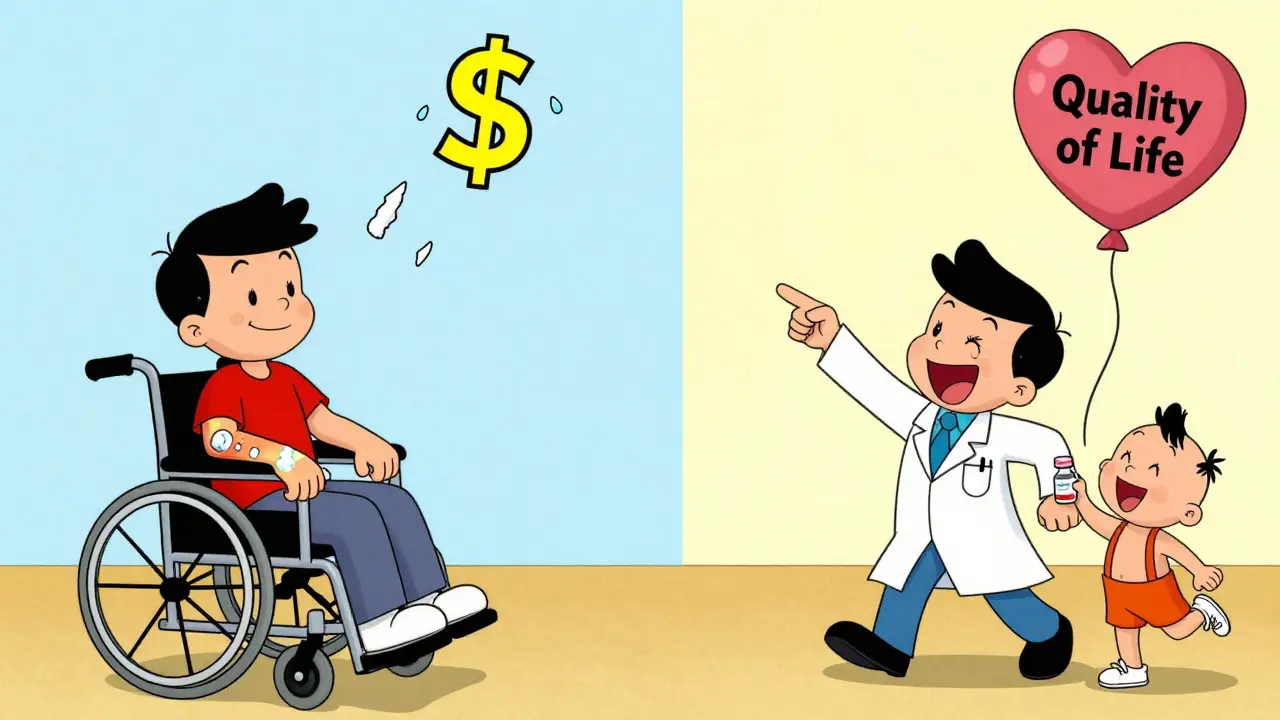
When Does the Cost Actually Make Sense?
There’s a pattern among the drugs patients say are worth it:- They stop a disease from getting worse - not just slow it.
- They replace a treatment with brutal side effects.
- They give back quality of life, not just years.
- They’re the only option left.
How Patients Navigate the System
Getting an expensive drug isn’t just about saying yes to your doctor. It’s a maze.- Prior authorization: Your doctor fills out paperwork. The insurer takes 7-14 days to decide.
- Step therapy: You must fail three cheaper drugs before they’ll approve the one that might work.
- Specialty pharmacies: These aren’t your local CVS. They handle complex drugs, deliver them to your door, and sometimes help with financial aid.
- Manufacturer assistance: 40% of out-of-pocket costs are covered on average by drugmaker programs. But you have to apply. And it’s not automatic.
- Foundations: Groups like the Chronic Disease Fund gave out $2.1 billion in aid in 2022. But demand outpaces supply.

The Bigger Picture: Is This Sustainable?
The U.S. spends more on drugs than any country. Specialty drugs - the expensive ones - make up only 3% of prescriptions but 54% of pharmacy spending. By 2030, they’ll be 79% of the total. The Inflation Reduction Act of 2022 started drug price negotiations in 2024. But here’s the catch: 96% of the most expensive drugs are excluded. Why? Because they’re for rare diseases, or they’re too new, or they’re not in Medicare’s top spending list yet. Meanwhile, Europe and Canada use strict cost-effectiveness rules. If a drug costs more than £30,000 per QALY in the UK, it’s usually rejected unless the manufacturer lowers the price. That’s why drugs like daratumumab got approved after negotiations. In the U.S., no one’s forcing that conversation. Patients are tired of being the price negotiators. They shouldn’t have to choose between their health and their rent. But until the system changes, they’re the ones holding the bag.What You Can Do If You’re Facing This Decision
If you’re considering an expensive drug:- Ask your doctor: What’s the evidence this drug works better than what’s already available?
- Check ICER’s reports - they analyze drug value independently.
- Call the manufacturer. Ask about patient assistance. Don’t assume you don’t qualify.
- Connect with patient advocacy groups. Others have walked this path.
- Don’t skip doses to save money. Talk to your pharmacist about alternatives - maybe a lower dose, or a different schedule.
Final Thought: Value Isn’t Just in the Price Tag
A $500,000 drug isn’t a luxury. It’s a lifeline for someone with no other options. But it shouldn’t be a gamble. The system needs to stop pricing hope. And patients need to stop paying for it alone. The real question isn’t whether these drugs are worth the cost. It’s: Why are we letting patients bear the cost at all?Are expensive medications always worth the side effects?
No - not always. But for some patients, the side effects of the disease are far worse than the side effects of the drug. For example, a biologic that causes mild fatigue might be worth it if it stops joint destruction in rheumatoid arthritis. The key is comparing the drug’s risks to the natural progression of the illness. If the disease is rapidly damaging your body and the drug slows or stops that, many patients consider the trade-off fair.
Why are some drugs so much more expensive than others with similar benefits?
Price isn’t always tied to effectiveness. Many ultra-expensive drugs are protected by patents, have no competitors, or target rare diseases with small patient pools. Manufacturers set prices based on what the market will bear, not just research costs. A 2024 NIH study found that 56% of the top 50 most expensive drugs had low or no added benefit over existing treatments, yet cost 10 times more. This gap between value and price is a major flaw in the system.
How can I afford a drug that costs thousands per month?
Start with the drug manufacturer - most offer patient assistance programs that can cover 40% or more of your costs. Next, contact independent foundations like the Chronic Disease Fund or Patient Access Network (PAN). Specialty pharmacies often have case managers who help navigate coverage. If you’re on Medicare, check if you qualify for Low-Income Subsidy (LIS) - it caps your out-of-pocket costs. Don’t give up if you’re denied the first time; appeals can take months, but they often succeed.
Do insurance companies ever deny these drugs even when they’re medically necessary?
Yes - and it’s common. Insurance companies require step therapy, meaning you must try cheaper drugs first, even if they’ve failed before. They also require prior authorization, which can delay treatment by weeks. In cancer care, that delay can mean the difference between remission and progression. Many patients appeal these denials, and about half succeed with help from their doctor or a patient advocate.
Is there a difference between the list price and what I actually pay?
Yes - and it’s huge. The list price (AWP) is what’s advertised. But drugmakers give huge rebates to insurers and pharmacy benefit managers (PBMs), so the actual cost - the net price - is often 30-60% lower. You rarely see this discount unless you’re covered by a plan that passes savings to you. Medicare beneficiaries without low-income subsidies often pay the full list price during the coverage gap (donut hole). That’s why your out-of-pocket bill might be $10,000, even if the drug’s real cost is $4,000.
Will drug prices come down in the future?
Slowly - and only for some. The Inflation Reduction Act allows Medicare to negotiate prices for 10 high-cost drugs starting in 2026, but 96% of the most expensive drugs are currently excluded. The EU is moving toward joint evaluations of drug value by 2025, which could pressure U.S. prices. But without binding cost-effectiveness thresholds, like those in the UK, prices will remain high for drugs targeting rare diseases or with no competition. Real change will come only when patients, doctors, and policymakers demand value-based pricing.