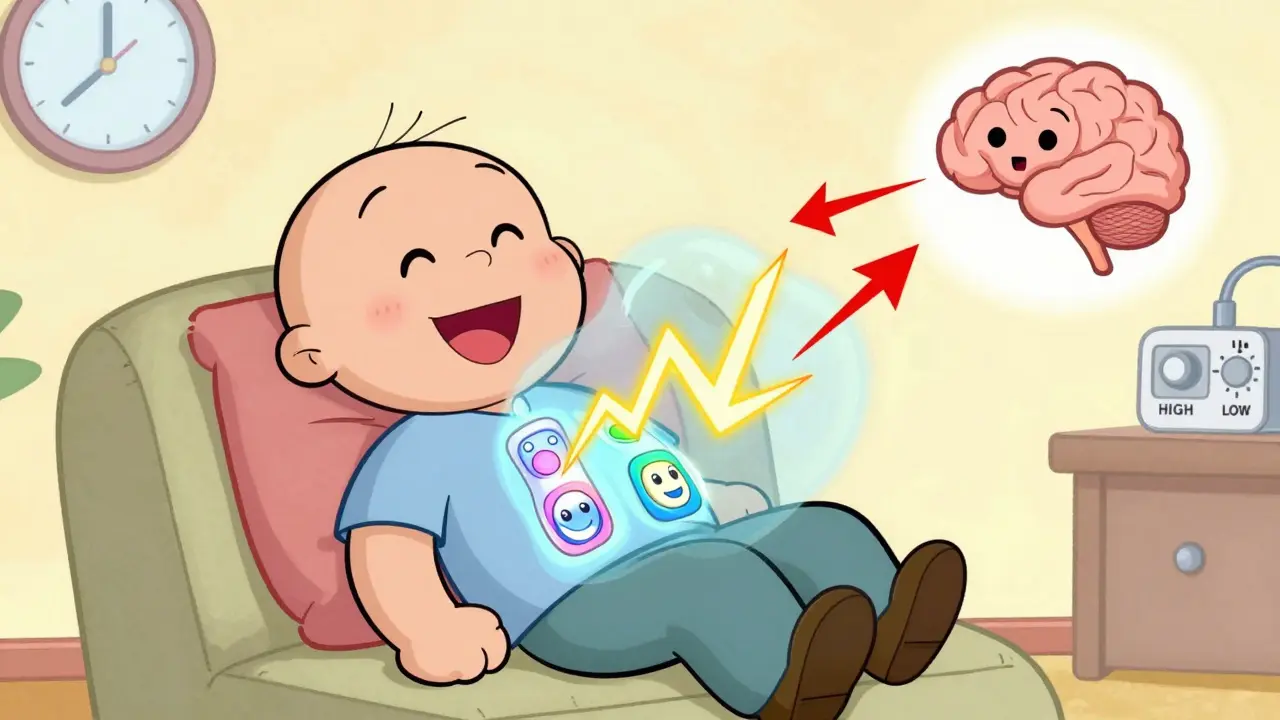
When your back flares up, your knees ache, or labor pains hit hard, reaching for a pill isn’t always the best or safest option. That’s where TENS therapy comes in - a simple, non-drug way to ease pain using a small device that sends gentle electrical pulses through your skin. It’s not magic, but it’s backed by science, used in clinics across the UK and US, and trusted by millions who want to avoid opioids or side effects from pills.
How TENS Therapy Actually Stops Pain
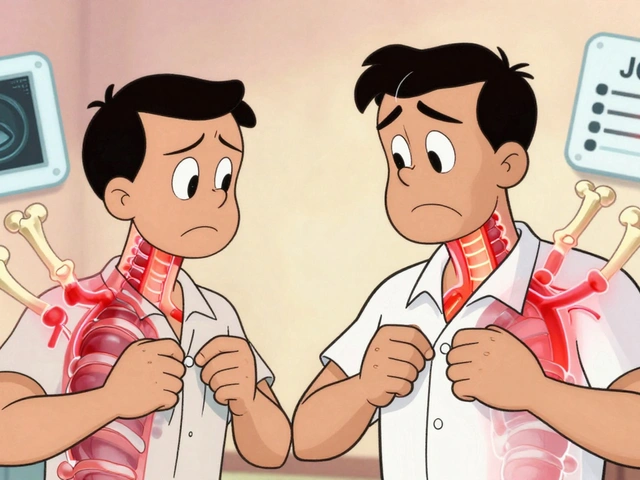
TENS stands for Transcutaneous Electrical Nerve Stimulation. That’s a mouthful, but it just means: electrical signals delivered through your skin to your nerves. The idea isn’t to heal the injury - it’s to interrupt the pain signal before it reaches your brain.
Back in 1965, researchers Ronald Melzack and Patrick Wall came up with the Gate Control Theory. Think of your nerves like a gate. Pain signals are like cars trying to get through. TENS floods the gate with non-pain signals - a tingling, buzzing feeling - and blocks the pain cars from getting through. It’s like turning up the volume on a song so you don’t hear the screaming outside.
There are two main ways TENS works, depending on how you set it:
- High-frequency TENS (50-100 Hz): You feel a strong but comfortable buzz. This is best for sharp, sudden pain like after surgery or a sprained ankle. It works by blocking pain signals fast.
- Low-frequency TENS (2-5 Hz): You feel a deep, pulsing tap. This one triggers your body to release natural painkillers - endorphins - the same chemicals released during exercise or a good laugh. It’s better for long-term, dull aches like arthritis or chronic back pain.
Some newer machines even have burst mode - mixing both types. It’s like giving your nerves a rhythmic massage that hits both the gate and your body’s own painkillers at once.
Who Benefits Most From TENS?
TENS isn’t a cure-all, but it works well for specific types of pain. Research shows the biggest wins are in:
- Post-surgery pain: A 2018 study found people using TENS needed 27% less opioid painkillers after operations.
- Labor pain: The Cochrane Review found women using TENS during childbirth reported 31% more pain relief than those using a placebo device.
- Osteoarthritis: Studies show up to 36% pain reduction in knees and hips - better than placebo, though not as strong as physical therapy.
- Chronic low back pain: Some people get relief, but results vary. The American Physical Therapy Association gives it a weak recommendation here - it helps some, but not everyone.
It’s less effective for widespread pain like fibromyalgia. Only about 38% of those patients get meaningful relief. If your pain is all over, TENS might not be your best bet.
Why TENS Beats Pills - and Where It Falls Short
Let’s be real: pills have downsides. Opioids cause drowsiness, nausea, and addiction risk. NSAIDs like ibuprofen can wreck your stomach or kidneys over time. TENS? No side effects like that. You might get mild skin irritation from the pads, but that’s it.
One big advantage: you control it. You can turn it up when pain spikes, turn it off when you’re sleeping. No waiting for a pill to kick in. No worrying about interactions with other meds.
But here’s the catch: TENS doesn’t work for everyone. Why? Because most people use it wrong.
A 2009 study found 68% of people who said TENS didn’t work were just using it too weak. If you can’t feel the tingling, it’s not doing anything. You need enough intensity to feel it - but not so much that it hurts. That sweet spot? It’s different for everyone. And if you stick the pads in the wrong spot, you’re wasting your time.
How to Use TENS Right (No Guesswork)
Using a TENS machine isn’t plug-and-play. You need to know where to put the pads and how to set them.
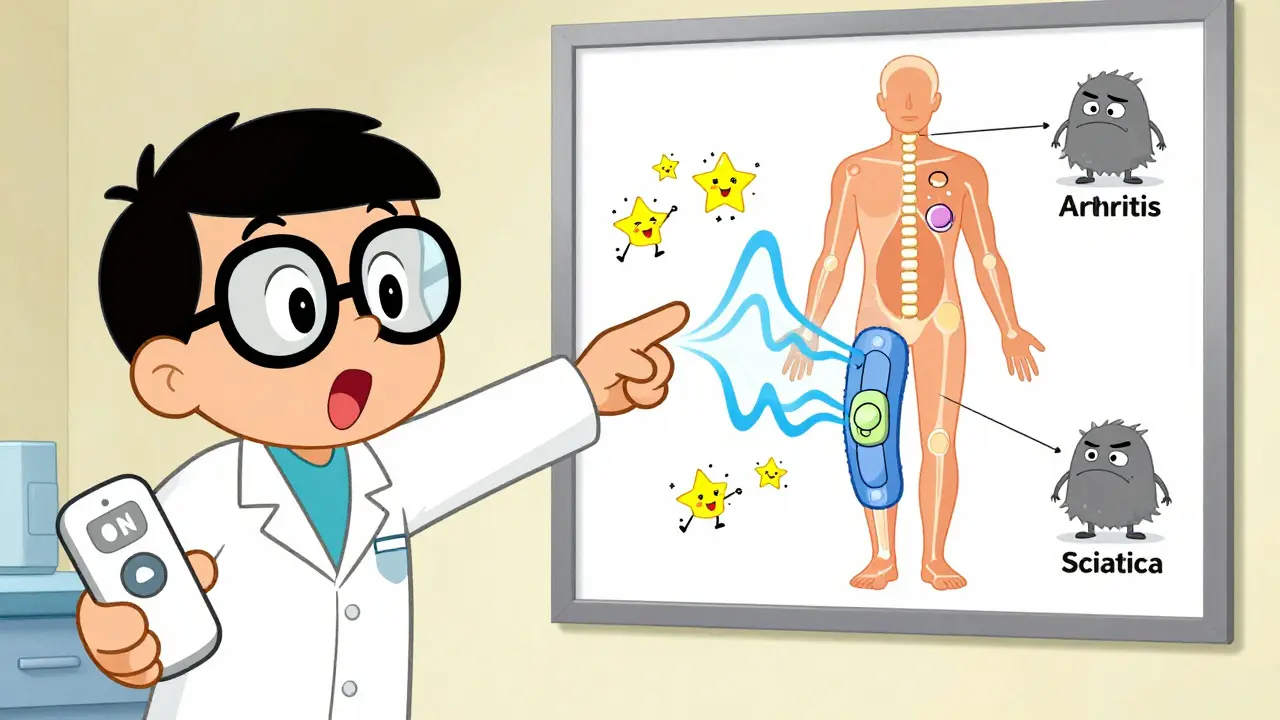
Placement matters more than you think. Put the electrodes within 2-3 cm of where you feel the pain. For lower back pain, place one on each side of your spine, just above the hips. For knee pain, one above and one below the kneecap. For sciatica, follow the nerve path down your leg.
Use conductive gel if your pads aren’t sticking well. Dry skin or movement during activity can break the connection. Gel cuts signal loss by over 60%.
Settings by pain type:
- Acute pain (after injury or surgery): 80-100 Hz, low to medium intensity, 20-30 minutes, 2-3 times a day.
- Chronic pain (arthritis, long-term back pain): 2-5 Hz, higher intensity, 30-45 minutes, 2-4 times a day.
- Labour pain: 80-100 Hz, adjust intensity as contractions come and go.
Most modern TENS units have pre-set programs for these conditions. Use them. Don’t guess.
And don’t expect miracles. It takes 3-5 sessions with a physiotherapist to learn how to use it properly. Most people give up after one try because they didn’t get the settings right.
What the Experts Say
Doctors aren’t all on the same page. The CDC’s 2023 guidelines say TENS should be a first-line option for chronic pain - right alongside exercise and physical therapy. That’s a big deal. It means they’re pushing it as an alternative to pills.
But here’s the nuance: the American Physical Therapy Association says the evidence is “moderate” at best. It works better for some people than others. And if you’re already taking opioid meds, low-frequency TENS might not work as well - your body’s natural painkillers are already blocked.
Neuroscientists at UCL have found TENS actually changes how nerves fire. It tweaks sodium channels - the switches that send pain signals. That’s not just blocking - it’s retraining your nerves. That’s why some people report longer-lasting relief even after turning the machine off.
What Users Really Think
Look at real people’s reviews. On Amazon, 78% of people who gave TENS a good rating said they felt relief right away. 82% loved that it didn’t make them drowsy or sick.
But here’s the dark side: 34% complained about skin irritation. 29% said the pads kept falling off. And 27% said they just couldn’t figure out how strong to set it.
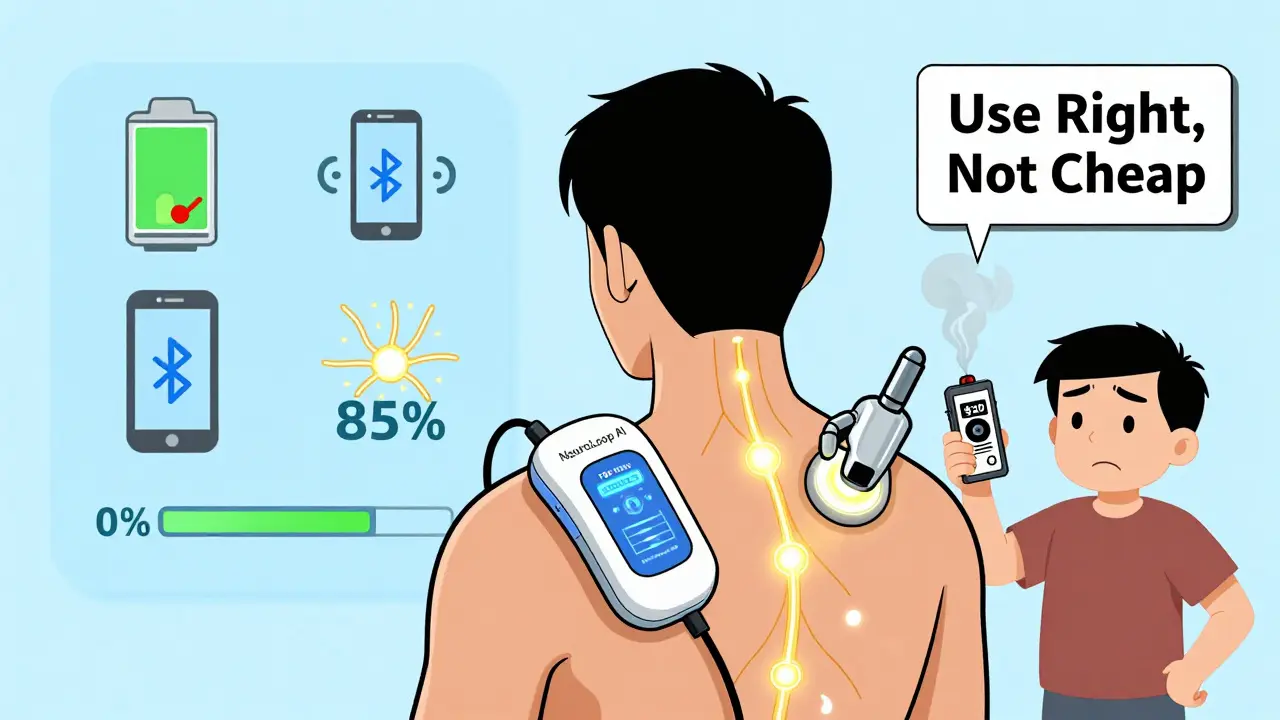
One Reddit user, u/BackPainWarrior, summed it up: “TENS works great for my sciatica - but only if I crank it to 85%. Problem? Battery dies in 90 minutes.”
That’s the trade-off. High intensity = better pain relief. But it drains the battery fast. Most units last 8-10 hours on medium settings. If you’re using it all day, keep spare batteries or a charger handy.
The Future of TENS: Smarter, Not Just Stronger
Old TENS machines were just boxes with dials. Now, things are changing.
In May 2023, the FDA cleared the first AI-powered TENS device - NeuroLoop AI. It uses sensors to read your nerve response and adjusts the settings automatically. In trials, it gave 44% more pain relief than standard units.
Next up: smart electrodes. These pads have tiny sensors that check your skin’s resistance and tweak the current so you always get the right dose - even if you sweat or move around.
Companies like Omron and Chattanooga are leading the pack. But cheaper brands like TechCare are catching up with Bluetooth apps that guide you through sessions. You can now sync your TENS device to your phone and get reminders, usage logs, and even personalized programs.
The market is growing fast. It was worth nearly $500 million in 2022 and is expected to hit $780 million by 2028. More clinics are using it. Amazon even gave TENS units to workers in 147 warehouses - and saw a 19% drop in missed workdays.
Is TENS Right for You?
Ask yourself these questions:
- Do you have localized pain - back, knee, shoulder, wrist? Yes → TENS is worth trying.
- Are you avoiding pills because of side effects or addiction risk? Yes → TENS is a safe alternative.
- Do you have a pacemaker, are pregnant, or have epilepsy? No → don’t use it without talking to your doctor first.
- Have you tried it once and gave up because it didn’t work? Try again - with help.
Don’t buy a cheap $20 gadget off Amazon and expect miracles. Spend $80-$150 on a reputable brand with clear settings and good reviews. And if you can, get a physiotherapist to show you how to use it. One 30-minute session can save you weeks of frustration.
TENS won’t fix your herniated disc or cure your arthritis. But it can give you back control - over your pain, your meds, and your daily life. And in chronic pain, that’s often the biggest win of all.
Can TENS therapy cure chronic pain?
No, TENS doesn’t cure the underlying cause of chronic pain like arthritis or nerve damage. It works by temporarily blocking pain signals or triggering your body’s natural painkillers. Many users report lasting relief after repeated use, but it’s a management tool, not a cure.
Is TENS safe to use every day?
Yes, TENS is safe for daily use when used as directed. Most people use it 2-4 times a day for 20-45 minutes per session. Avoid using it for more than 6 hours total per day. Watch for skin redness or irritation - if it happens, switch pad locations or use conductive gel.
Can I use TENS with pain medication?
Yes, TENS can be used alongside most pain medications. In fact, many people use it to reduce their pill intake. However, if you’re on opioid medications, low-frequency TENS may be less effective because it works through the same painkilling pathways. High-frequency TENS still works well in this case.
Why does TENS sometimes not work for me?
Most often, it’s because the intensity is too low. You need to feel a strong tingling or buzzing - not just a tickle. Poor electrode placement is the second most common reason. Make sure pads are directly over or near the painful area. Also, dry skin, movement, or old pads can reduce effectiveness.
Are there any risks or side effects?
Side effects are rare. The most common is mild skin irritation under the pads. Avoid using TENS if you have a pacemaker, defibrillator, or are pregnant (unless advised by your OB-GYN). Don’t place electrodes on your head, neck, or over broken skin. Never use it while driving or operating heavy machinery.
Do I need a prescription to buy a TENS unit?
No, you can buy TENS units over the counter without a prescription in the UK and US. However, if you want insurance to cover the cost (like Medicare or private plans), you’ll need a prescription and a diagnosis code. Some clinics offer rentals or trial units before you buy.