Diabetes Medication Sick Day Calculator
Answer these questions to get personalized recommendations
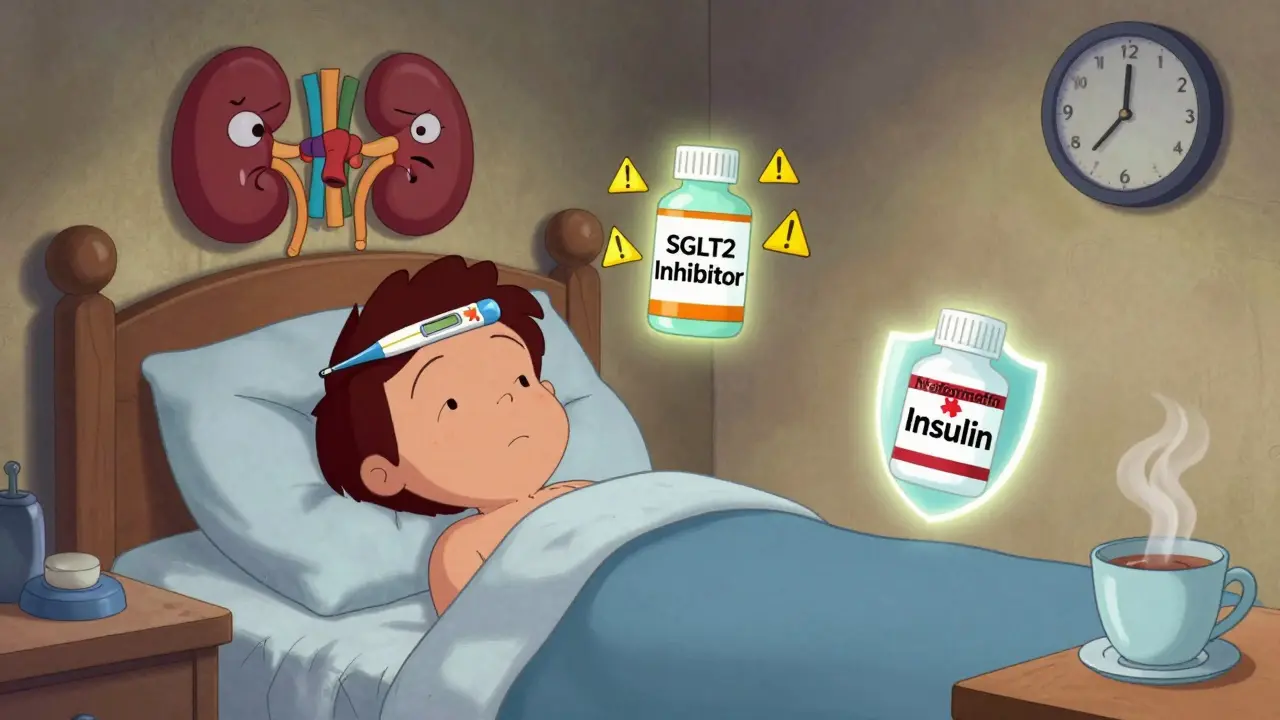
When you’re sick-whether it’s a cold, flu, stomach bug, or fever-your body goes into stress mode. For people with diabetes, that stress can turn a minor illness into a medical emergency. Diabetic ketoacidosis (DKA) and acute kidney injury (AKI) aren’t rare side effects during sickness. They’re common, preventable, and often caused by one thing: continuing or stopping the wrong diabetes medications at the wrong time.
Why Sick Days Are Dangerous for People with Diabetes
When you’re ill, your body releases stress hormones like cortisol and adrenaline. These hormones make your liver pump out more glucose, even if you’re not eating. At the same time, illness can reduce your appetite, cause vomiting or diarrhea, and make you drink less fluid. That’s a perfect storm for diabetes complications. In 2022, a study of nearly 48,000 hospital admissions found that people with diabetes are 3 times more likely to develop DKA and 2 times more likely to suffer AKI during illness compared to when they’re well. And here’s the kicker: nearly 1 in 8 diabetes-related hospital stays are caused by medication mistakes during sickness, according to CDC data from 2023.Which Medications to Stop-And When
Not all diabetes meds are safe to take when you’re sick. Some can turn dangerous if you’re dehydrated or not eating. Here’s what you need to know, broken down by drug class.Metformin: Stop Immediately If You’re Vomiting or Diarrheal
Metformin is one of the most common type 2 diabetes pills. But during illness, it can cause lactic acidosis-a rare but deadly buildup of acid in the blood. The risk jumps 8.3 times if you’re dehydrated and your creatinine level rises above 1.5 mg/dL. Rule: Stop metformin the moment you start vomiting, have diarrhea, or develop a fever. Don’t wait. Don’t think, “I’ll take it if I can keep it down.” If you can’t keep fluids in, you can’t safely keep metformin in.SGLT2 Inhibitors: Stop at the First Sign of Illness
Drugs like empagliflozin (Jardiance), dapagliflozin (Farxiga), and canagliflozin (Invokana) help lower blood sugar by making your kidneys flush out glucose. Sounds good-until you’re sick. These drugs increase your risk of euglycemic DKA, where your blood sugar isn’t sky-high, but your body is still making dangerous ketones. Why? Because they push your body to burn fat for fuel, even when you’re not eating enough. The FDA reported a 7.2-fold increase in DKA cases linked to SGLT2 inhibitors during illness. Rule: Discontinue SGLT2 inhibitors as soon as you feel unwell-even if your blood sugar is normal. Don’t wait for vomiting. Don’t wait for ketones. Stop them immediately.ACE Inhibitors and ARBs: Pause If You’re Not Drinking Enough
Many people with diabetes also take blood pressure meds like lisinopril (ACE inhibitor) or losartan (ARB). These are great for kidney protection-but only when you’re hydrated. When fluid intake drops below 1,500 mL per day (about 6 cups), these drugs can cause your kidneys to shut down. Studies show a 40% increase in AKI risk under these conditions. Rule: If you’re drinking less than 6 cups of fluid a day because you’re nauseous or not hungry, pause your ACE inhibitor or ARB. Resume only after you’re eating, drinking, and feeling better-and only after checking in with your doctor.What About Insulin? You Can’t Skip This One
Insulin is the one medication you should almost never stop during illness. Your body still needs it-even if you’re not eating. Without insulin, your body burns fat for energy, which creates ketones. That’s how DKA starts.Type 1 Diabetes
If you have type 1 diabetes, your body makes no insulin. During illness, your insulin needs often go up. The ADA recommends increasing your basal insulin by 10-20% every 4 hours if your blood sugar is above 15 mmol/L (270 mg/dL). Don’t skip your long-acting insulin. Don’t assume you don’t need it because you’re not eating. You need it more.Type 2 Diabetes
If you take insulin for type 2, your needs can also rise during illness. A 2023 clinical trial found that 68% of type 2 patients needed higher insulin doses when sick. But unlike type 1, there’s no one-size-fits-all rule. Work with your doctor to create a personalized sick day insulin plan. Some may need to increase basal insulin. Others may need to add short-acting insulin with meals-even if they’re only sipping broth.What to Monitor: Blood Sugar and Ketones
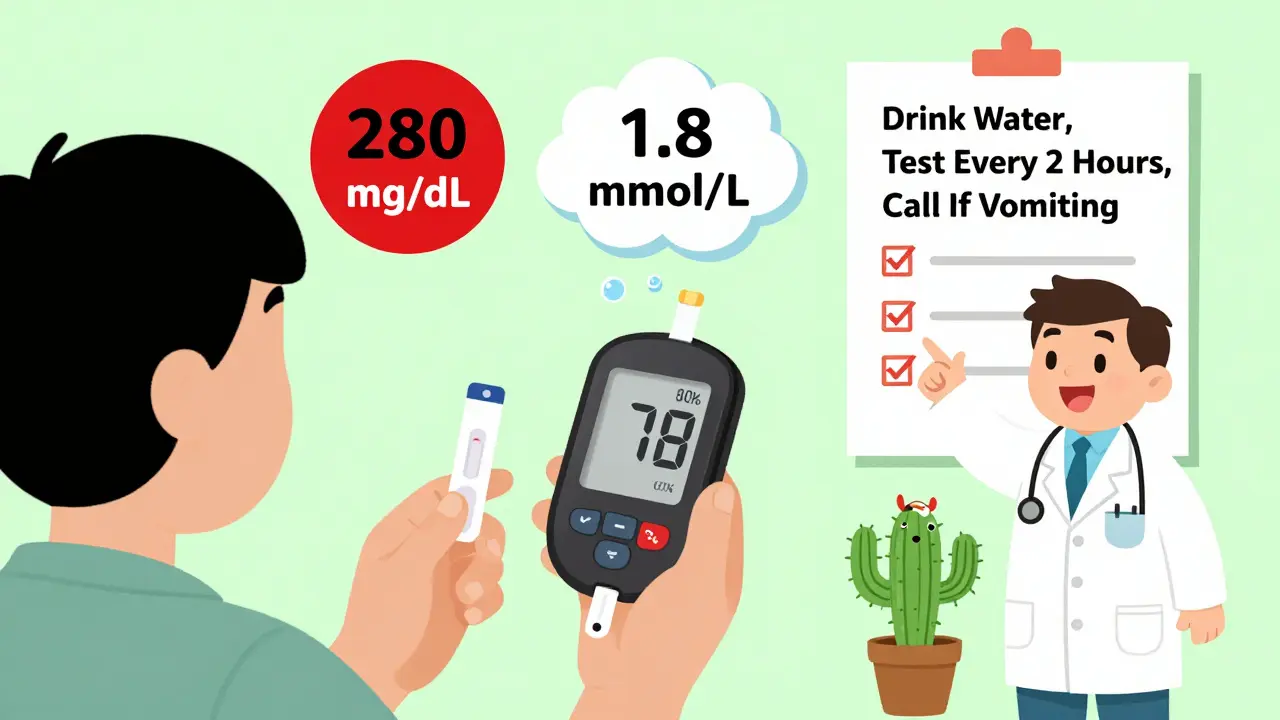
You can’t manage what you don’t measure. During illness, you need to check your blood sugar and ketones more often.- Check blood sugar every 2-4 hours (at least 6 times a day). Set phone alarms if you have to.
- Target range: 100-180 mg/dL (5.6-10 mmol/L). Higher than that? Watch for ketones.
- Test for ketones if your blood sugar is above 240 mg/dL (13.3 mmol/L).
- Blood ketones above 0.6 mmol/L → call your doctor
- Blood ketones above 1.5 mmol/L → go to the ER
- Urine ketones “large” or “++” or higher → seek help immediately
Hydration Is Non-Negotiable
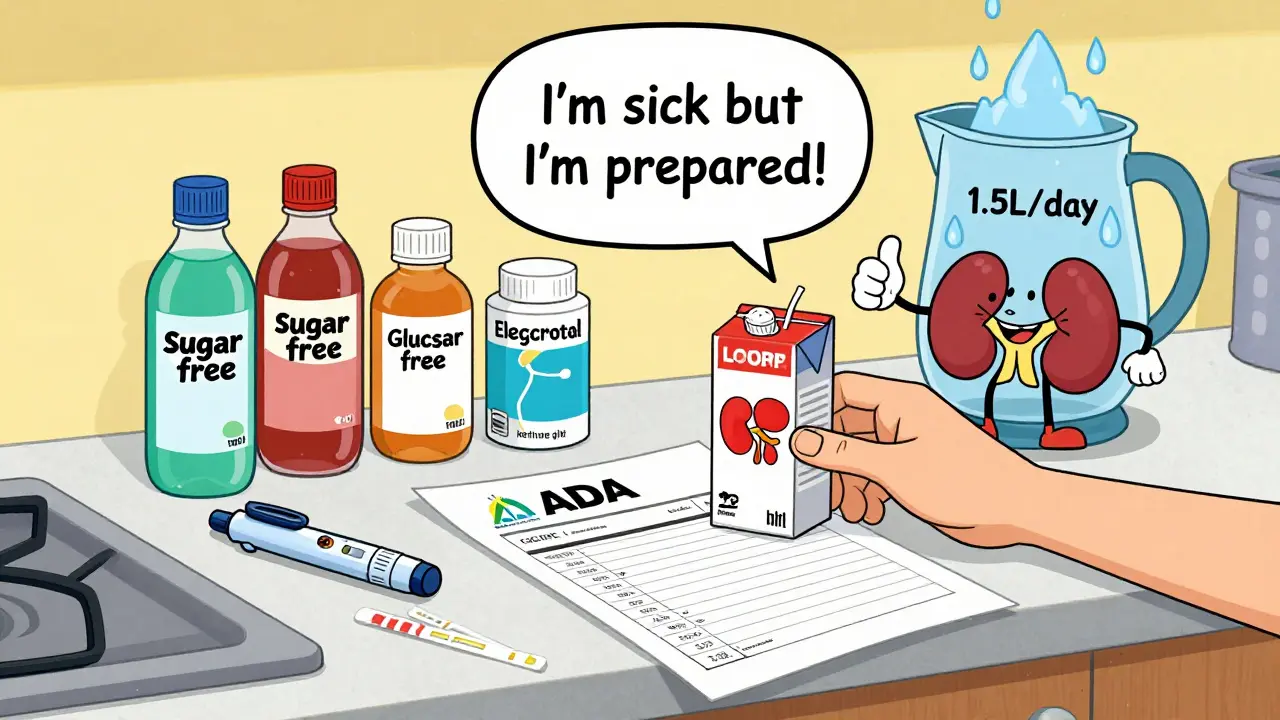
You can’t fix DKA or AKI without fluids. Your kidneys need water to flush out toxins. Your body needs water to dilute excess glucose and ketones. Drink at least 1.5 liters (6 cups) of fluid every 24 hours. If you’re vomiting or have diarrhea, aim for more. Good choices:- Water
- Sugar-free electrolyte drinks (like Nuun or DripDrop)
- Clear broth
- Unsweetened tea
- Sugary sodas (they spike blood sugar)
- Alcohol (dehydrates you)
- Energy drinks (too much caffeine, too much sugar)
What to Keep in Your Sick Day Kit
Preparation saves trips to the ER. Build a sick day kit at least 30 days before flu season. Include:- Glucose meter with 50+ test strips
- Ketone strips (urine or blood)
- 7-day supply of all your medications (including insulin)
- 6 bottles of sugar-free drinks (12 oz each)
- Electrolyte packets (Nuun, DripDrop, or similar)
- Simple carbs for low blood sugar: juice boxes, glucose tablets, honey
- ADA Sick Day Log (print or digital) to track readings
When to Call for Help
Don’t wait until you’re collapsing. Call your doctor or go to the ER if you have:- Blood sugar below 70 mg/dL that doesn’t improve after 30g of fast-acting carbs
- Ketones above 1.5 mmol/L that don’t drop after 2 hours of fluids and insulin
- Vomiting for more than 4 hours
- Diarrhea for more than 6 hours
- Confusion, trouble breathing, or fruity-smelling breath
- Little or no urine output
Why Guidelines Conflict-and What to Do
You might get different advice from your endocrinologist, your GP, the ADA website, and your pharmacist. That’s normal. Here’s why:- The ADA says: Stop metformin only if vomiting or dehydration occurs.
- The IDF says: Stop metformin during any illness, even mild.
- NICE (UK) says: Pause ACE inhibitors if you drink less than 1,200 mL/day.
- Some clinics say: Keep all meds unless told otherwise.
Real Stories: What Happens When People Don’t Follow the Rules
One Reddit user, “SugarFreeLife,” wrote: “My endo said keep metformin. ADA says stop. I kept it during a stomach bug. Ended up in the hospital with AKI.” Another, “Type1Dad2020,” stopped metformin but forgot to pause his lisinopril. He didn’t realize both drugs were hurting his kidneys. He spent 3 days in the hospital. These aren’t rare. A 2023 survey of 2,500 patients found that 62% had at least one medication mistake during illness. Nearly 1 in 4 ended up in the ER.What’s Changing in 2025
New diabetes drugs like GLP-1 receptor agonists (semaglutide, tirzepatide) are now used by over 22 million Americans. But there are no official sick day rules for them yet. The ADA is working on guidelines for 2025. In the meantime, experts recommend:- Continue GLP-1 agonists if you can tolerate them.
- Stop them if you have severe vomiting or dehydration.
- Monitor for low blood sugar-these drugs can make hypoglycemia more likely if you’re not eating.
Your Action Plan
1. Make a plan now. Sit down with your doctor and write down exactly what to do for each of your meds during illness. 2. Build a kit. Get the supplies listed above and keep them ready. 3. Test often. Blood sugar every 2-4 hours. Ketones if over 240 mg/dL. 4. Drink water. No excuses. Even if you’re not hungry, sip. 5. Know your emergency signs. Don’t wait for collapse. 6. Call your doctor if unsure. Better to be safe than in the ER. Sick days don’t have to mean hospital stays. With the right plan, you can get through them safely. The key isn’t just knowing the rules-it’s having them written down, ready to use, before you need them.Should I stop my metformin if I have a cold?
Yes-if you’re vomiting, have diarrhea, or can’t keep fluids down. Even a mild cold can lead to dehydration. Metformin increases your risk of lactic acidosis when you’re not drinking enough. If you’re just sneezing and have no nausea, you may keep it. But when in doubt, stop it and call your doctor.
Can I skip insulin if I’m not eating?
No. Your body still needs insulin to stop fat breakdown and ketone production-even if you’re not eating. Skipping insulin during illness is one of the leading causes of DKA. You may need less, but you still need some. Check your blood sugar every 2-4 hours and adjust your basal insulin as needed. If you’re unsure how much, call your provider.
What if my blood sugar is low during illness?
Treat it like any low-15g of fast-acting carbs (glucose tablets, juice, honey). Then retest in 15 minutes. If you’re vomiting and can’t keep food down, use glucose gel or injectable glucagon if prescribed. Don’t wait for your blood sugar to drop further. Low blood sugar during illness can be dangerous, especially if you’re on insulin or sulfonylureas.
Are ketone strips necessary if I have type 2 diabetes?
Yes. People with type 2 diabetes can develop DKA too-especially if they’re on SGLT2 inhibitors or under severe stress. This is called euglycemic DKA, where blood sugar isn’t extremely high but ketones are. If your blood sugar is over 240 mg/dL, test for ketones. Don’t assume it’s only a type 1 problem.
Can I use over-the-counter cold medicine with diabetes?
Choose sugar-free versions. Many cold syrups and lozenges contain hidden sugars that spike blood sugar. Read labels carefully. Avoid decongestants like pseudoephedrine if you have high blood pressure-they can raise glucose. Always check with your pharmacist or doctor before taking anything new during illness.
How long should I wait before restarting my meds after being sick?
Don’t restart metformin, SGLT2 inhibitors, or ACE inhibitors until you’re eating normally, drinking enough fluids, and your symptoms are gone. For metformin and SGLT2 inhibitors, wait at least 24-48 hours after you feel better. For ACE inhibitors, wait until your creatinine is back to normal. Always check with your doctor before restarting any stopped medication. Restarting too soon can cause AKI or lactic acidosis.