Every year, hundreds of thousands of women around the world are diagnosed with cervical cancer. But here’s the truth: cervical cancer is one of the few cancers we can actually prevent. Not just reduce. Prevent. Thanks to two simple, proven tools - the HPV vaccine and regular Pap testing - this disease is on its way out. In places like Scotland and Australia, it’s already fading into history for vaccinated generations.
Why HPV Is the Root Cause
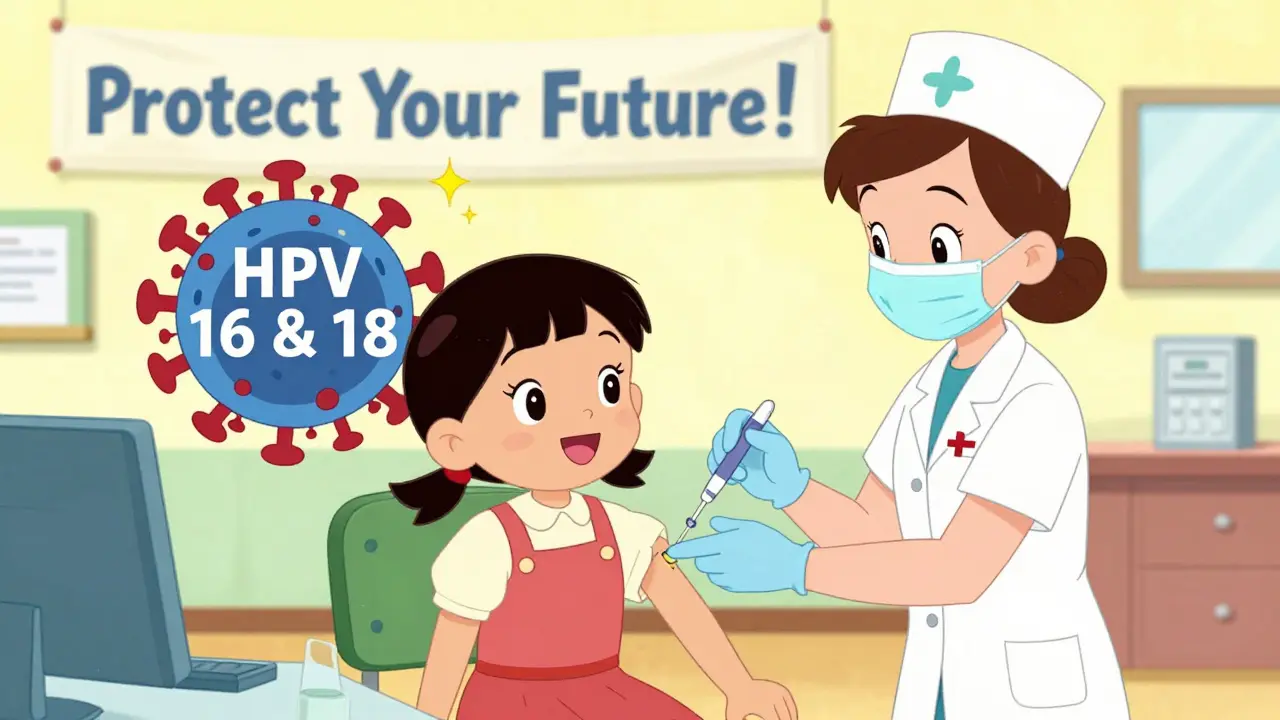
Cervical cancer doesn’t appear out of nowhere. It starts with the human papillomavirus, or HPV. Nearly all cases - over 99% - are caused by this common virus. Most people will get HPV at some point in their lives. It spreads through skin-to-skin contact during sex. For most, the body clears it on its own. But in some, certain high-risk types - especially HPV 16 and 18 - stick around for years, slowly turning healthy cells into precancerous ones. Left unchecked, those can become invasive cancer. The scary part? This process can take 10 to 20 years. That’s why prevention works so well. If you stop HPV before it takes hold, you stop cancer before it starts.How the HPV Vaccine Works
The HPV vaccine is a game-changer. It doesn’t treat existing infections. It prevents them. Modern vaccines like Gardasil-9 protect against nine of the most dangerous HPV strains - including the two that cause 70% of all cervical cancers. Since its introduction in 2006, it’s been given to over 300 million people worldwide. The vaccine works best when given before anyone becomes sexually active. That’s why health experts recommend routine vaccination at ages 11 to 12. At that age, the immune system responds strongly, and the chance of prior exposure is low. Two doses, six to twelve months apart, are enough for kids under 15. For teens and young adults starting the series at 15 or older, three doses are still recommended. But here’s the breakthrough: recent studies show a single dose may be just as effective. A 2022 trial in Kenya found that one shot of either the bivalent or nonavalent HPV vaccine gave 97.5% protection against high-risk HPV strains 18 months later - and that protection held steady at 36 months. Similar results came from Costa Rica’s 11-year follow-up study. These findings are changing global health policy. The WHO now prequalifies single-dose HPV vaccines, and Gavi is investing over $1 billion to bring them to low-income countries.The Scottish Study That Changed Everything
In 2024, researchers in Scotland released data that stunned the medical world. They followed 138,692 women born between 1988 and 1996 - all of whom received two doses of the HPV vaccine at ages 12 to 13. By the time they turned 25 to 30, zero cases of invasive cervical cancer had been recorded in the fully vaccinated group. That’s not a small drop. That’s complete prevention. The unvaccinated women in the same cohort had 8.4 cases per 100,000. The vaccinated? Just 3.2. That’s a 78% reduction in risk. And this wasn’t a small study. It tracked nearly 140,000 women over decades. It’s the first time a national program has shown cervical cancer could be eliminated in a whole generation. In the U.S., where only 60.4% of teens completed the full HPV vaccine series in 2022, the same results are still coming. A 2024 study from MUSC showed a 62% drop in cervical cancer deaths among young women over the past decade - directly tied to rising vaccination rates.
Why Pap Tests Still Matter
Even if you’ve been vaccinated, you still need screening. The vaccine doesn’t protect against every strain of HPV. And not everyone gets vaccinated on time. That’s where Pap tests - and now HPV testing - come in. For decades, the Pap smear was the gold standard. It looks for abnormal cells on the cervix. But now, HPV testing is replacing it as the primary screen for most women. Why? Because it finds the virus before it causes cell changes. It’s more sensitive. It’s more accurate. The American College of Obstetricians and Gynecologists (ACOG) now says women should start HPV testing at age 25. If the test is negative, you only need to repeat it every five years. That’s a big change from the old three-year Pap schedule. For vaccinated women, the risk is even lower - so extending the interval makes sense. Even if you had the vaccine, you still need to get screened. Vaccination isn’t a free pass.What Screening Looks Like Today
There are three main options now:- Primary HPV testing every 5 years - recommended for most women 25 to 65.
- Co-testing (HPV + Pap) every 5 years - still acceptable, but not usually needed if HPV test is negative.
- Pap test alone every 3 years - only if HPV testing isn’t available.
Global Gaps and Why They Matter
The U.S. and U.K. are leading the way. Australia expects to eliminate cervical cancer as a public health threat by 2028. Scotland’s vaccinated cohort may be the first generation never to see a single case. But globally? The picture is uneven. Only 12.9% of girls worldwide have received the full HPV vaccine series. Eighty-five percent of cervical cancer deaths happen in low- and middle-income countries. Why? Lack of access, cost, weak health systems, and misinformation. The WHO’s 2020 goal - 90% of girls vaccinated by 15, 70% of women screened by 35 and 45, and 90% of precancers treated - is still far off. But with single-dose vaccines now approved and affordable, that goal is suddenly realistic. If we get the vaccine to every girl, and screening to every woman, we could prevent 50 million cervical cancer cases by 2100.
What You Can Do
If you’re a parent: Get your child vaccinated at 11 or 12. Don’t wait. The earlier, the better. Even if they’re older - up to age 26 - it’s still worth it. For adults 27 to 45, talk to your doctor. The vaccine may still help if you haven’t been exposed to all the strains. If you’re a woman over 25: Don’t skip your HPV test. Even if you had the vaccine. Even if you feel fine. Cervical cancer doesn’t cause symptoms until it’s advanced. By then, it’s harder to treat. If you’re in a community with low vaccination rates: Talk to your local clinic. Ask about school-based programs. Push for self-sampling options. These tools exist. They work. They just need to reach people.Myths vs. Facts
- Myth: The HPV vaccine causes infertility. Fact: No study has ever shown this. In fact, by preventing cervical cancer, it protects fertility.
- Myth: Only girls need the vaccine. Fact: HPV causes cancers in men too - throat, anal, penile. Vaccinating boys helps protect everyone.
- Myth: I’m not sexually active, so I don’t need it. Fact: The vaccine works best before any exposure. Waiting defeats the purpose.
- Myth: Pap tests are enough. Fact: Vaccination prevents infection. Screening catches what slips through. You need both.
Looking Ahead
Cervical cancer could become the first cancer to be eliminated worldwide. That’s not science fiction. It’s happening right now. Scotland proved it. Kenya proved it. Costa Rica proved it. The tools are here. The data is clear. The only thing missing is action. We have vaccines that work. We have tests that catch it early. We have ways to reach people who’ve been left behind. The question isn’t whether we can end cervical cancer. It’s whether we will.Do I still need a Pap test if I got the HPV vaccine?
Yes. The HPV vaccine protects against the most common cancer-causing strains, but not all of them. Screening with HPV testing every five years starting at age 25 catches any remaining risk. Vaccination and screening work together - one prevents, the other catches what slips through.
Is the HPV vaccine safe?
Yes. Over 300 million doses have been given worldwide. The most common side effects are mild - soreness at the injection site, dizziness, or a slight fever. Serious reactions are extremely rare. The benefits far outweigh any risks. Studies tracking vaccinated populations for over 15 years show no long-term health problems.
Can I get the HPV vaccine if I’m over 26?
Yes, but it’s less likely to help. The CDC says adults 27 to 45 can still get the vaccine after talking with their doctor. It’s most useful if you haven’t been exposed to many HPV strains. For people with multiple past partners or a history of abnormal Pap tests, the benefit is smaller. Still, it’s an option - and worth discussing.
Why is HPV testing preferred over Pap tests now?
HPV testing finds the virus before it causes cell changes. Pap tests look for changes after they’ve already happened. HPV tests are more accurate at catching serious risks early. That means fewer false alarms, fewer unnecessary procedures, and longer safe intervals between tests - five years instead of three.
What if I can’t afford the HPV vaccine or screening?
In the U.S., most insurance plans cover both under the Affordable Care Act. If you’re uninsured, programs like the CDC’s Vaccines for Children (VFC) and the National Breast and Cervical Cancer Early Detection Program offer free or low-cost vaccines and screenings. Community health centers and local health departments can help you find them.
If you’re unsure where to start, call your doctor or local health department. Ask about HPV vaccination for your kids. Ask about screening for yourself. This isn’t about fear. It’s about control. You can prevent this cancer - if you act now.