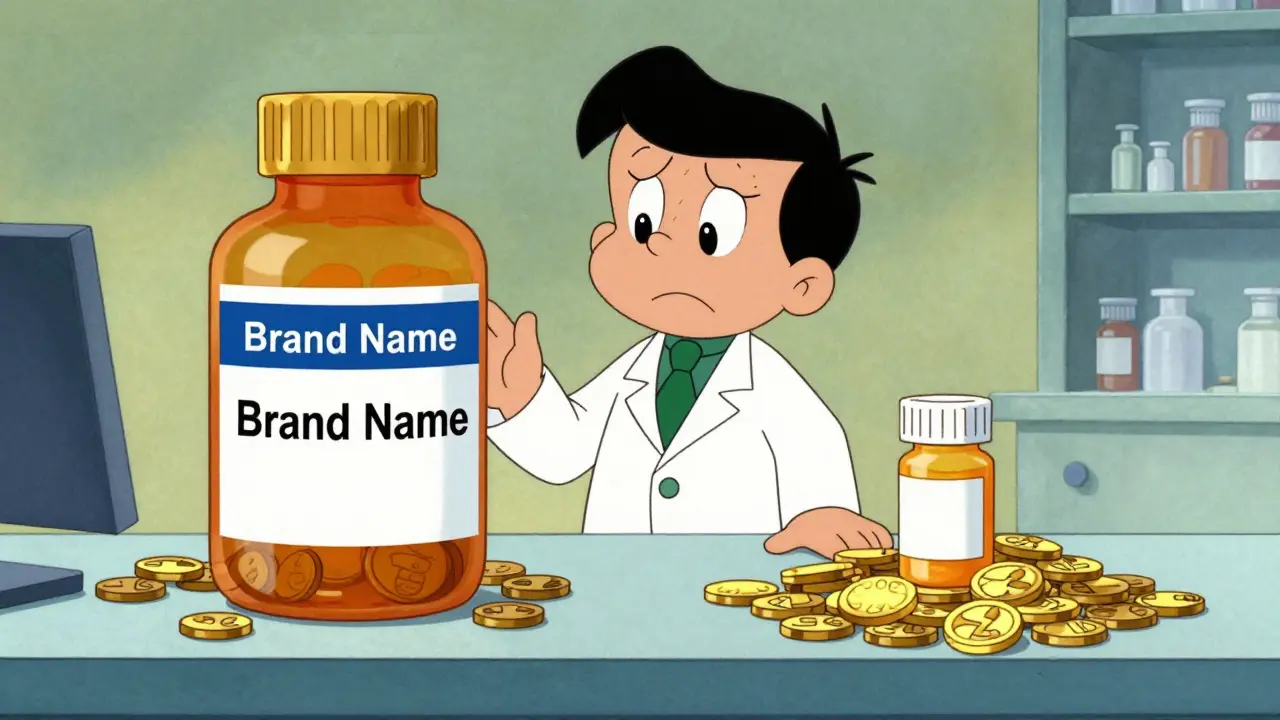
If you look at a pharmacy's balance sheet, you'll find a strange paradox. Most of the money flowing through the register comes from expensive brand-name medications, but almost none of the actual profit does. In a world where a single specialty drug can cost thousands of dollars, the real money-maker for the local pharmacist is actually the cheap generic version of a blood pressure pill that costs a few dollars. This is the core of pharmacy margin economics is the study of how pharmacies generate revenue from dispensing different types of medications within a complex supply chain.
For anyone running a pharmacy or studying health economics, understanding this flip between sales volume and profit margin is critical. While brand-name drugs might represent the bulk of spending, they often leave the pharmacy with pennies on the dollar. Generics, however, are the engine that keeps the lights on. But as the market shifts toward consolidation and opaque pricing, that engine is starting to sputter.
The Great Divide: Generics vs. Brand-Name Margins
To understand why pharmacies love generics, you have to look at the gross margin-the difference between what the pharmacy pays for the drug and what they charge the customer or insurance. According to data from the Commonwealth Fund, the disparity is staggering. Gross margins for generic drugs average around 42.7%, while brand-name drugs hover at a meager 3.5%.
Think about it this way: if a pharmacy sells a brand-name drug for $1,000, they might only make $35 in gross profit. But if they sell a generic for $100, they could make $42.70. Even though the total sale is smaller, the profit is higher. This creates a situation where Generic Drugs, which make up about 90% of all prescriptions dispensed in the U.S., are the primary source of income, while brand drugs are essentially just high-volume, low-reward transactions.
| Drug Category | Avg. Gross Margin (%) | Role in Pharmacy Revenue |
|---|---|---|
| Generic Drugs | ~42.7% | Primary profit driver |
| Brand-Name Drugs | ~3.5% | High sales volume, low profit |
The Middleman Problem: Enter the PBMs
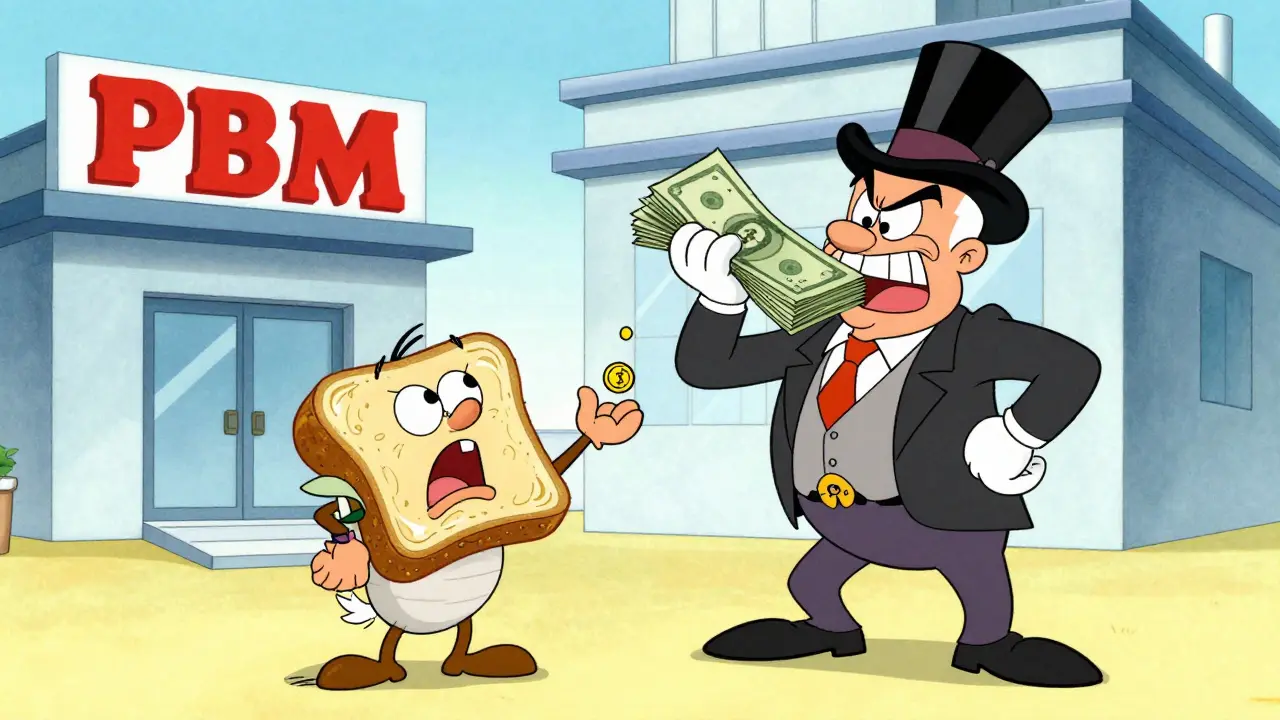
If the gross margins on generics look great on paper, why are so many independent pharmacies closing? The answer lies with Pharmacy Benefit Managers (or PBMs), third-party administrators of prescription drug programs that act as intermediaries between insurers, pharmacies, and drug manufacturers. The three biggest players-CVS Caremark, Express Scripts, and OptumRx-control about 80% of all transactions.
PBMs use a practice called "spread pricing." This is where the PBM charges the health plan a high price for a drug but reimburses the pharmacy a much lower amount, pocketing the difference. For the pharmacist, this means the "gross margin" they see in their software isn't what they actually take home. Many independent owners report that their net profit on generics has plummeted. In some cases, net profit has dropped from 10% to barely 2% over the last few years, even as the cost of running the business-like rent and labor-climbs.
Then there are "clawbacks." Imagine a PBM paying a pharmacy $50 for a drug, only to come back a month later and demand $10 of it back because of a pricing adjustment. It makes financial planning nearly impossible for small business owners.
The Shift Toward Single-Source Generics
For decades, the Hatch-Waxman Act ensured that once a patent expired, multiple companies would race to make a generic version. This competition drove prices down for consumers and kept margins predictable for pharmacies. However, we are seeing a dangerous trend toward "single-source generics."
A single-source generic happens when only one manufacturer produces the generic version of a drug. When competition vanishes, the manufacturer gains pricing power. In some extreme cases, the price of a single-source generic can actually climb higher than the original brand-name drug. This wipes out the pharmacy's profit margin entirely, as they are forced to pay more for the drug than the PBM is willing to reimburse them for it.
Market consolidation has accelerated this. Between 2014 and 2016 alone, nearly 100 mergers occurred in the generic manufacturing space, involving nearly $80 billion. When a few giant companies control the supply, the "competitive response" that used to lower prices simply doesn't happen.
How Pharmacies are Fighting Back
Since relying on traditional dispensing is becoming a losing game, pharmacies are diversifying. You can't survive on 2% net margins, so the goal is to find revenue streams that PBMs can't touch.
- Medication Therapy Management (MTM): Instead of just handing over a bottle, pharmacists provide clinical consultations to optimize drug therapy, charging a professional fee for the service.
- Specialty Pharmacy: Moving into high-cost, complex medications for chronic conditions. While these drugs are expensive, the reimbursement structures are often more stable than the volatile generic market.
- Direct-Pay Models: Some pharmacies are bypassing PBMs entirely by offering cash-pay options. Models like Mark Cuban Cost Plus Drug Company have highlighted how broken the system is by charging a flat $20 for generics plus a small dispensing fee, stripping away the hidden markups.
- Direct Contracting: Small pharmacies are increasingly trying to contract directly with local employers to provide prescriptions, cutting out the PBM middleman.
The Future of Pharmacy Profits
The landscape is changing rapidly. The Inflation Reduction Act's drug price negotiations, starting in 2026, may shift how brand-name drugs are priced, which could ripple down to generic margins. Meanwhile, the FTC is taking a harder look at PBM practices and price-fixing in the generic industry.
For the average independent pharmacist, the road ahead is steep. Projections suggest that without reimbursement reform, another 20-25% of independent pharmacies could close by 2027. The winners will be those who stop thinking of themselves as "pill dispensers" and start acting as healthcare providers who offer high-value clinical services.
Why do pharmacies make more money on cheap generics than expensive brands?
It comes down to the percentage markup. Brand-name drugs have very thin gross margins (around 3.5%) because their high cost is strictly controlled by PBMs and manufacturers. Generics have much higher percentage markups (averaging over 40%), meaning the pharmacy keeps a larger slice of the total price, even if the overall price is lower.
What is spread pricing and how does it hurt pharmacies?
Spread pricing is when a PBM charges an insurance company $100 for a drug but only pays the pharmacy $60 to dispense it. The PBM keeps the $40 "spread" as profit. This reduces the amount of money available to the pharmacy, squeezing their net margins and making it harder to cover operating costs.
What are single-source generics?
These are generic drugs produced by only one manufacturer. Because there is no competition, the manufacturer can raise prices. In some cases, these generics become more expensive than the original brand-name drug, which can lead to pharmacies losing money on every single prescription filled.
How can independent pharmacies improve their profit margins?
The most successful pharmacies are diversifying into clinical services like Medication Therapy Management (MTM), becoming specialty pharmacies for complex diseases, or adopting transparent cash-pay models that avoid PBM reimbursement issues entirely.
Do PBMs provide any value to the system?
Theoretically, PBMs are supposed to negotiate lower drug prices for health plans and manage formularies to ensure the most effective drugs are used. However, recent scrutiny from the FTC suggests that much of this "value" is actually captured as profit by the PBMs rather than being passed on to consumers or pharmacies.