
Imagine waking up to a pounding headache behind your eyes, nausea clawing at your stomach, and bright sunlight feeling like shards of glass. If this sounds familiar, you're not alone. Migraine headaches affect roughly 1 in 8 adults globally, with women experiencing them three times more often than men. What feels like a bad headache is actually a complex neurological event involving inflammation, nerve pathways, and brain chemistry. Understanding the unique mix of triggers, medications, and coping strategies can transform your relationship with migraines.
Why Do Migraine Attacks Happen?
Migraines aren't just bad headaches-they're electrical storms in the brain. Picture your nerves as wires sending signals through blood vessels. During a migraine, these signals get overloaded, releasing inflammatory substances that cause throbbing pain. Research from the National Center for Biotechnology Information shows this cascade starts in the cortex (brain surface), moves to protective membranes around the brain, and ends in painful inflammation.
Your Personal Trigger Map
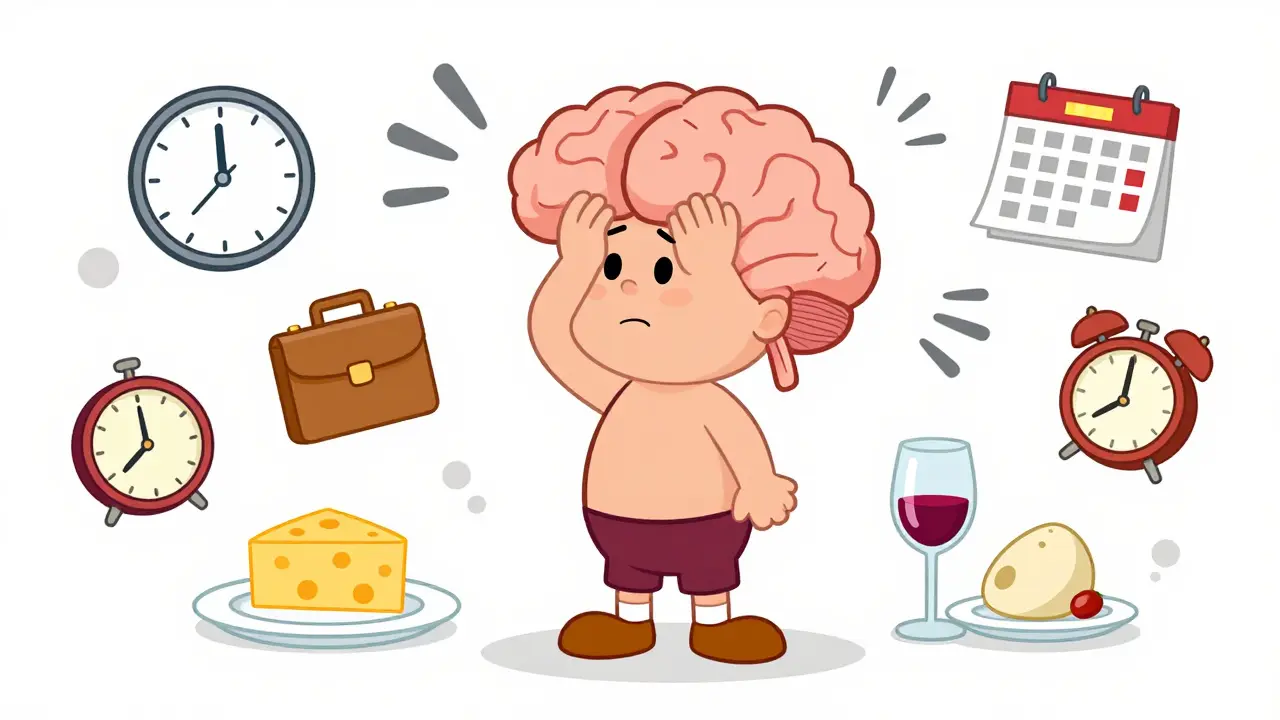
What sparks one person's migraine might not bother another. Think of triggers as matches-some only burn under the right conditions. Here's what typically lights the fuse:
| Trigger Category | Reported Frequency | Key Examples |
|---|---|---|
| Stress | 50-80% | Work deadlines, financial worries |
| Sleep Changes | Nearly 50% occur 4am-9am | Oversleeping, irregular schedules |
| Hormones | 65% during menstruation | Ovulation, birth control pills |
| Diet | Varies widely | Aged cheese, wine, MSG, skipped meals |
The "threshold theory" explains why some days tolerate triggers while others don't. Your brain has a pain threshold like a battery-stress drains it faster. A Migraine Trust study found combining two minor triggers (say, missing lunch + loud noise) pushes more people over the edge than either alone.
Medications That Actually Help
Not all painkillers work equally for migraines. Acetaminophen helps tension headaches but leaves migraines untouched. Effective treatments target specific migraine pathways:
| Type | How It Works | Common Options | Side Effects |
|---|---|---|---|
| Preventive | Blocks future attacks | Beta-blockers (propranolol), Topiramate | Fatigue, dizziness |
| Acute | Stops ongoing attacks | Triptans (sumatriptan), Gepants (ubrogepant) | Nausea, tingling |
| Newer Class | Target inflammation directly | CGRP inhibitors (erenumab) | Injection site reactions |
Triptans constrict blood vessels to stop pain waves, while newer gepants block calcium channels involved in inflammation. Important: Taking these early matters-waiting until pain peaks reduces effectiveness by 40% according to Cleveland Clinic guidelines.
Daily Habits That Reduce Attacks
Medications work best paired with lifestyle anchors. A regular sleep schedule alone cuts nocturnal migraines by half-remember, nearly half strike between 4am-9am. Keep a food/symptom diary: One person discovered their "healthy" almond milk triggered attacks; another blamed rainstorms before realizing barometric pressure shifts were the culprit.
Caffeine plays both sides-it appears in some migraine meds but withdrawal causes attacks. Stick to 200mg daily max if tolerated.When to Seek Specialized Care
Contact a neurologist if you experience: 4+ monthly attacks, aura symptoms lasting >1 hour, or sudden worst-ever headaches (could indicate other issues). New treatments like monthly CGRP injections reduce attack frequency by 50% in clinical trials.
How do I identify my specific triggers?
Track everything for 2 months: sleep hours, foods eaten, menstrual cycle days, weather changes. Look for patterns when attacks happen within 3 hours of potential triggers. Apps like Migraine Buddy automate this process.
Can hormones really cause migraines?
Yes-estrogen fluctuations lower serotonin levels. 65% of women report hormonal migraines around ovulation/periods. Hormone therapy adjustments may help but require specialist guidance.
Why doesn't ibuprofen work anymore?
Overusing NSAIDs (>15 days/month) causes rebound headaches. Switch to triptans reserved for severe attacks only, and combine preventive medications to break the cycle.
Are natural remedies effective?
Some show promise: Butterbur extract reduced attacks by 40% in one study (avoid unprocessed forms due to liver risks). Magnesium glycinate helps if deficient-but test blood levels first.


Categories