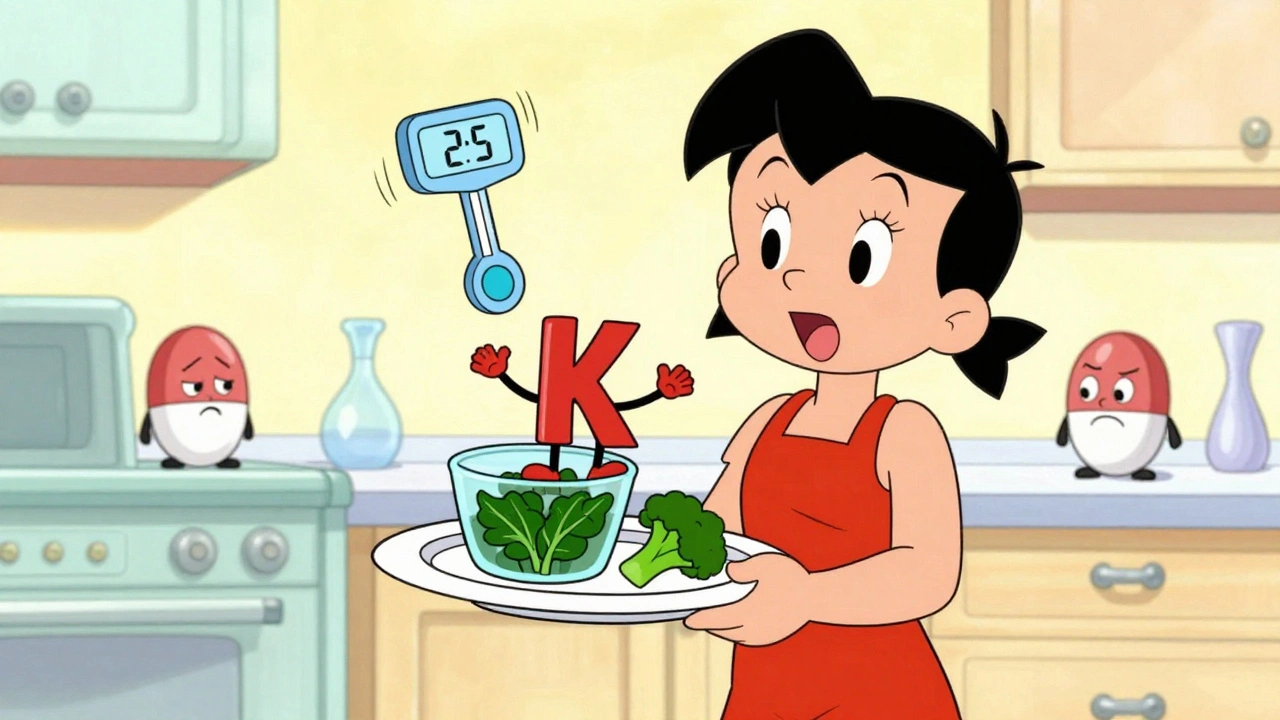
When you're on warfarin, your blood doesn't clot as easily - that’s the whole point. But if your diet changes suddenly, especially in how much vitamin K you eat, your INR can swing out of range. Too high, and you risk bleeding. Too low, and you could get a clot. It’s not about avoiding vitamin K. It’s about keeping it consistent.
Why Vitamin K Matters When You’re on Warfarin
Warfarin works by blocking your body’s ability to recycle vitamin K. Without enough active vitamin K, your blood can’t make the clotting factors it needs. That’s good - it keeps you from forming dangerous clots. But if you suddenly eat a lot of vitamin K - say, a big bowl of cooked spinach - your body gets enough of the vitamin to bypass warfarin’s effect. Your INR drops. Your blood clots faster. That’s when things get risky.On the flip side, if you stop eating vitamin K-rich foods for a few days - maybe you switched from kale to iceberg lettuce - your body runs low on vitamin K. Warfarin now has even less to fight against. Your INR spikes. You’re at higher risk of bleeding.
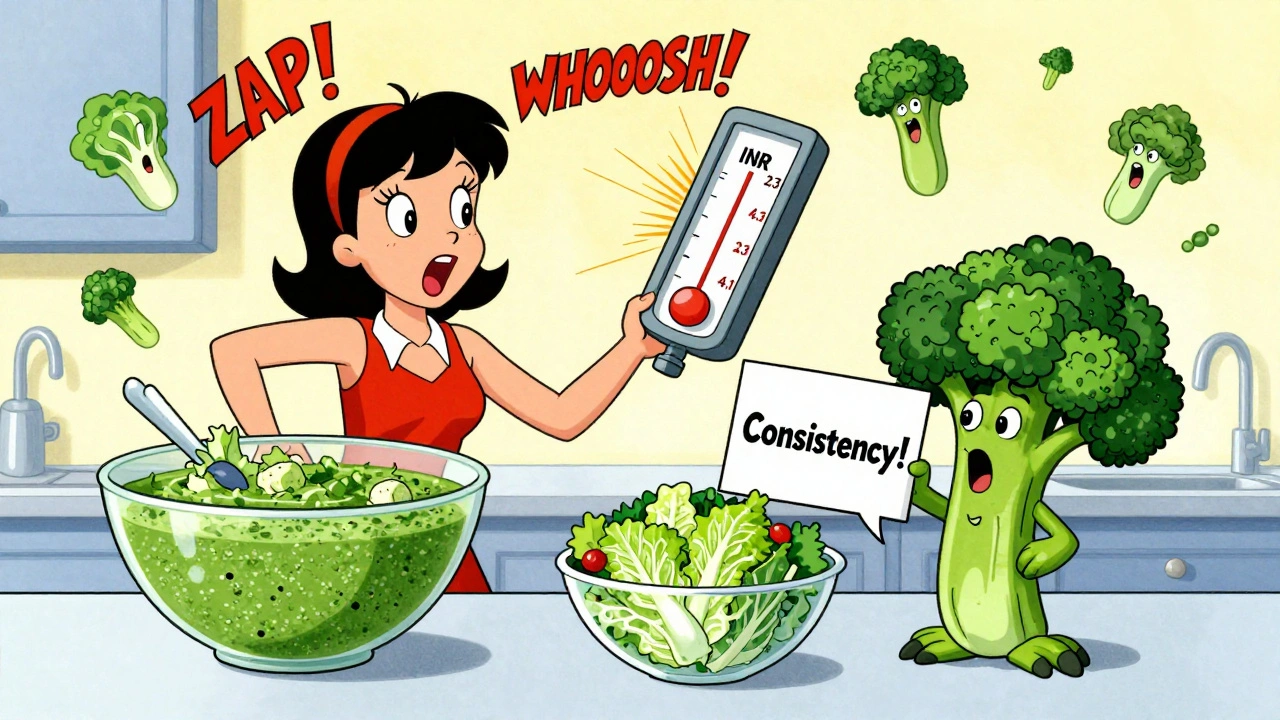
The key isn’t eating less vitamin K. It’s eating the same amount every day. Studies show that people who keep their daily vitamin K intake within 10-15% of their usual level spend over 70% of their time in the target INR range. Those who swing wildly? Their INR is unstable more than half the time.
Which Foods Are High in Vitamin K?
Not all greens are created equal. Here’s what actually moves the needle:- Cooked kale: 547 mcg per cup
- Cooked spinach: 889 mcg per cup
- Cooked broccoli: 220 mcg per cup
- Cooked Brussels sprouts: 219 mcg per cup
- Cabbage: 108 mcg per cup (cooked)
- Green tea: 100-200 mcg per cup (varies by brew)
- Beef liver: 70 mcg per 3 oz
- Hard cheeses: 50-70 mcg per 1 oz
These are the foods that can cause real INR shifts. A single cup of cooked spinach has more vitamin K than most people eat in a full day. One serving can drop your INR by 0.5-1.0 points within a few days.
On the other end, foods like apples, bananas, potatoes, white rice, and eggs have less than 10 mcg per serving. They’re safe to eat freely. Iceberg lettuce? Only 17 mcg per cup. That’s why switching from spinach salad to iceberg can spike your INR.
How Much Vitamin K Should You Eat Daily?
The recommended daily intake for healthy adults is 90-120 mcg. But if you’re on warfarin, you don’t need to hit that target. You need to hit the same number every day.Most patients do well with 60-100 mcg per day - enough to keep things stable without overwhelming warfarin’s effect. That’s roughly one serving of a high-vitamin K food daily, or two smaller servings. For example:
- 1 cup cooked broccoli (220 mcg) - too much unless you cut back elsewhere
- ½ cup cooked kale (275 mcg) - too much unless you avoid all other sources
- 1 cup raw spinach (145 mcg) - still high, but easier to balance
- ¼ cup cooked Brussels sprouts (55 mcg) - a good daily portion
Consistency matters more than perfection. If you eat 80 mcg one day and 85 mcg the next, you’re fine. If you eat 80 mcg Monday through Friday and then 500 mcg on Saturday? That’s when your INR goes haywire.
What Happens When You Eat Too Much (or Too Little)
Real stories from patients tell the clearest story.One man in Ohio, on warfarin for a mechanical heart valve, ate a large kale smoothie for breakfast - 547 mcg of vitamin K. His INR dropped from 2.8 to 1.9 in four days. His doctor had to increase his dose by 20%. He didn’t realize the smoothie was the problem until he tracked his food.
Another woman switched from eating spinach salads daily to just lettuce because she thought she was being “healthier.” Her INR jumped from 2.3 to 4.1 - she started bruising easily and had nosebleeds. She ended up in the ER.
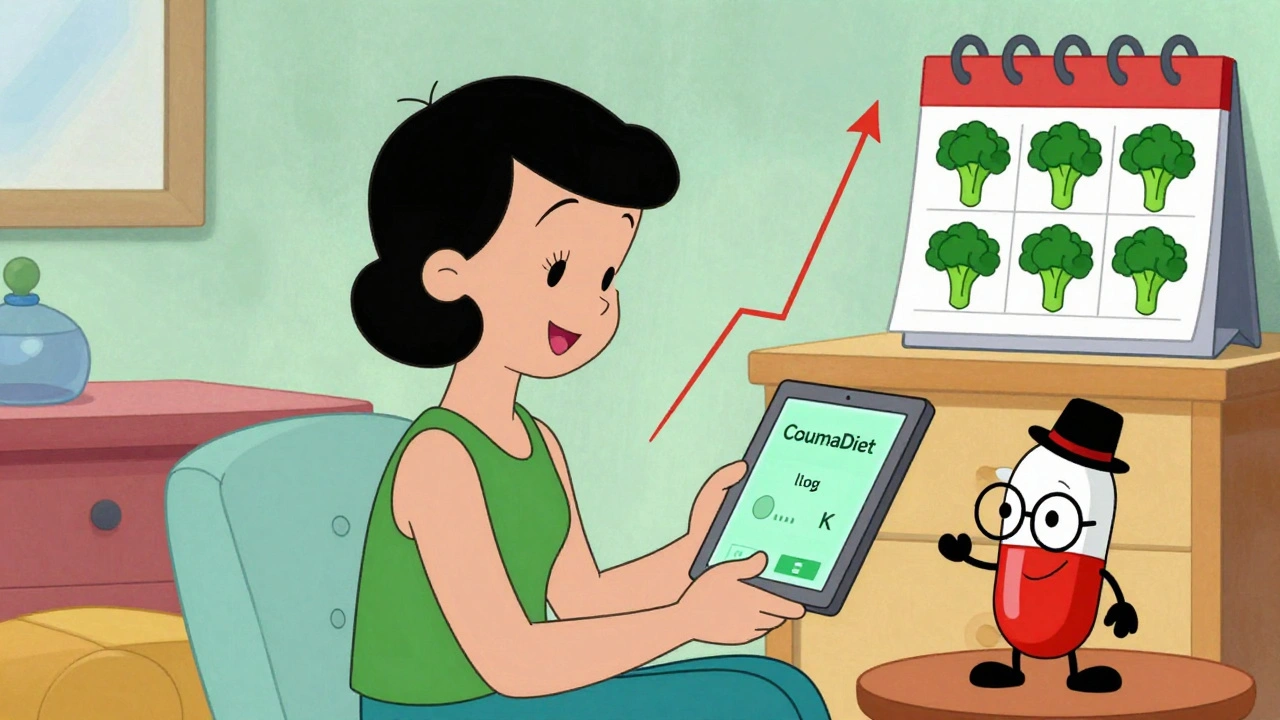
On the positive side, a woman in Minnesota started eating exactly 1 cup of cooked broccoli every day. She tracked it with an app. Within six months, her time in therapeutic range (TTR) went from 58% to 92%. She stopped having INR-related calls from her anticoagulation clinic.
These aren’t rare cases. A 2022 survey of 852 warfarin users found that 89% of those who kept vitamin K intake consistent achieved TTR above 70%. For those who didn’t? Only 34% stayed in range.
How to Keep Your Intake Consistent
You don’t need to become a nutritionist. But you do need a system.- Track your intake for 2 weeks. Use an app like CoumaDiet or MyFitnessPal (with the vitamin K database turned on). Log everything you eat, especially greens and liver.
- Find your baseline. After two weeks, average your daily vitamin K. If it’s around 70-90 mcg, stick with that.
- Plan your meals. Pick one high-vitamin K food to eat daily - say, broccoli - and keep the portion the same. If you want kale on Tuesday, skip it Wednesday. Don’t double up.
- Be careful with restaurant meals. A “healthy salad” at a café might be loaded with spinach and kale. Ask what’s in it. If you’re unsure, pick a safer option like grilled chicken with steamed carrots.
- Don’t suddenly start or stop supplements. Vitamin K pills, green powders, or multivitamins with K can throw your INR off. Talk to your doctor before taking anything new.
Some people find it easier to take a low-dose vitamin K supplement - 100-150 mcg daily - to stabilize their intake. Research shows this actually reduces INR swings in people with erratic diets. It’s not for everyone, but it’s an option your doctor can help you consider.
What About Cooking and Prep?
How you cook your food changes vitamin K levels. Boiling spinach or kale can reduce vitamin K by 30-50%. Steaming? It keeps most of it. Raw? Full potency.So if you usually eat steamed broccoli and suddenly start boiling it, you might see a small INR rise. It’s not dramatic, but it adds up. The same goes for frozen vs. fresh - frozen veggies are blanched before freezing, which lowers vitamin K slightly.
Stick to your usual method. If you’ve been eating raw spinach in smoothies, keep doing it. Don’t switch to cooked unless you’re ready to adjust your warfarin dose accordingly.
What’s Changed in the Last Few Years?
Ten years ago, doctors told people on warfarin to avoid vitamin K. Now, they say the opposite. The 2023 American College of Chest Physicians guidelines explicitly say: “Do not restrict vitamin K. Focus on consistency.”Research from 2022 in Blood Advances showed that patients who took 150 mcg of vitamin K daily had 28% less INR variability than those who didn’t. Why? Because it smoothed out the spikes and dips from unpredictable meals.
Even the apps are changing. Tools like DoseMeRx now use your food logs, INR history, and even your genetics to predict how your dose should change - not just based on warfarin metabolism, but on what you ate yesterday.
When to Call Your Doctor
You don’t need to panic over every small change. But call your anticoagulation clinic if:- Your INR is outside your target range for two tests in a row
- You’ve had a major change in diet (e.g., started juicing greens, stopped eating vegetables)
- You’ve been sick, hospitalized, or started a new medication
- You’re traveling and eating unfamiliar foods
Don’t adjust your warfarin dose yourself. That’s how emergencies happen.
Final Thought: It’s Not About Perfection
You don’t have to eat the same exact meal every day. You don’t need to memorize micrograms. You just need to be aware. If you usually eat spinach, keep eating spinach. If you eat broccoli, stick with broccoli. Avoid wild swings.Warfarin works. But it works best when your diet doesn’t keep changing the rules. The goal isn’t to eat less vitamin K. It’s to eat the same amount - every single day.
Can I eat leafy greens while on warfarin?
Yes - but you must eat the same amount every day. One cup of cooked spinach daily is fine. Two cups one day and none the next is dangerous. Consistency matters more than avoiding these foods.
Does cooking reduce vitamin K in vegetables?
Yes, boiling can reduce vitamin K by 30-50%, especially in spinach and kale. Steaming or sautéing preserves more. If you switch cooking methods, your INR might change slightly. Stick with your usual way to avoid surprises.
Should I take a vitamin K supplement?
Some people benefit from a daily 100-150 mcg supplement to stabilize intake, especially if their diet varies. It’s not for everyone, but studies show it reduces INR swings. Talk to your doctor before starting.
Can I drink green tea while on warfarin?
Green tea contains 100-200 mcg of vitamin K per cup - enough to affect INR. If you drink it daily, keep the amount consistent. Switching from 2 cups to none can raise your INR. Don’t start drinking it suddenly if you haven’t before.
How often should I check my INR?
Monthly checks are standard for stable patients. If you’ve had recent diet changes, your doctor may want checks every 1-2 weeks until your INR stabilizes. Always follow your clinic’s schedule - don’t skip tests.
Do DOACs (like Eliquis or Xarelto) have the same food restrictions?
No. DOACs don’t interact with vitamin K. If you’re on one of these, you don’t need to track your greens. But if you’re on warfarin - especially for a mechanical valve - vitamin K consistency is still critical.