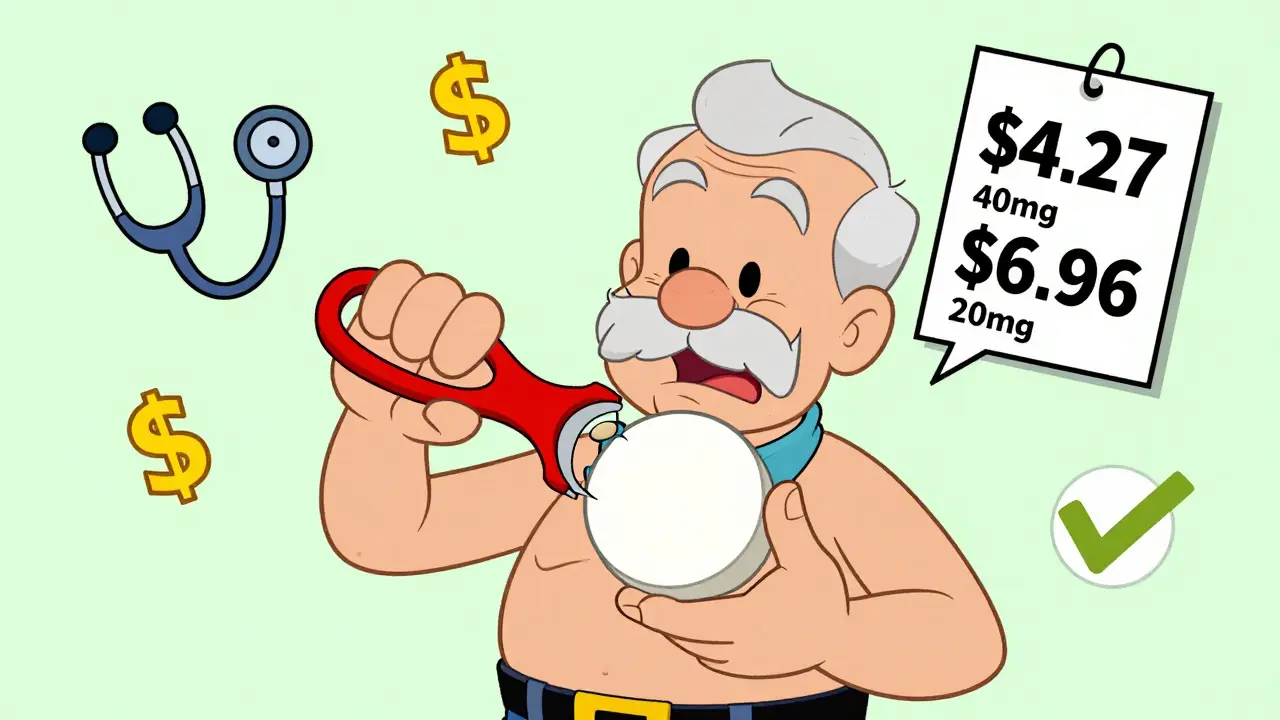
Medication costs are rising, and many people are looking for ways to cut expenses without sacrificing their health. One common strategy is pill splitting-cutting a higher-dose tablet in half to get two doses instead of buying two separate lower-dose pills. It sounds simple, but doing it wrong can be dangerous. Done correctly, though, it can save you hundreds of dollars a year. The key isn’t just cutting the pill-it’s knowing which pills you can split, how to split them, and when not to do it at all.
Why Pill Splitting Saves Money
Pharmaceutical companies often price higher-dose tablets cheaper per milligram than lower-dose ones. For example, a 40mg atorvastatin tablet might cost $4.27, while a 20mg tablet costs $3.48 each. If you buy one 40mg tablet and split it, you get two 20mg doses for less than the cost of two separate 20mg pills. That’s a 38% savings on just one medication. For people taking multiple medications, those savings add up fast.According to a 2022 Kaiser Family Foundation report, nearly 15% of Medicare Part D beneficiaries split pills to save money. Some users report saving over $1,000 a year-especially with blood pressure, cholesterol, and thyroid medications. But not all drugs work this way. Some 100mg tablets cost the same as two 50mg ones, so splitting gives you no benefit. That’s why checking the price per milligram matters before you start.
Which Pills Can You Split?
Not every pill is safe to split. The FDA says you should only split tablets that are specifically approved for it. Look for a score line-a shallow groove down the middle-but don’t assume that means it’s safe. A score line is just a guide; it doesn’t guarantee the pill is designed to be split.Medications that are generally safe to split include:
- Lisinopril (for high blood pressure)
- Atorvastatin and simvastatin (cholesterol drugs)
- Metoprolol (heart medication)
- Fluoxetine (antidepressant)
- Levothyroxine (thyroid hormone)-only if your doctor confirms stability
Never split these types of pills:
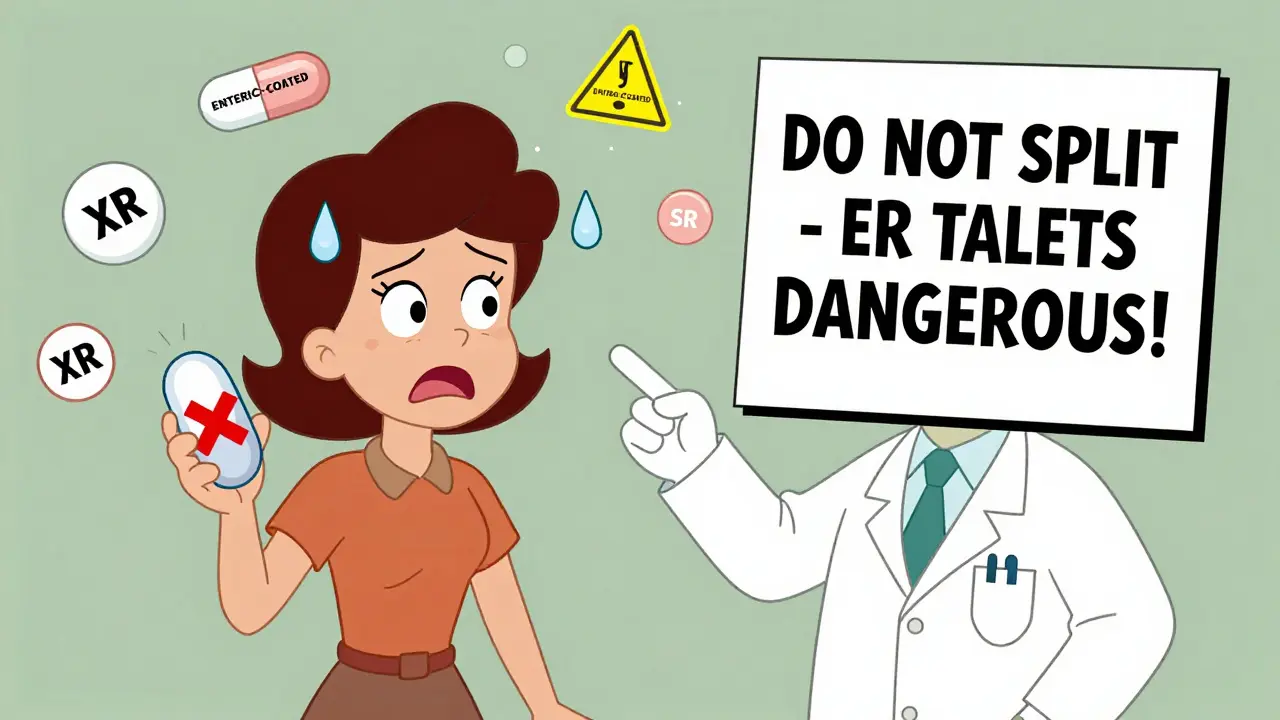
- Extended-release (ER, XR, SR) tablets-like metformin ER or Adderall XR. Splitting them releases the full dose at once, which can be dangerous.
- Enteric-coated pills-like omeprazole. The coating protects your stomach or ensures absorption in the intestine. Breaking it ruins the design.
- Capsules and liquids-these can’t be split safely.
- Drugs with narrow therapeutic windows-warfarin, digoxin, tacrolimus, and lithium. Even a 5-10% dose change can cause serious side effects or hospitalization.
The FDA has documented 127 adverse events linked to improper pill splitting between 2018 and 2023. Most involved people splitting time-release or high-risk medications without medical advice.
How to Split Pills the Right Way
If your doctor or pharmacist says it’s okay to split your pill, follow these steps:- Get approval first. Never split a pill without talking to your doctor or pharmacist. Ask: “Is this medication approved for splitting?” and “Will splitting affect how it works?”
- Check the package insert. Look for wording like “may be split” or “splitting is acceptable.” If it’s not mentioned, assume it’s not safe.
- Use a pill splitter. Never use a knife, scissors, or your teeth. A pill splitter is a small, inexpensive tool ($3-$10) with a V-shaped holder and a sharp blade. It holds the pill steady and cuts it cleanly.
- Split one pill at a time. Split pills right before you take them. Don’t pre-split and store them. Moisture, heat, and air can break down the medication, especially if it’s not coated. Banner Health says split tablets lose stability within 24-48 hours.
- Discard uneven pieces. If one half looks crumbled, misshapen, or dusty, throw it out. Don’t try to save it. Take the other half.
Studies show that using a pill splitter results in dose accuracy within 5-15%. Knife splitting? That can be off by 25-72%. That’s not just inaccurate-it’s risky.
What to Avoid
Many people try to save money by splitting pills without knowing the risks. Here are the biggest mistakes:- Splitting pills in advance. Storing split tablets increases the risk of moisture damage, especially in bathrooms or kitchens. One Reddit user reported hospitalization after splitting a time-release amlodipine tablet and storing the halves for days.
- Using the wrong tool. A kitchen knife or scissors won’t give you an even split. You’ll end up with uneven doses or crumbled powder.
- Assuming all scored pills are safe. A score line doesn’t mean FDA-approved for splitting. Some pills have it just for manufacturing reasons.
- Ignoring side effects. If you feel dizzy, unusually tired, or your symptoms worsen after splitting, stop and call your doctor. It could be a dosing issue.
A 2010 study in the Journal of the American Pharmacists Association found that 94 volunteers splitting 25mg hydrochlorothiazide tablets produced halves where 41% were off by more than 10%, and 12% were off by over 20%. That’s not a small error-it’s potentially harmful.
Alternatives to Pill Splitting
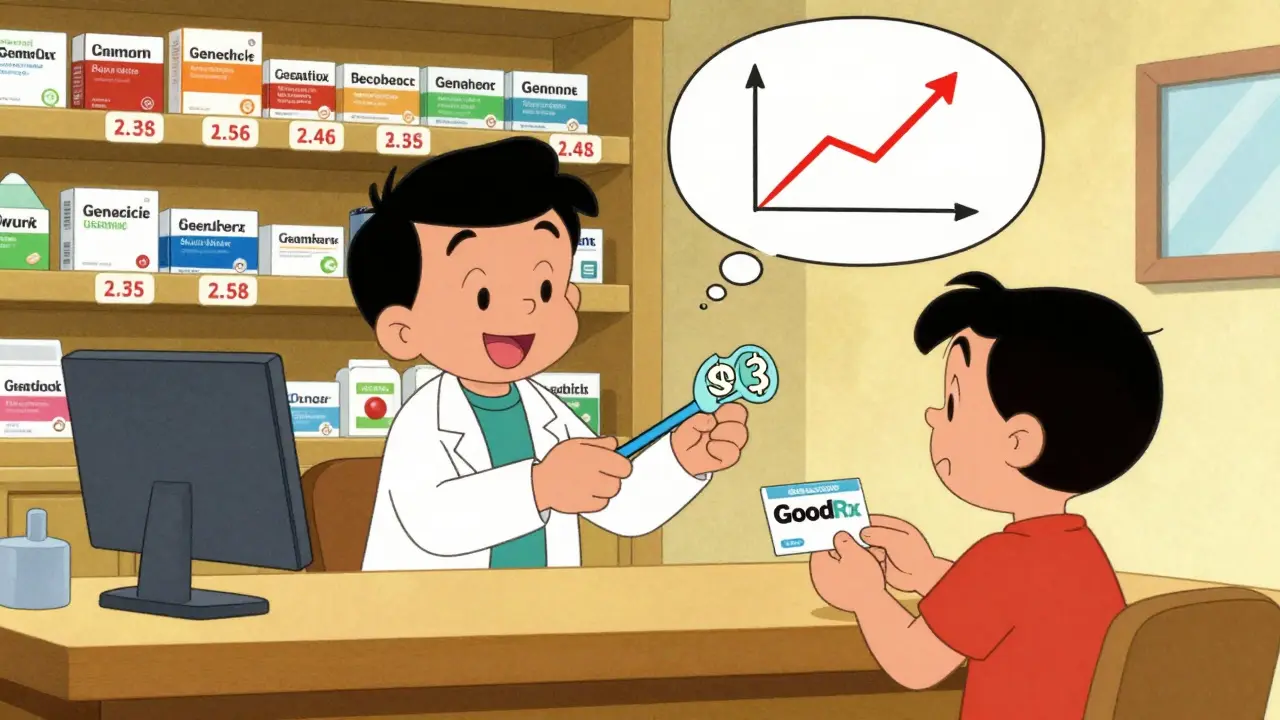
Before you split pills, explore safer options:- Pharmacy discount cards. GoodRx and SingleCare often offer prices lower than the cost of a split tablet. For example, sertraline 50mg might cost $0.08 per pill with a discount card-cheaper than splitting a 100mg tablet.
- Manufacturer patient assistance programs. Many drug companies offer free or low-cost meds to people with low income. These programs can save you up to 53% on average.
- Generic versions. Sometimes switching to a different generic brand cuts the price dramatically.
- 30-day instead of 90-day prescriptions. Some insurers charge the same for 90-day supplies, but if you’re paying out of pocket, buying smaller amounts might be cheaper.
The American Society of Health-System Pharmacists says pill splitting should be a last resort-only after you’ve explored other options. If you’re struggling to afford meds, talk to your pharmacist. They know about programs you might not know exist.
Real Stories, Real Risks
On Reddit’s r/pharmacy community, users share both wins and warnings. One person, ‘MedSaver87,’ saved $287 a month splitting 40mg simvastatin tablets with a $4.99 pill splitter. Another, ‘AnxiousPatient22,’ ended up in the ER after splitting a time-release amlodipine tablet. Their blood pressure crashed.On Drugs.com, a verified user wrote: “The pill splitter from Walgreens has saved me $1,200 a year on my blood pressure meds.” But on r/Thyroid, someone said: “I split my Synthroid by accident and had emergency blood work because my TSH went crazy.”
These stories aren’t rare. A 2022 PharmacyTimes poll found that 41% of patients who split pills without professional guidance noticed their meds weren’t working as well. That’s not just inconvenience-it’s health risk.
When to Stop
You should stop splitting pills if:- Your medication changes form (e.g., from immediate-release to extended-release).
- You start a new drug that interacts with your split pills.
- You notice side effects like dizziness, heart palpitations, or confusion.
- Your doctor advises against it.
- The pill crumbles every time you split it.
Even if you’ve been splitting safely for years, always check in with your provider. Your needs change. So do your meds.
Final Thoughts
Pill splitting can be a smart way to save money-but only if you do it right. It’s not a DIY hack. It’s a medical decision. Talk to your pharmacist. Check the label. Use the right tool. Split only what’s safe. And never assume a score line means it’s okay.The goal isn’t just to save money. It’s to stay healthy while doing it. With the right approach, you can cut costs without cutting corners on safety.
Can I split any pill with a score line?
No. A score line only means the pill was designed to be split during manufacturing-it doesn’t mean it’s safe for you to split at home. Always check the package insert or ask your pharmacist. Some scored pills, like extended-release medications, can be dangerous to split even if they have a line.
Is it safe to split pills ahead of time?
No. Split pills right before you take them. Once cut, the exposed surface can absorb moisture, lose potency, or break down faster-especially in humid environments like bathrooms. Studies show split tablets can become unstable within 24 to 48 hours. Always split one pill at a time.
What’s the best tool to split pills?
A dedicated pill splitter with a V-shaped holder and sharp blade is the only safe tool. These cost between $3 and $10 at pharmacies like Walgreens, CVS, or Walmart. Never use a knife, scissors, or your teeth-they cause uneven splits, crumbling, and inaccurate dosing.
Which medications should never be split?
Never split extended-release (ER/XR/SR), enteric-coated, or capsule medications. Also avoid splitting drugs with narrow therapeutic windows like warfarin, digoxin, levothyroxine, tacrolimus, and lithium. Even a small dose change can cause serious side effects or hospitalization.
How do I know if splitting will save me money?
Compare the price per milligram. For example, if a 40mg tablet costs $4.27 and two 20mg tablets cost $6.96 total, splitting saves you money. But if a 100mg tablet costs $0.12 and two 50mg tablets cost $0.16, splitting doesn’t help. Use GoodRx or your pharmacy’s price checker to compare before you split.
Are there safer alternatives to pill splitting?
Yes. Many drug manufacturers offer patient assistance programs that provide free or low-cost meds. Pharmacy discount cards (like GoodRx or SingleCare) often lower prices below the cost of split pills. Switching to a different generic brand or asking for a 30-day supply instead of 90-day can also help. Talk to your pharmacist-they know what’s available.