10 Jan 2026 |
Health
|
by
Brian Halstead
Why You Can’t Just Toss Expired EpiPens, Inhalers, or Patches in the Trash
You’ve got an old EpiPen sitting in your medicine cabinet. It’s been sitting there since last summer-maybe longer. The expiration date passed months ago. You know you should get rid of it, but what do you do? Throw it in the bin? Flush it? Burn it? None of those are safe options. The same goes for your asthma inhaler or that nicotine patch you stopped using last year. These aren’t just empty plastic containers. They contain powerful medications-and sometimes pressurized gas or sharp needles. Improper disposal can hurt kids, pets, sanitation workers, and even rivers and lakes. According to the FDA, 12% of accidental poisonings in children involve medications thrown in the trash. That’s not a small risk. And it’s not just about safety. The propellants in inhalers contribute to greenhouse gases. Medications leaching into waterways have been found in 80% of tested streams across the U.S. This isn’t just a personal problem-it’s a public health and environmental issue.How to Dispose of an Expired EpiPen
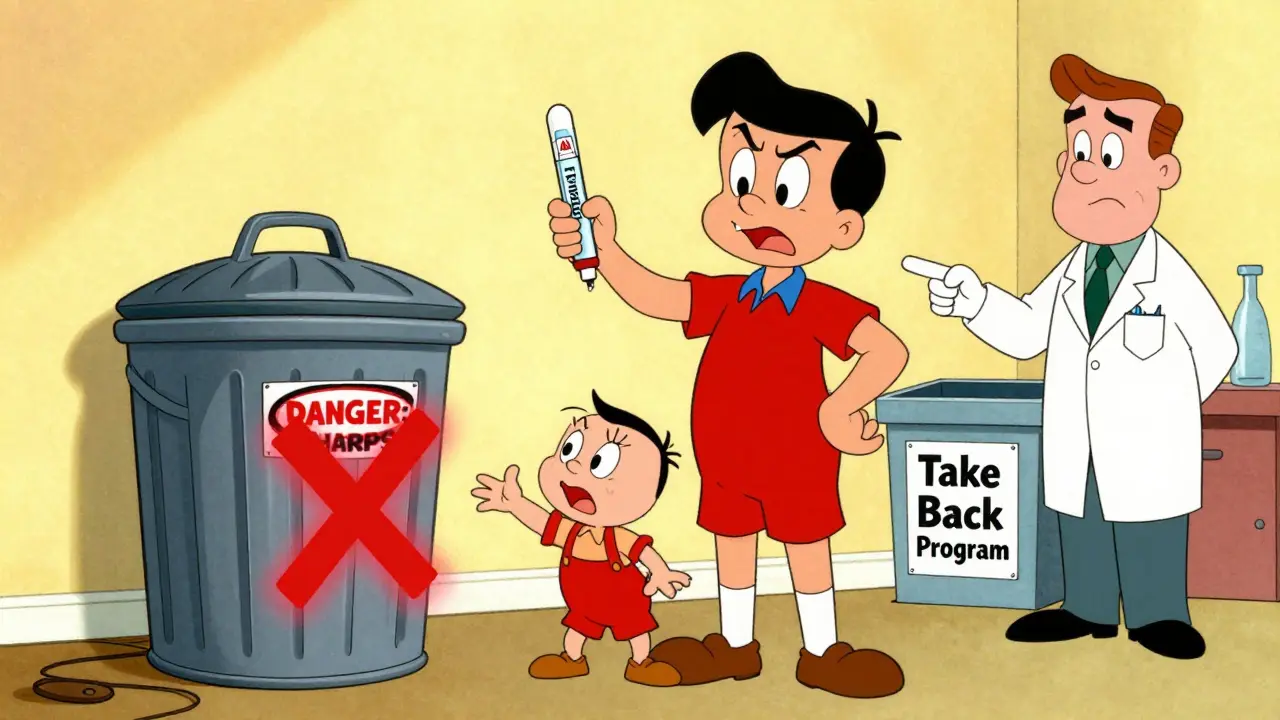
An EpiPen isn’t just a pen-shaped device. It’s a medical sharp with a hidden needle that delivers life-saving epinephrine. Even if it’s empty or expired, that needle is still dangerous. The safest way to dispose of an expired or used EpiPen is to take it back to the place where you got it. Most allergists, clinics, and hospitals have sharps disposal bins. When you go in for your new prescription, just hand over the old one. Many providers will take it without question. If your doctor’s office doesn’t offer this, check with your local pharmacy. Not all do-but many chain pharmacies like CVS, Walgreens, or independent pharmacies with take-back programs will accept EpiPens. Use the DEA’s National Take Back Day locator to find the nearest authorized collection site. These sites are often police stations, fire departments, or hospitals. If you can’t get to a drop-off location right away, store it safely at home. Put the EpiPen in a rigid, puncture-proof container-a plastic laundry detergent bottle works. Tape the lid shut. Write clearly on the outside: “SHARPS,” “BIOHAZARD,” and “DO NOT RECYCLE.” Keep it out of reach of children and pets. Important: Never try to remove the needle. Don’t break it open. Don’t put it in recycling. EpiPens are classified as medical sharps by the FDA. The same rules apply whether it’s used, expired, or empty.What to Do with an Expired Inhaler
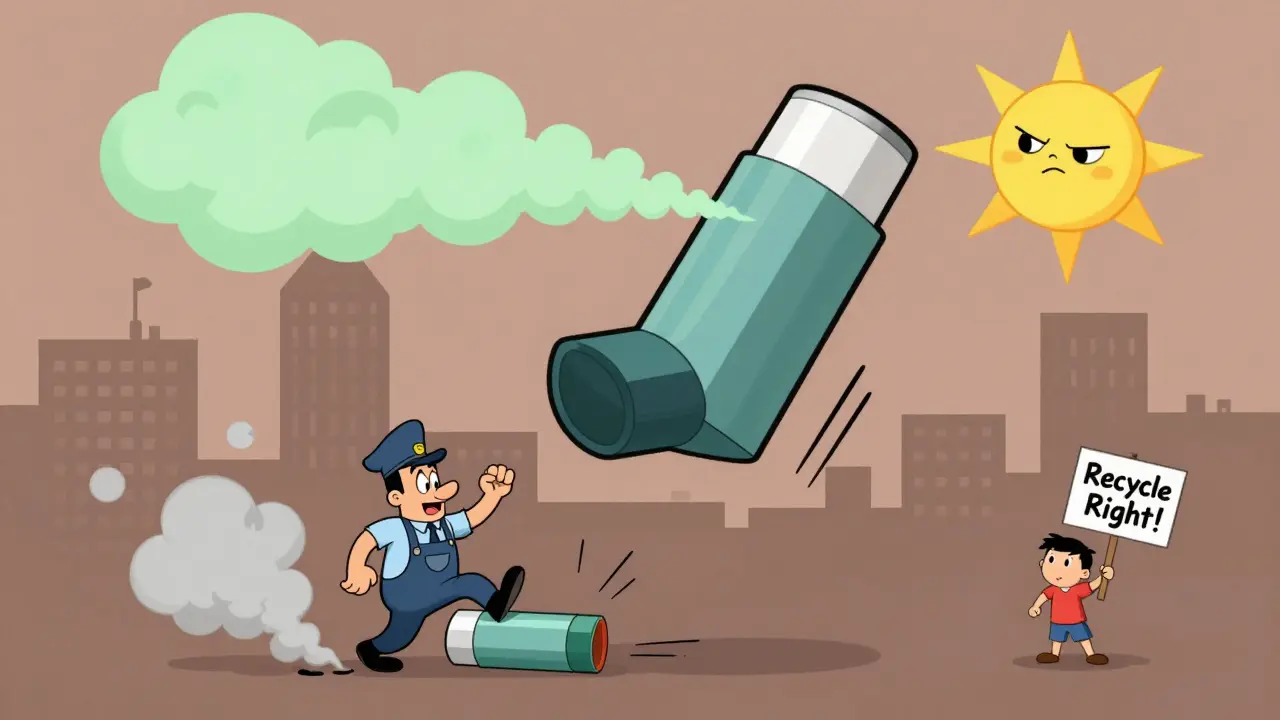
Inhalers are trickier than pills. They’re pressurized cans filled with medication and propellant-often hydrofluoroalkanes (HFAs), which are greenhouse gases. If you puncture one, throw it in the fire, or toss it in the recycling bin, you’re releasing those gases into the air. The first step? Read the label. Some inhalers say “Do not puncture or incinerate.” That’s your clue. Your best bet is to find a local drop-off program. A few cities, like New York City, have special Household Special Waste Drop-Off Sites that accept aerosols. Call your city’s waste management department or visit their website. Ask if they take inhalers. Some pharmacies participate in inhaler recycling programs. Walgreens and CVS have pilot programs in certain states, but availability is patchy. A 2022 survey found only 47% of Walgreens locations accepted inhalers. Don’t assume your local store does-call ahead. If no drop-off is available, the FDA recommends removing the metal canister from the plastic mouthpiece. Discard the plastic part in regular trash (if it’s clean). For the metal canister, check with your local recycling center. Some accept empty aerosol cans-only if they’re completely empty. To be sure, spray it out until no more mist comes out, then remove the cap. Never put a full or partially full inhaler in the trash. That’s a fire hazard and an environmental risk.
How to Dispose of Medicated Patches
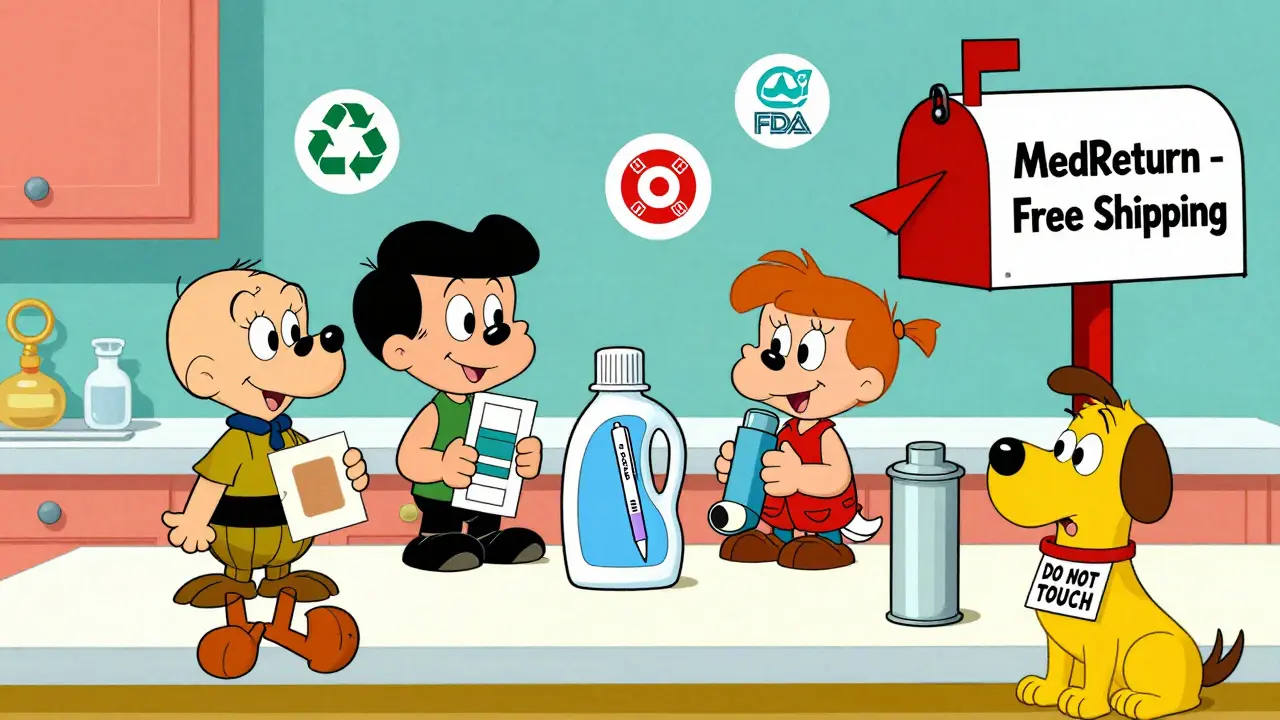
Medicated patches-like fentanyl, nicotine, or pain relief patches-are sticky, potent, and often overlooked. The medication stays on the adhesive side even after use. If a child or pet finds one in the trash, they can absorb a dangerous dose through their skin. The FDA has a specific list of medications that should be flushed immediately if unused. Fentanyl patches are on that list. Why? Because even a tiny amount can be fatal. If you have a fentanyl patch that’s expired or unused, flush it down the toilet right away. For other patches-like nicotine or lidocaine-the safest home method is to fold the patch in half with the sticky sides together. That traps the medication inside. Then, throw it in the trash. You can also tape it shut with duct tape for extra security. Some people suggest mixing patches with coffee grounds or cat litter before tossing them. That works for pills, but not patches. The adhesive makes it hard for the substance to mix properly. Folding and taping is more reliable. If you’re unsure whether your patch should be flushed, check the patient information leaflet or ask your pharmacist. When in doubt, flush fentanyl patches. For others, fold and trash.What About Take-Back Days?
The DEA runs National Prescription Drug Take Back Days twice a year-usually in April and October. In October 2022, they collected nearly a million pounds of unused medications across 5,800 locations. These events are free, anonymous, and available nationwide. You can drop off EpiPens, inhalers, patches, pills, and more. No questions asked. Even if you don’t have a prescription, they’ll take it. Find your nearest location using the DEA’s online tool. It’s updated regularly and includes police stations, pharmacies, and hospitals. Take Back Days are great, but they’re not year-round. Don’t wait six months to dispose of something dangerous. If you need to get rid of something now, use a permanent collection site instead.
What NOT to Do
Here’s a quick list of what never to do:- Don’t throw EpiPens in the regular trash without a puncture-proof container.
- Don’t flush all patches-only fentanyl and others on the FDA flush list.
- Don’t put inhalers in recycling bins unless they’re completely empty and your local facility accepts aerosols.
- Don’t try to dismantle an EpiPen or inhaler. The needles and canisters are dangerous.
- Don’t assume your pharmacy takes everything. Always call first.