Imagine you have a prescription for a medication that has kept your health stable for years. You take it to the pharmacy, but the pharmacist hands you a different bottle with a generic label and a lower price tag. This is generic substitution, defined as the practice where pharmacists or insurance companies replace a prescribed brand-name medication with a therapeutically equivalent generic version. For most people, this swap saves money without changing how they feel. But for others, especially those on sensitive medications, it can cause unexpected side effects or require dose adjustments. Understanding how insurance handles this process is crucial for protecting both your wallet and your health.
Why Insurance Companies Push for Generics
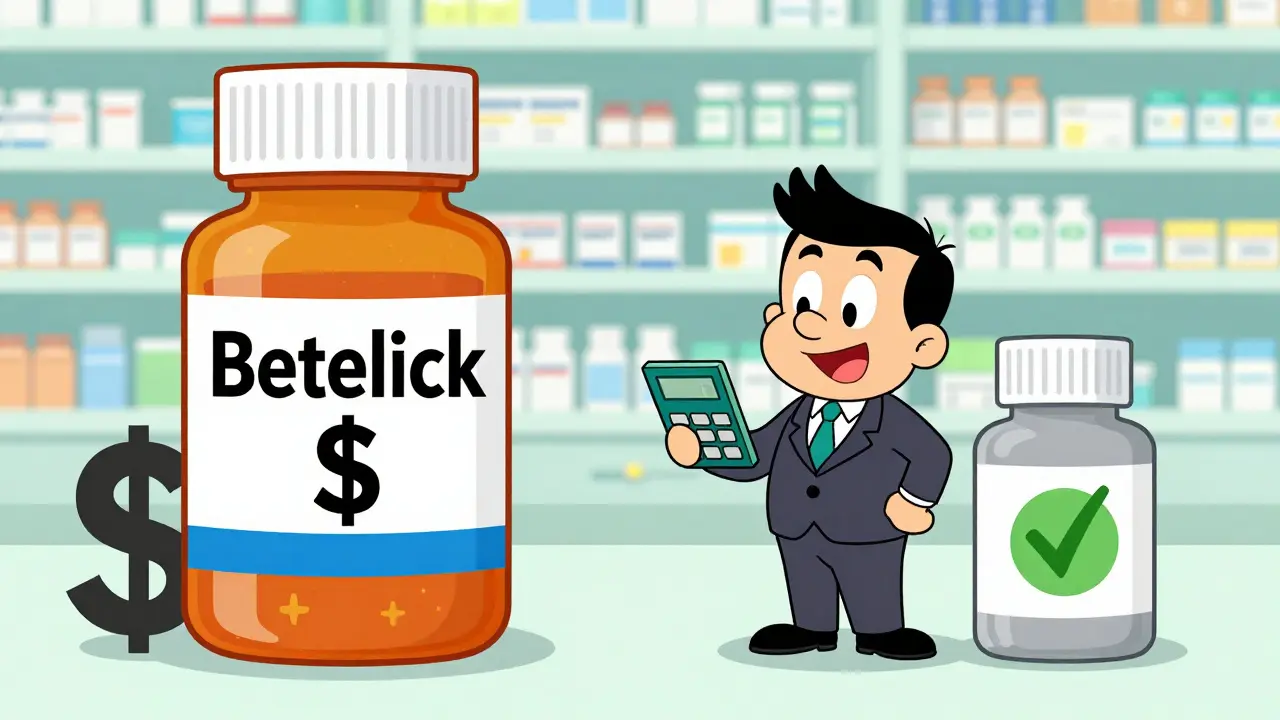
Insurance providers are not trying to be difficult; they are trying to manage costs. The math behind mandatory generic programs is simple but powerful. According to data from the Association for Accessible Medicines, generics account for about 90% of all prescriptions dispensed in the United States but represent only 18% of total spending. This disparity saves the healthcare system billions annually. For example, private insurers like Sun Life Financial reported that the average claim for a brand-name drug was $72, while the generic version cost just $27. That is a 62.5% cost difference per prescription.
When you sign up for an insurance plan, you often agree to terms that prioritize these cost savings. Many plans include a "mandatory generic" clause. This means if a generic version exists and is deemed therapeutically equivalent by the FDA, the insurer will only cover the cost of the generic. If you insist on the brand-name drug, you pay the full price difference out of pocket. This policy applies even if your doctor writes "no substitution" on the prescription, depending on your specific state laws and insurer rules.
The Science Behind the Swap: Bioequivalence
You might wonder if generic drugs are truly the same as brand-name ones. The Food and Drug Administration (FDA) requires strict testing to ensure safety. A generic drug must demonstrate bioequivalence to its brand-name counterpart. This means the generic must contain the same active ingredients, strength, dosage form, and route of administration. More importantly, it must deliver the drug into your bloodstream at a similar rate and extent.
Specifically, the FDA looks at two key metrics: Area Under the Curve (AUC) and Maximum Concentration (Cmax). The 90% confidence interval of the geometric mean test/reference ratios for these metrics must fall within 80-125%. In plain English, the generic works almost identically to the brand in most cases. However, there are exceptions. Drugs with a narrow therapeutic index-like warfarin, lithium, or some anti-seizure medications-have a very small window between being effective and being toxic. While the FDA maintains that approved generics are safe substitutes for these drugs too, experts like Dr. Jerry Avorn from Harvard Medical School suggest they may require more careful monitoring when switching manufacturers.
State Laws vs. Insurance Policies
Handling generic substitution isn't just about your insurance card; it's also about where you live. State regulations vary wildly, creating a complex patchwork of rules. A 2020 study in JAMA Internal Medicine found significant differences across the U.S.:
- Mandatory Substitution: In 19 states, pharmacists have a duty to substitute generics unless the prescriber explicitly forbids it.
- Patient Consent: In 7 states and Washington, D.C., pharmacists must get explicit consent from the patient before swapping.
- Notification: In 31 states and D.C., pharmacists must notify the patient about the substitution, regardless of packaging labels.
For instance, Texas Administrative Code § 309.3 sets clear rules: the generic must cost less, the patient must not refuse, and the doctor must not certify the brand as medically necessary. Pharmacists use the FDA's "Orange Book" to check therapeutic equivalence ratings, only substituting products rated 'A'. If you move states or travel, these rules might change, affecting what you receive at the counter.
| Factor | Brand-Name Drug | Generic Drug |
|---|---|---|
| Average Cost (Example) | $72 per claim | $27 per claim |
| Regulatory Hurdle | Full clinical trials required | Bioequivalence demonstration (ANDA) |
| Insurance Coverage | Often higher co-pay or prior auth needed | Typically lowest tier coverage |
| Substitution Rights | Protected if marked "Dispense as Written" | Default choice in most plans |
When You Need the Brand Name: How to Fight Back
Sometimes, a generic just doesn't work for you. Maybe you experience headaches, nausea, or changes in efficacy. Online forums reveal real-world struggles: one Reddit user described thyroid level fluctuations after being forced to switch from Synthroid to generic levothyroxine, requiring three dose adjustments in six months. If this happens to you, here is how to handle the insurance requirements to get back to the brand name.
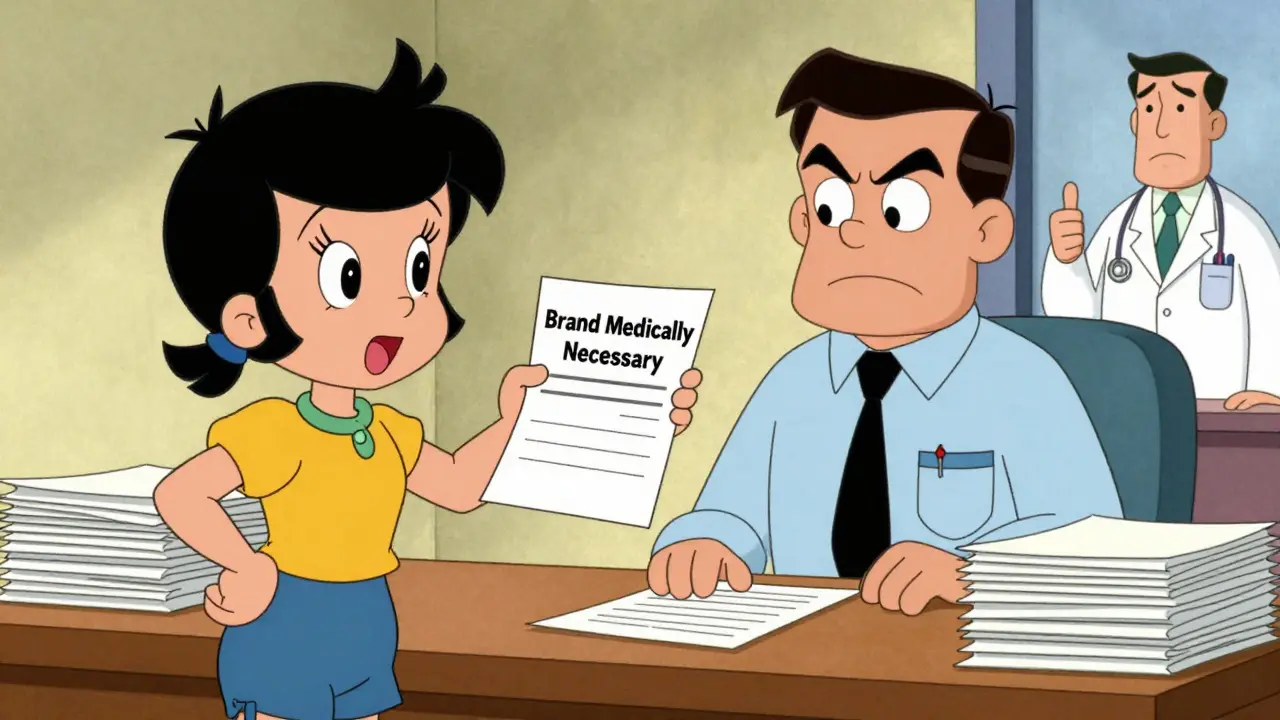
- Mark the Prescription Correctly: Ask your doctor to write "Brand Medically Necessary" or "Dispense as Written" (DAW) on the prescription. In many states, this legally prevents the pharmacist from substituting. However, check your state laws, as some insurers ignore this unless backed by a prior authorization.
- Request Prior Authorization (PA): This is the formal appeal process. Your doctor must submit medical documentation proving why the generic failed. Blue Cross Blue Shield of Michigan, for example, requires ICD-10 codes showing therapeutic failure. Their internal data shows a 78% approval rate for well-documented requests.
- Document Everything: Keep records of side effects or ineffective treatment with the generic. Insurers often reject PA requests if the reason is vague. Specific symptoms and lab results carry more weight.
Be prepared for delays. The American Pharmacists Association reports that the entire process-from documentation to final decision-can take 2 to 14 business days. During this time, you may need to bridge supply with short-term prescriptions.
The Complexity of Biologics and Biosimilars
Not all non-brand drugs are created equal. While small-molecule generics (like aspirin or atorvastatin) have straightforward substitution rules, biologics are different. Biologics are large, complex molecules made from living organisms. Their substitutes, called biosimilars, face higher regulatory hurdles. The Biologics Price Competition and Innovation Act (BPCIA) of 2009 requires biosimilars to show "high similarity" rather than exact sameness, often needing additional clinical studies.
As of early 2023, 38 states had specific laws governing biosimilar substitution. Most require prescribers to be notified within 5-7 business days, and many mandate extra patient consent. The CARES Act of 2020 reinforced this, requiring pharmacists to notify doctors when substituting biosimilars. If you are on a biologic for conditions like rheumatoid arthritis or Crohn's disease, do not assume automatic substitution is safe or legal without checking your specific state's notification laws.
Tips for Navigating the System Smoothly
Dealing with insurance and pharmacy rules can be frustrating. Here are practical steps to stay in control:
- Know Your Formulary: Check your insurance plan's drug list (formulary) before starting a new medication. See if the brand is on a higher tier that requires prior authorization upfront.
- Talk to Your Pharmacist: Pharmacists are experts in drug interactions and local laws. Ask them which manufacturer produces the generic they dispense. Some patients react to inactive ingredients (fillers/dyes) used by specific manufacturers, even if the active drug is the same.
- Appeal Rejections: If your prior authorization is denied, you have the right to appeal. Start with an internal appeal through your insurer, then move to an external review by an independent third party if needed.
- Consider Patient Assistance Programs: If you cannot afford the brand name and generics fail, pharmaceutical companies often offer coupons or assistance programs that can reduce costs significantly.
FAQ
Can my pharmacist substitute a generic if my doctor wrote "No Substitution"?
It depends on your state laws and insurance policy. In many states, a "Dispense as Written" (DAW) designation prevents substitution. However, some private insurers have policies that override this, reimbursing only for the lowest-priced equivalent unless a prior authorization is completed. Always check your specific plan documents.
Are generic drugs always cheaper than brand-name drugs?
Yes, typically. Generics save the U.S. healthcare system an estimated $373 billion annually because they do not bear the high costs of initial research and development. Insurance plans reflect this by placing generics in lower cost-sharing tiers, resulting in lower co-pays for patients.
What should I do if the generic causes side effects?
First, consult your doctor to rule out other causes. If the generic is suspected, ask your doctor to document "therapeutic failure" or adverse reactions. Then, request a prior authorization for the brand-name drug. Keep a log of symptoms to support your case during the appeal process.
Do I need consent for biosimilar substitution?
In many states, yes. As of 2023, 27 states mandate additional patient consent for biosimilar substitution beyond standard generic rules. Additionally, 32 states require prescribers to be notified within 5-7 business days. Check your state's specific regulations regarding biologics.
How long does prior authorization take?
The process typically takes 2 to 14 business days, according to surveys of pharmacy directors. It involves your doctor submitting clinical evidence, the insurer reviewing it, and potentially waiting for a decision. Plan ahead to avoid running out of medication during this period.