Traveling with liquid medications doesn’t have to be a nightmare. Millions of people fly every year with insulin, chemotherapy drugs, EpiPens, or prescription creams-and most of them make it through security without a hitch. But if you’ve ever been held up because a TSA officer didn’t know the rules, you know how stressful it can be. The good news? The TSA has clear, well-documented policies for medical liquids. The challenge? Not every officer knows them by heart. Here’s how to make sure you’re not the one stuck in line while others zip through.
What Counts as a Medical Liquid?
Not every bottle of liquid you pack qualifies for an exemption. The TSA allows exceptions only for medications that are medically necessary and prescribed to you. This includes:- Insulin and other injectable medications (vials, pens, pumps)
- Prescription liquid medications (antibiotics, pain relievers, antivirals)
- EpiPens and auto-injectors
- Prescription creams, gels, or ointments (for eczema, psoriasis, etc.)
- Oral syringes and liquid doses for children or those with swallowing issues
Things that don’t qualify: over-the-counter cough syrup, vitamins in liquid form, or non-prescription supplements-even if you take them daily. If it’s not on a prescription label with your name on it, it’s treated like any other liquid.
You Can Carry More Than 3.4 Ounces-Here’s How
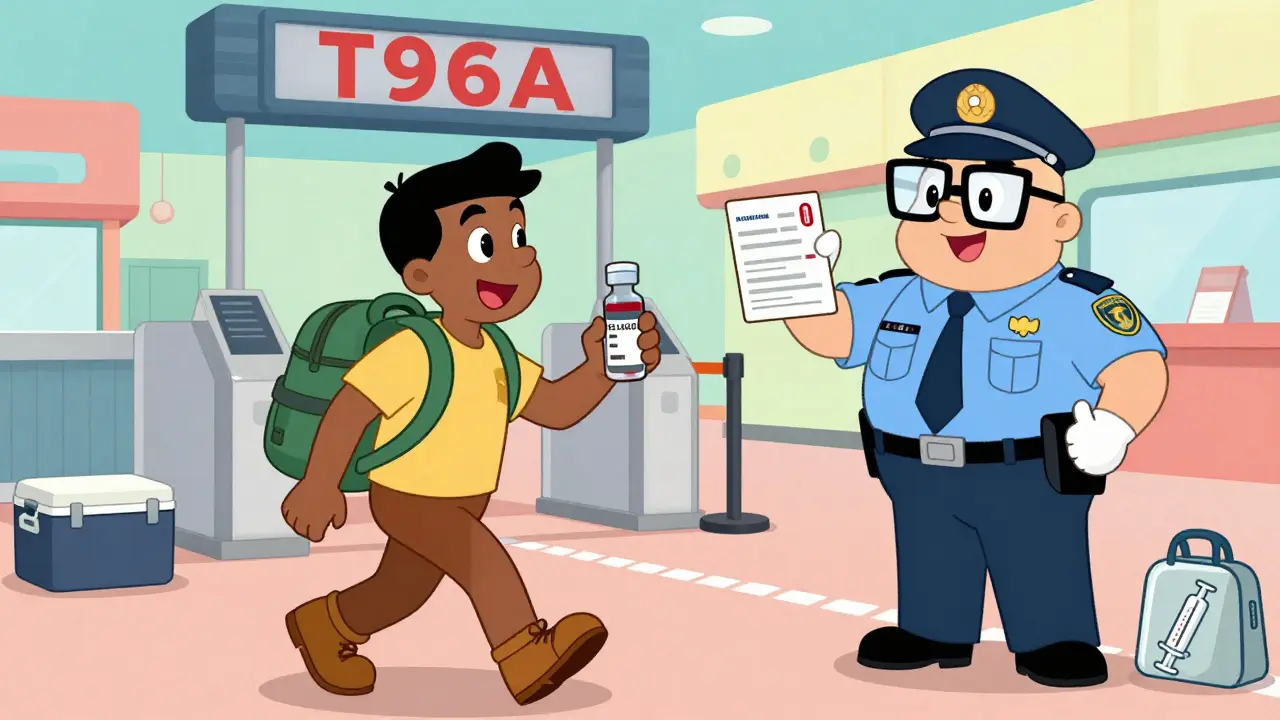
The famous 3-1-1 rule (3.4 oz per container, 1 quart-sized bag, 1 bag per person) applies to toiletries, not medicine. Prescription liquids are exempt from this limit. You can bring a 100 mL vial of insulin. You can bring a 500 mL bottle of liquid painkiller. You can bring three liters of chemotherapy solution if your doctor says you need it.But here’s the catch: you must declare them. Don’t just toss them into your carry-on and hope for the best. Walk up to the security checkpoint and tell the officer, “I have liquid medications.” Do it before you reach the X-ray machine. This simple step cuts your screening time in half.
Keep Medications in Original Containers
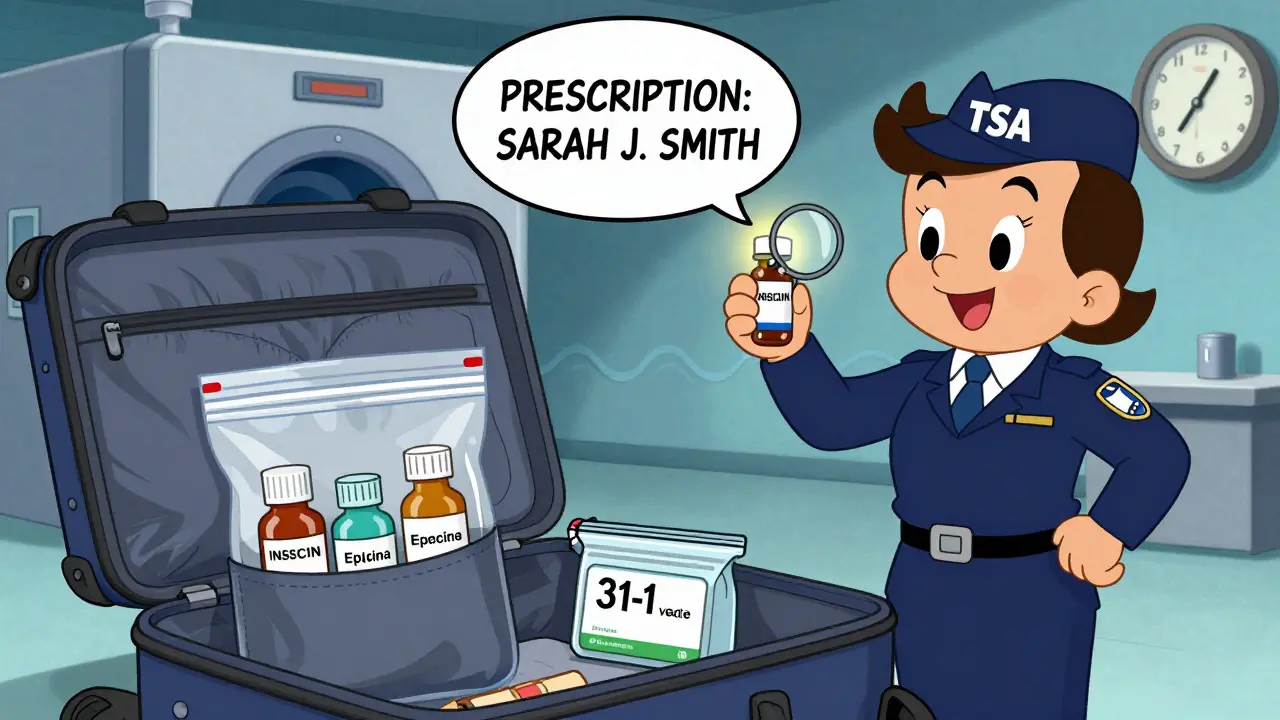
This isn’t optional. Over 60% of delays at security in 2024 happened because travelers transferred pills or liquids into unlabeled containers. TSA officers need to see the prescription label: your name, the drug name, the pharmacy, and the prescribing doctor. A pill organizer with “insulin” written on it? That’s not enough. A vial with a pharmacy sticker that says “Sarah J. Smith, Insulin Glargine, 100 units/mL, Rx#12345”? That’s perfect.If your meds come in blister packs or original bottles, leave them that way. If you’re worried about spillage, pack them in a resealable plastic bag-but don’t remove the labels. The American Pharmacists Association says this single step reduces delays by 55%.
Bring a Medication List
Even with labeled containers, officers might not recognize every drug. A printed or digital list makes things easier. Include:- Drug name (generic and brand)
- Dosage and frequency
- Prescribing doctor’s name and phone number
- Prescription number
- Reason for use (e.g., “Type 1 diabetes,” “chemotherapy support”)
Keep this list in your carry-on, not your checked bag. You might not need it-but if you do, having it ready saves minutes. The American Medical Association recommends this practice, and travelers who bring it report 92% faster screening, according to Johns Hopkins research.
Ice Packs and Coolers: What’s Allowed?
If you need to keep your meds cold, you can bring ice packs. But there are rules:- Frozen ice packs are fine-as long as they’re solid when you get to the checkpoint.
- If they’ve started melting, they’re considered liquid. That means they’ll be screened separately.
- Coolers must be 8x6x2 inches or smaller (per Juvenile Diabetes Research Foundation guidelines).
- You must declare them. Say, “I have a cooler with frozen ice packs for insulin.”
Don’t try to sneak a half-melted pack through. Officers will spot it. And if you’re carrying multiple vials, a small insulated bag with a frozen gel pack is better than a bulky cooler.
What If You’re Asked to Open Your Bottle?
TSA officers have the right to inspect any item. If they ask you to open a vial or pour a sample, you’re not required to do it-but you can refuse. Instead, ask for a visual inspection. You can say: “I’d prefer a visual inspection instead of X-ray or opening the container.”Most officers will honor this. They’ll hold the bottle up to the light, check the label, and move on. If they push back, ask to speak to a supervisor. The TSA’s own 2025 compliance report says 98% of officers recognize the right to request visual inspection for medications.
Controlled Substances and Medical Cannabis
If you’re carrying a controlled substance-like oxycodone, Adderall, or benzodiazepines-you’ll face more questions. That’s normal. Carry your original prescription bottle and the list we mentioned earlier. Some states allow medical cannabis, but it’s still illegal under federal law. TSA officers are not trained to enforce state marijuana laws, but they can refer you to law enforcement if they find it. If you’re flying with cannabis, even in a legal state, you’re taking a risk. The TSA doesn’t search for it, but if they find it, they’ll report it.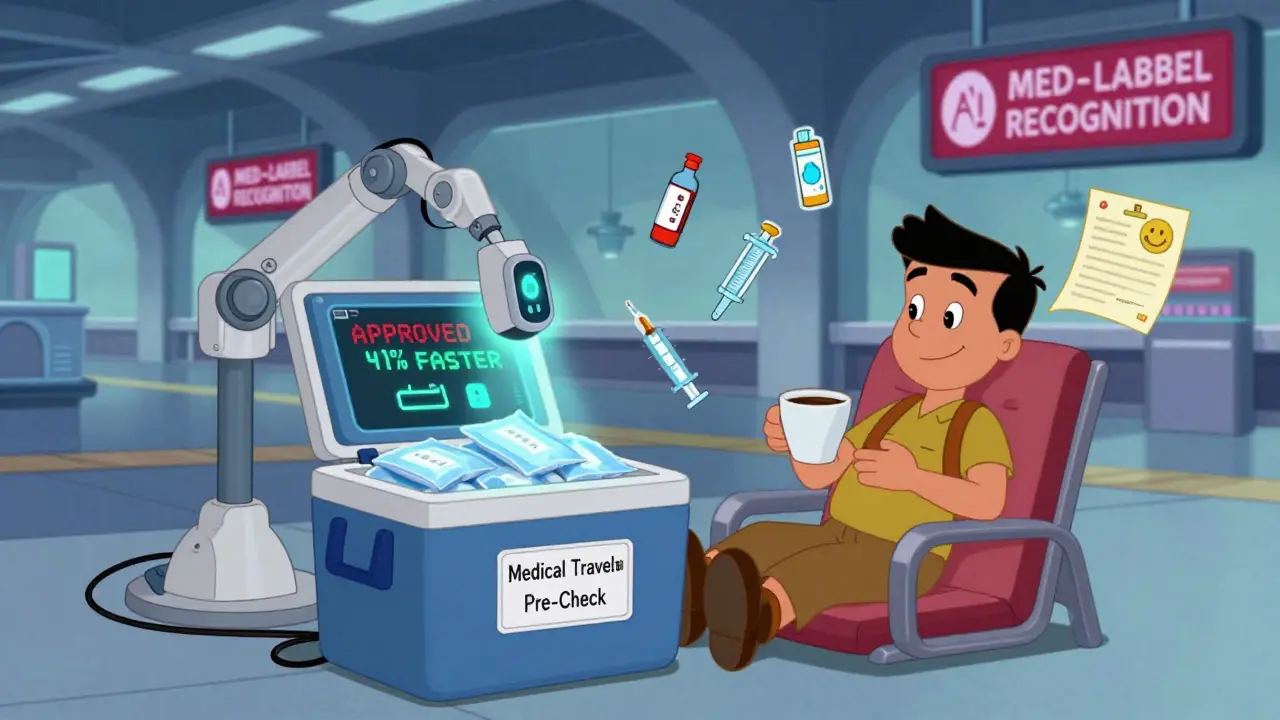
How to Pack for Maximum Efficiency
Here’s the fastest way to get through security:- Pack all medications in one clear, resealable bag.
- Put that bag in an outer pocket of your carry-on-never buried under clothes.
- Keep your medication list nearby, printed or on your phone.
- Separate it from your 3-1-1 liquids bag. Don’t mix them.
- Have your ID and boarding pass ready.
According to TSA’s internal data, travelers who follow this method cut screening time from nearly 5 minutes to under 2 minutes. That’s the difference between catching your flight and missing it.
What Happens If You’re Delayed?
Sometimes, you’ll get stuck. Maybe the officer is new. Maybe they’ve never seen your medication before. Maybe they’re just having a bad day. If you’re delayed:- Stay calm. Raise your voice or argue won’t help.
- Ask to speak to a supervisor. They’ve been trained on these rules.
- Use your medication list. Show them the prescription.
- If you’re on insulin or another time-sensitive med, say so. “I need this within the next hour or I’ll be hospitalized.” That often gets priority.
According to a 2025 survey by Healthline Travel, 89% of travelers who kept meds in original containers had no issues. Only 43% of those who used unlabeled containers got through without delay.
What’s Changing in 2025 and Beyond?
The TSA is making changes to reduce delays. By September 2025, they’ll launch a pilot program called Medical Traveler Pre-Check. If you fly often with liquid meds, you can sign up for a voluntary registry. Registered travelers will get a special lane with faster screening.By late 2026, 50 major airports will start using AI tools to recognize medication labels automatically. Early tests in Dallas showed a 41% drop in screening errors. That means fewer people getting pulled aside for the same reason.
Right now, about 2.9 million liquid medication declarations happen at U.S. airports every month. That number is growing fast-partly because more people are using insulin, injectable biologics, and other advanced treatments. The system is adapting, but you still need to do your part.
Final Tips for a Smooth Experience
- Don’t wait until the day before your flight to organize your meds.
- Call your airline ahead of time-they can alert security if needed.
- Print extra copies of your medication list. Give one to a travel companion.
- If you’re flying internationally, check the rules of your destination country. Some have stricter limits.
- For children or elderly travelers, bring a note from the doctor explaining the need for the medication.
The goal isn’t to outsmart the system. It’s to work with it. The rules are clear. The tools are simple. And if you follow them, you’ll spend less time waiting and more time getting where you need to go.
Can I bring liquid medication in my checked luggage?
Yes, you can. But it’s not recommended. Checked bags can get lost, delayed, or exposed to extreme temperatures. If your medication is critical-like insulin or seizure meds-keep it in your carry-on. TSA allows all medically necessary liquids in carry-ons, no matter the size, as long as they’re declared.
Do I need a doctor’s note to fly with liquid meds?
No, the TSA doesn’t require a doctor’s note. But having one can help if an officer questions your medication. A note that says, “Patient requires daily insulin injections,” adds credibility. It’s not mandatory, but it reduces friction.
Can I bring syringes or needles on a plane?
Yes. Needles and syringes for insulin or other injections are allowed in carry-ons. Keep them in their original packaging or a sharps container. Declare them along with your medication. TSA allows them as long as they’re for personal medical use.
Are there limits on how many pills I can bring?
No. There’s no limit on the number of pills you can carry, whether they’re prescription or over-the-counter. TSA doesn’t count pills. Just make sure they’re clearly labeled. For controlled substances, keep them in original bottles to avoid delays.
What if I’m flying outside the U.S.?
Rules vary by country. In the EU, Canada, and Australia, you can usually bring prescription liquids with a doctor’s note or prescription. Some countries require prior approval. Always check the destination country’s aviation authority website before you fly. Don’t assume their rules match the TSA’s.