24 Mar 2026 |
Health
|
by
Brian Halstead
Medication-Induced Arrhythmia Risk Calculator
This tool assesses your risk of medication-induced heart rhythm problems based on clinical factors. It is not a medical diagnosis.
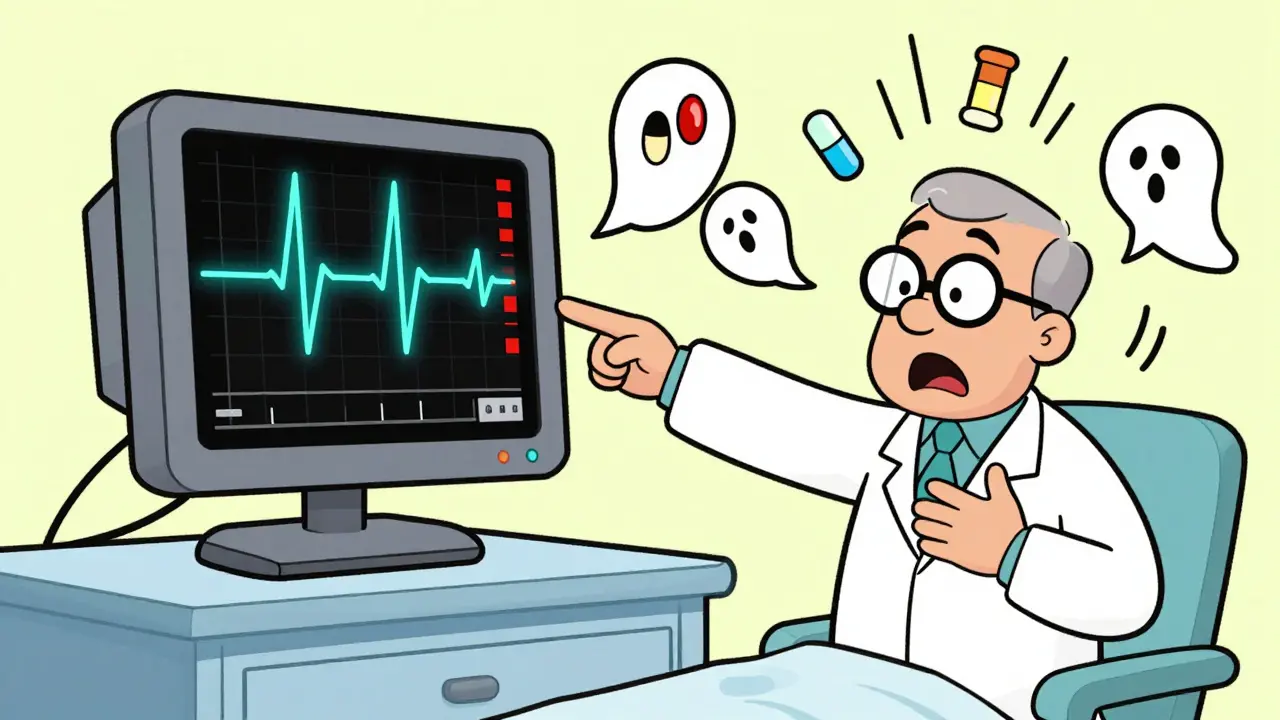
Many people don’t realize that the pills they take every day-whether for high blood pressure, depression, or an infection-can sometimes mess with their heart rhythm. It’s not rare. Over 400 common medications have been linked to abnormal heartbeats, and in some cases, those rhythms can be deadly. This isn’t just a theoretical risk. In the U.S., around 100,000 to 150,000 people end up in the hospital each year because of heart rhythm problems caused by their meds. The good news? Most of these cases can be caught early and managed without long-term damage-if you know what to look for.
How Medications Throw Your Heart Off Balance
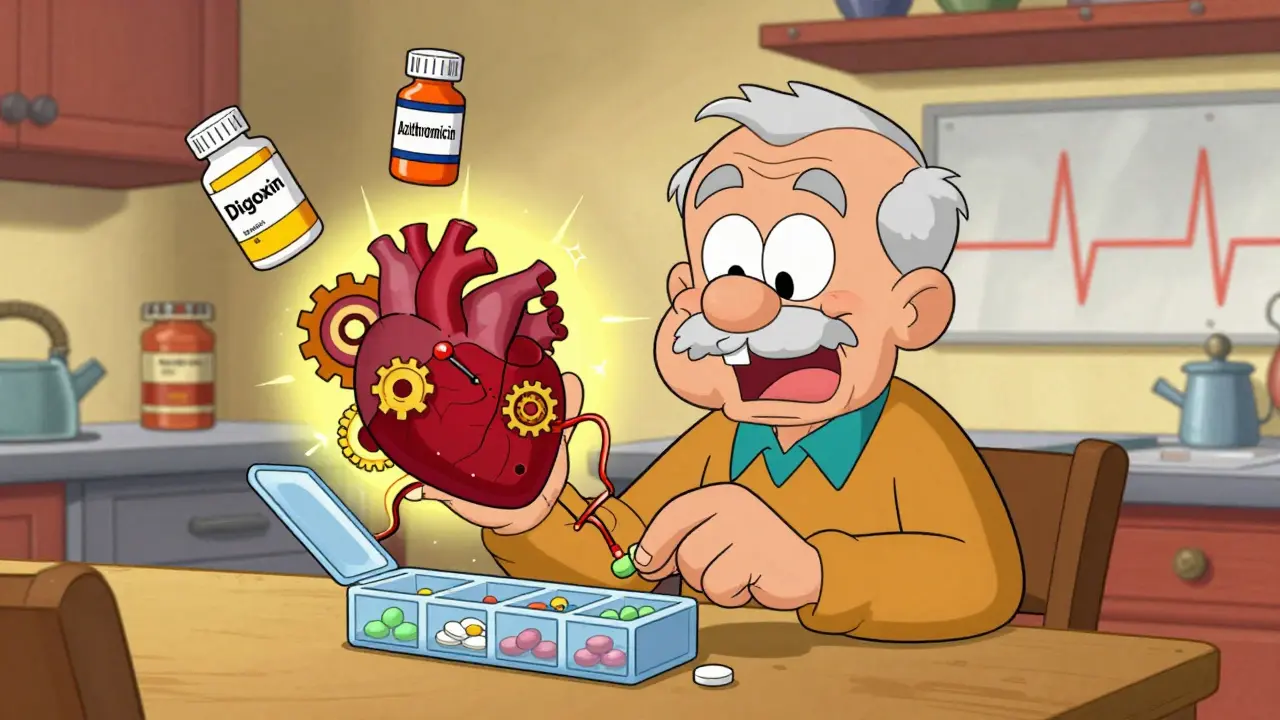
Your heart beats because of tiny electrical signals moving through muscle cells. These signals rely on a precise balance of minerals like potassium, magnesium, and calcium. Many drugs interfere with this system. Some block ion channels that control how electricity flows. Others change your body’s electrolyte levels. And some even trigger inflammation that damages heart tissue over time. One of the most dangerous effects is QT prolongation. This is when the heart takes longer than normal to recharge between beats. It doesn’t sound serious, but it can lead to a life-threatening rhythm called torsades de pointes. Drugs like certain antibiotics (azithromycin, moxifloxacin), antifungals, antipsychotics, and even some allergy meds can cause this. The risk jumps sharply if you’re taking more than one of these drugs at once. In fact, combining two QT-prolonging medications can triple or even quadruple your risk. Some medications cause arrhythmias in unexpected ways. For example, digoxin-used for heart failure and atrial fibrillation-can cause dangerous rhythms if your kidney function dips or if your magnesium levels fall. Beta-blockers like metoprolol, meant to slow your heart, can make it beat too slowly, leading to dizziness or fainting. Even drugs meant to treat arrhythmias, like flecainide or amiodarone, can sometimes make them worse.Warning Signs You Can’t Ignore
Most people with drug-induced arrhythmias notice something off before things get serious. The most common signs are:- Palpitations-feeling your heart race, flutter, or skip
- Dizziness or lightheadedness, especially when standing up
- Unusual fatigue, even after resting
- Chest discomfort that doesn’t feel like typical heartburn
- Fainting or near-fainting spells
Who’s Most at Risk?
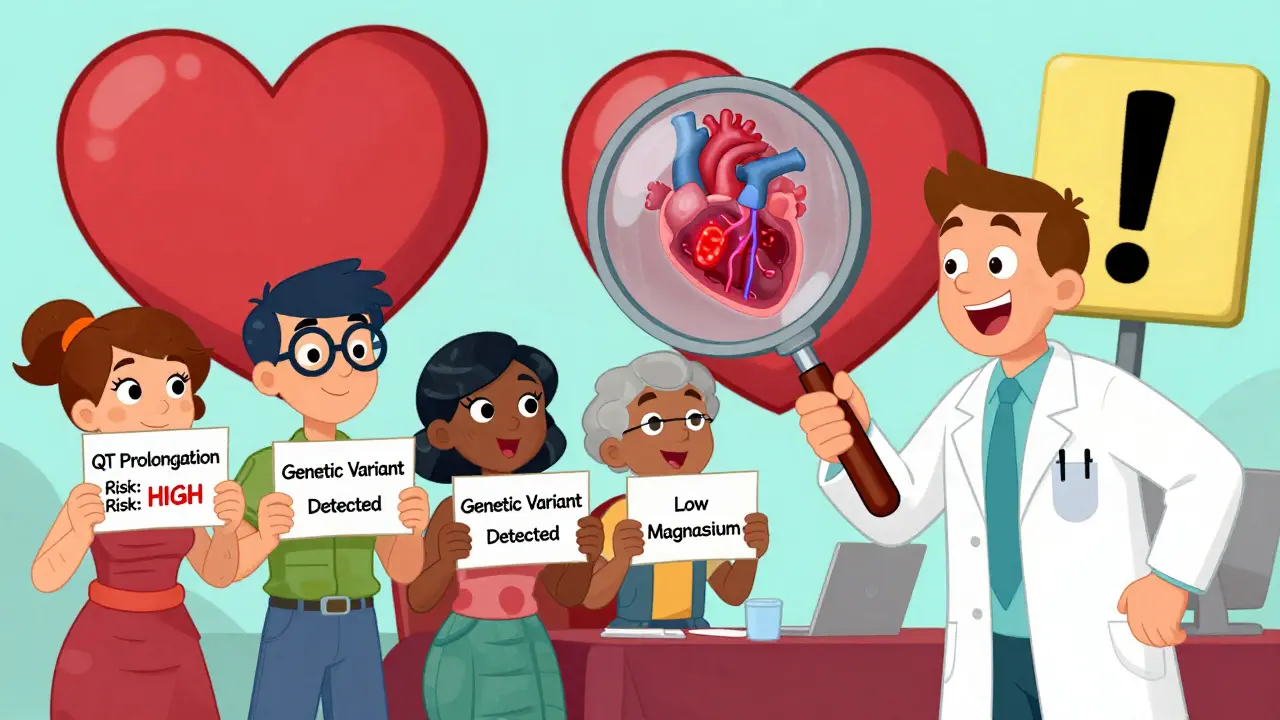
It’s not just about the drug. Your body matters too. About 15% of people of African ancestry carry a genetic variant called S1103Y. Around 12% of East Asian individuals have R1193Q. Both make the heart far more sensitive to QT-prolonging drugs. Right now, most doctors don’t test for these-but that’s changing. Genetic screening is becoming part of clinical practice. In 2022, Vanderbilt researchers showed that stem cells with these variants went into dangerous rhythms when exposed to common meds like ciprofloxacin. The FDA has added black box warnings-the strongest possible-to 25 drugs since 2010, and 8 more got them in 2022 alone. Experts predict that within five years, genetic testing before prescribing high-risk drugs could cut severe arrhythmia cases by 30-40%. Other big risk factors:- Age 65+
- Chronic kidney disease
- Low potassium (below 4.0 mEq/L) or magnesium (below 2.0 mg/dL)
- Using three or more drugs that affect heart rhythm
- Excessive alcohol use
What Doctors Do to Prevent and Manage It
If you’re starting a high-risk medication, your doctor should check your ECG before you begin. That’s the baseline. Then, they’ll repeat it within 72 hours after you start. This catches early changes in the QT interval. Blood tests for potassium and magnesium are also routine, especially if you’re on diuretics or have heart failure. For most people, the problem is fixed by adjusting the dose or switching meds. The Cleveland Clinic reports that 75-85% of cases resolve with medication changes alone. For example, if metoprolol causes your heart to drop too low, reducing the dose helps in 60-70% of cases. If you’re on an antibiotic like azithromycin and start feeling dizzy, stopping it often reverses the rhythm within days. In rare cases, more aggressive steps are needed. About 5-10% of patients with persistent arrhythmias need a catheter ablation-a procedure that burns a small area of heart tissue causing the faulty signal. Less than 2% require surgery. Pacemakers are sometimes implanted if a beta-blocker is essential for heart control but causes dangerous bradycardia.What You Can Do Right Now
You don’t have to wait for your doctor to act. Here’s what you can do today:- Know your meds. Keep a list of everything you take-including supplements and OTC drugs. Many people don’t realize antihistamines like diphenhydramine (Benadryl) or cold medicines can affect heart rhythm.
- Check your symptoms. If you notice new palpitations, dizziness, or fatigue after starting a new drug, write it down. Note the timing. Did it start within a week? That’s a red flag.
- Get blood tests. Ask for potassium and magnesium levels if you’re on diuretics, have heart disease, or are over 65. Low levels are easy to fix with supplements or diet changes.
- Limit alcohol and caffeine. While caffeine alone rarely causes serious arrhythmias, it can tip the balance when combined with other triggers. Stick to one or two cups of coffee a day.
- Don’t skip follow-ups. If you’re on amiodarone, digoxin, or a new antibiotic, don’t assume everything’s fine just because you feel okay. Follow-up ECGs are not optional.
When to Call for Help
If you experience any of these, seek medical attention immediately:- Sudden fainting or loss of consciousness
- Chest pain that lasts more than a few minutes
- Heart rate below 40 or above 140 beats per minute
- Shortness of breath with dizziness