

Living with Generalized Anxiety Disorder (GAD) feels like your brain is stuck on high alert. You worry about everything-bills, health, family, work-even when there’s no immediate threat. It’s exhausting, it’s isolating, and frankly, it ruins your quality of life. If you’ve been diagnosed or suspect you have GAD, you’re probably staring down a confusing menu of treatments: medications like SSRIs and benzodiazepines, or therapy like Cognitive Behavioral Therapy (CBT). Which one actually works? Which one is safe for the long haul? And why do doctors seem to disagree?
The short answer is that there isn’t one single "best" cure. There is, however, a clear hierarchy of effectiveness and safety backed by decades of clinical data. While quick fixes exist, they often come with heavy costs. The goal here isn’t just to stop the anxiety today; it’s to help you live without it tomorrow.
Understanding the Core Problem: What Is GAD?
Before picking a treatment, you need to understand what you’re treating. According to the Diagnostic and Statistical Manual of Mental Disorders, Fifth Edition (DSM-5), GAD isn’t just "being stressed." It is defined as excessive anxiety and worry occurring more days than not for at least six months. This worry is difficult to control and causes significant distress or impairment in social, occupational, or other important areas of functioning.
To meet the diagnostic criteria, this worry must be associated with three or more physical or cognitive symptoms:
- Restlessness or feeling keyed up or on edge
- Being easily fatigued
- Difficulty concentrating or mind going blank
- Irritability
- Muscle tension
- Sleep disturbance (difficulty falling or staying asleep, or restless sleep)
Approximately 6.8 million American adults experience GAD annually. Women are twice as likely as men to develop the disorder. Understanding these specifics matters because GAD is a chronic condition, not a temporary phase. Treatments that only mask symptoms without addressing the underlying neural patterns often fail over time.
SSRIs: The First-Line Standard
When most psychiatrists start treating GAD, they reach for Selective Serotonin Reuptake Inhibitors (SSRIs). These medications work by inhibiting the reuptake of serotonin, a neurotransmitter that regulates mood, in the brain. By keeping more serotonin available in the synaptic cleft, SSRIs help stabilize emotional responses over time.
Common SSRIs prescribed for GAD include escitalopram (Lexapro), sertraline (Zoloft), and paroxetine (Paxil). Escitalopram, for instance, has demonstrated response rates of 50-60% in large-scale trials like the STAR*D study.
The Reality Check: SSRIs are not magic pills. They take time. You typically won’t feel better until 2 to 6 weeks after starting the medication. During this initial window, side effects can be prominent. Nausea affects about 62% of patients initially, and sexual dysfunction occurs in roughly 47% of users. However, unlike other options, SSRIs do not cause dependence. They are considered safe for long-term use, which is crucial for a chronic condition like GAD.
If you choose an SSRI, patience is key. Doctors often start at half-standard doses (e.g., sertraline 25mg) and titrate up over four weeks to minimize side effects. If you drop out too early, you miss the therapeutic benefit entirely.
Benzodiazepines: The Quick Fix with High Risks
Benzodiazepines, such as alprazolam (Xanax), lorazepam (Ativan), and diazepam (Valium), act differently. They enhance the effect of gamma-aminobutyric acid (GABA), a neurotransmitter that calms nerve activity in the brain. The result is rapid anxiolysis-you might feel relief within 30 to 60 minutes.
This speed makes them incredibly tempting. If you’re having a panic attack or severe insomnia, a benzo works immediately. Studies show 70-80% of patients report immediate relief. But this comes with a steep price tag.
The Danger Zone: Your body adapts to benzodiazepines quickly. Tolerance develops in 40-50% of patients within six months, meaning you need higher doses to get the same effect. More critically, dependence is common. Withdrawal from benzodiazepines can be severe, sometimes worse than the original anxiety, and includes risks of seizures. Long-term use is linked to cognitive impairment, increased fall risk in older adults, and a higher mortality rate.
Current guidelines from the American Psychiatric Association (2020) and the CDC strongly advise against using benzodiazepines as first-line monotherapy for GAD. They should be reserved for short-term crisis management (2-4 weeks) or as an adjunct while waiting for an SSRI to kick in. Never stop taking them abruptly; tapering requires careful medical supervision, often lasting 8-16 weeks.
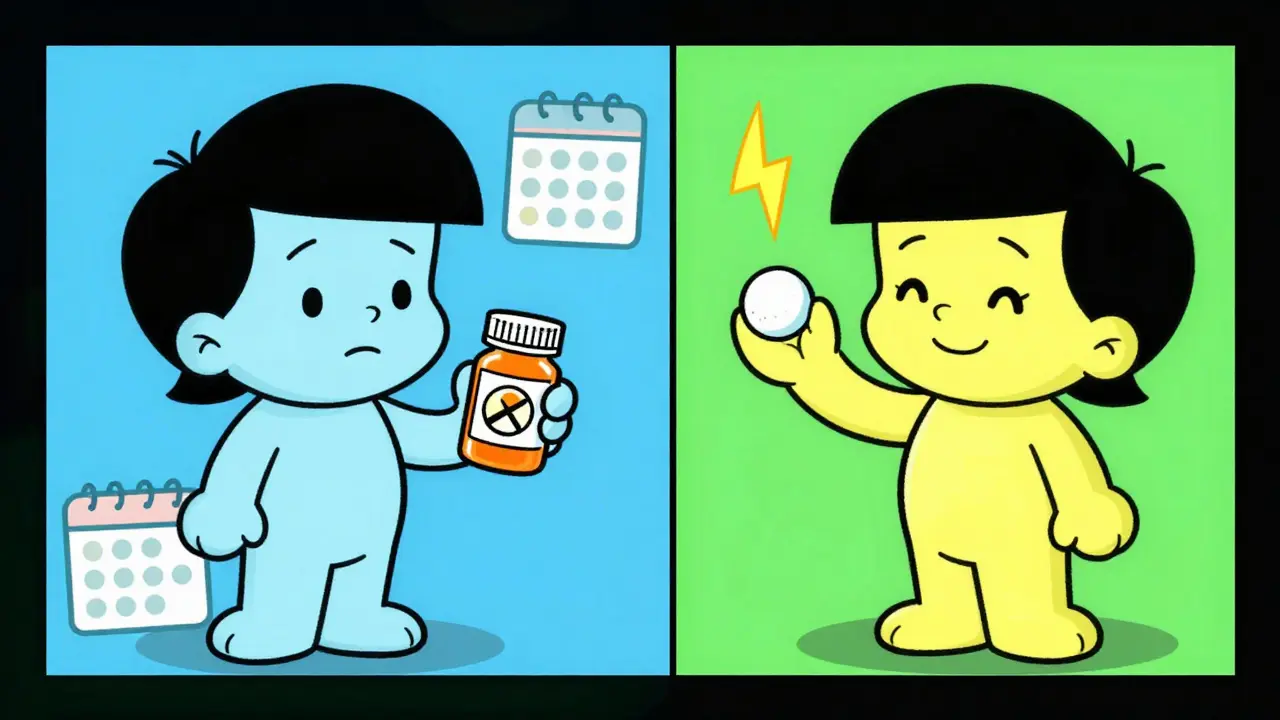
Cognitive Behavioral Therapy: Teaching Skills, Not Just Suppressing Symptoms
Cognitive Behavioral Therapy (CBT) takes a completely different approach. Instead of changing your brain chemistry with drugs, CBT changes how your brain processes thoughts. Developed from Aaron Beck’s cognitive therapy in the 1960s, modern CBT for GAD involves identifying catastrophic thinking patterns, challenging their validity, and gradually exposing yourself to worries rather than avoiding them.
A standard protocol involves 12-20 weekly sessions of 50 minutes each. You’ll do homework between sessions-tracking worries, practicing relaxation techniques, and behavioral experiments. Compliance matters: studies show that patients who complete 70% of their homework have 2.3 times higher odds of remission.
Why CBT Wins Long-Term: Medications treat symptoms; CBT teaches skills. When you stop taking an SSRI, the anxiety often returns (relapse rates around 45%). When you finish CBT, you keep the tools. Meta-analyses show CBT has significantly better sustained effects at 12-month follow-ups compared to medication alone, with relapse rates dropping to about 25%. It addresses the root cause: the habit of worrying.
Comparing Effectiveness: The Data Speaks
So, which one is better? Let’s look at the numbers from recent systematic reviews and network meta-analyses.
| Treatment | Time to Relief | Long-Term Efficacy | Relapse Risk (After Stopping) | Major Risks |
|---|---|---|---|---|
| SSRIs | 2-6 Weeks | High (if continued) | ~45% | Nausea, Sexual Dysfunction, Weight Gain |
| Benzodiazepines | 30-60 Minutes | Low (tolerance develops) | Very High (withdrawal) | Dependence, Cognitive Impairment, Addiction |
| CBT | 4-12 Weeks | Very High (skills retained) | ~25% | Initial discomfort during exposure exercises |
A 2024 network meta-analysis found that while benzodiazepines are more effective than placebo in the short term, they offer no advantage over SSRIs in the long run and carry far greater safety risks. CBT shows equivalent efficacy to medication at the end of treatment but outperforms both in preventing relapse a year later.

The Gold Standard: Combination Therapy
Here’s the secret that many patients don’t realize: you don’t always have to choose just one. For moderate to severe GAD, combining SSRIs and CBT often yields the best results.
The VA Whole Health Initiative found that 72% of GAD patients receiving combined treatment achieved remission, compared to only 48% with medication alone. The logic is simple: the SSRI lowers the baseline anxiety enough to allow you to engage effectively in CBT, while CBT provides the coping skills needed to eventually taper off the medication if desired.
This integrated approach addresses both the biological and psychological components of anxiety. It’s more intensive upfront, but it offers the highest chance of lasting freedom from GAD.
Practical Steps: How to Start
If you’re ready to tackle GAD, here is a realistic roadmap:
- Get a Proper Diagnosis: Ensure your symptoms meet DSM-5 criteria for GAD and aren’t caused by another medical condition (like thyroid issues).
- Consult a Psychiatrist: Discuss SSRIs. Ask about starting low and going slow to manage side effects. Avoid requesting benzodiazepines unless you have acute, short-term needs.
- Find a CBT Therapist: Look for providers certified by the Academy of Cognitive and Behavioral Therapies. If access is limited, consider digital therapeutics like FDA-cleared apps (e.g., Woebot, reSET) as supplements, though they rarely replace human therapy.
- Commit to the Process: Whether it’s taking pills daily or doing CBT homework, consistency is non-negotiable. Track your progress.
- Re-evaluate Every 3 Months: Are you improving? If not, adjust the dose, switch meds, or intensify therapy. Don’t stay on a treatment that isn’t working.
Can I take SSRIs and Benzodiazepines together?
Yes, but only under strict medical supervision and usually for a short period. Doctors may prescribe a benzodiazepine temporarily to help you cope while waiting for an SSRI to become effective (which takes 2-6 weeks). Combining them long-term increases the risk of sedation, confusion, and dependence. Never combine them with alcohol or opioids.
How long does CBT take to work for GAD?
Most people begin noticing improvements after 4 to 6 sessions, but full protocols typically last 12 to 20 weeks. The benefits continue to grow as you practice the skills. Unlike medication, where effects stop when you stop taking it, CBT skills remain with you, leading to lower relapse rates long-term.
Are there natural alternatives to medication for GAD?
While lifestyle changes like regular exercise, mindfulness meditation, and reducing caffeine can significantly reduce anxiety symptoms, they are generally not sufficient as standalone treatments for moderate to severe GAD. They work best as complementary strategies alongside CBT or medication. Always consult your doctor before stopping prescribed medication for natural remedies.
What if my insurance doesn't cover CBT?
This is a common barrier. Options include looking for therapists who offer sliding scale fees, utilizing university training clinics, or trying evidence-based digital mental health platforms. Some employers offer Employee Assistance Programs (EAPs) that provide free short-term counseling. Additionally, the 2022 Mental Health Access Improvement Act has expanded Medicare reimbursement for certain counselors, increasing access for some demographics.
Is it dangerous to stop taking SSRIs suddenly?
Yes. Abruptly stopping SSRIs can cause discontinuation syndrome, characterized by dizziness, nausea, electric-shock-like sensations ("brain zaps"), irritability, and rebound anxiety. Always taper off SSRIs gradually under the guidance of your prescribing physician to minimize these effects.





Categories