Every year, millions of unused or expired pills sit in medicine cabinets across the U.S. - and most people don’t know what to do with them. Flushing them down the toilet? Throwing them in the trash? Both are risky. The safest, cleanest way to get rid of old medications is through a drug take-back program. These programs exist in nearly every community, but many people still don’t know they’re there - or how to use them.
What Exactly Is a Drug Take-Back Program?
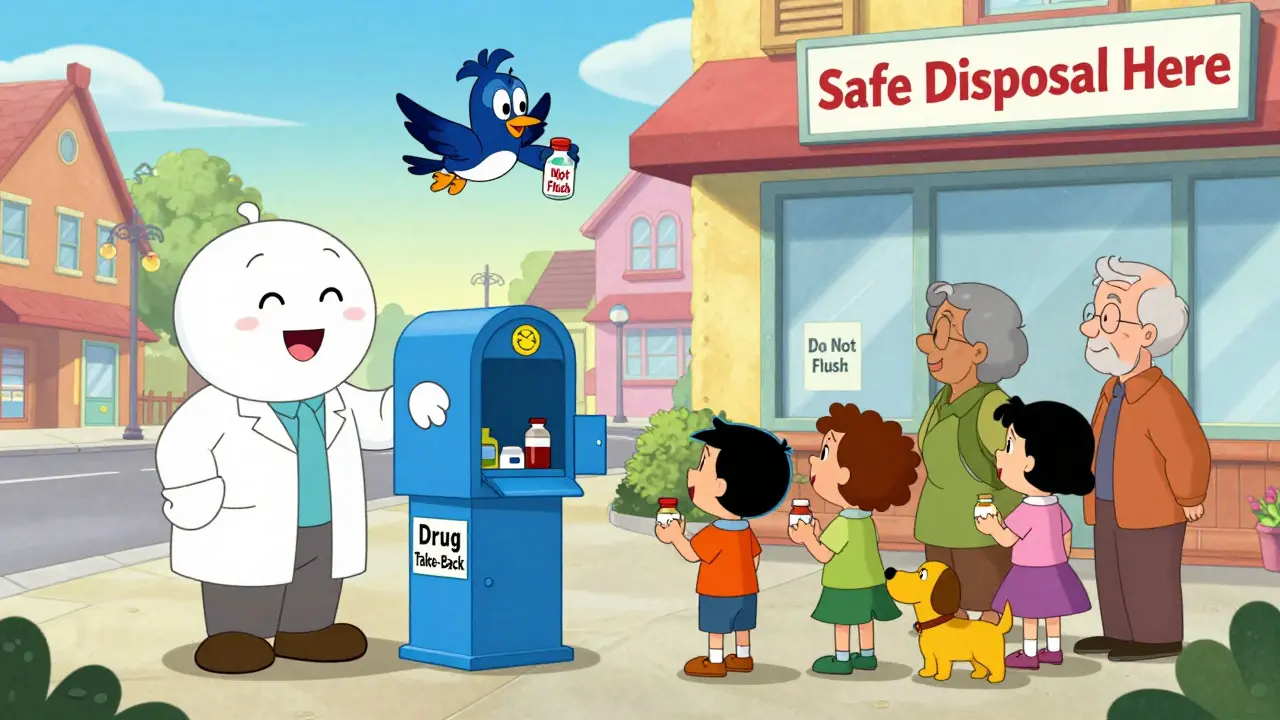
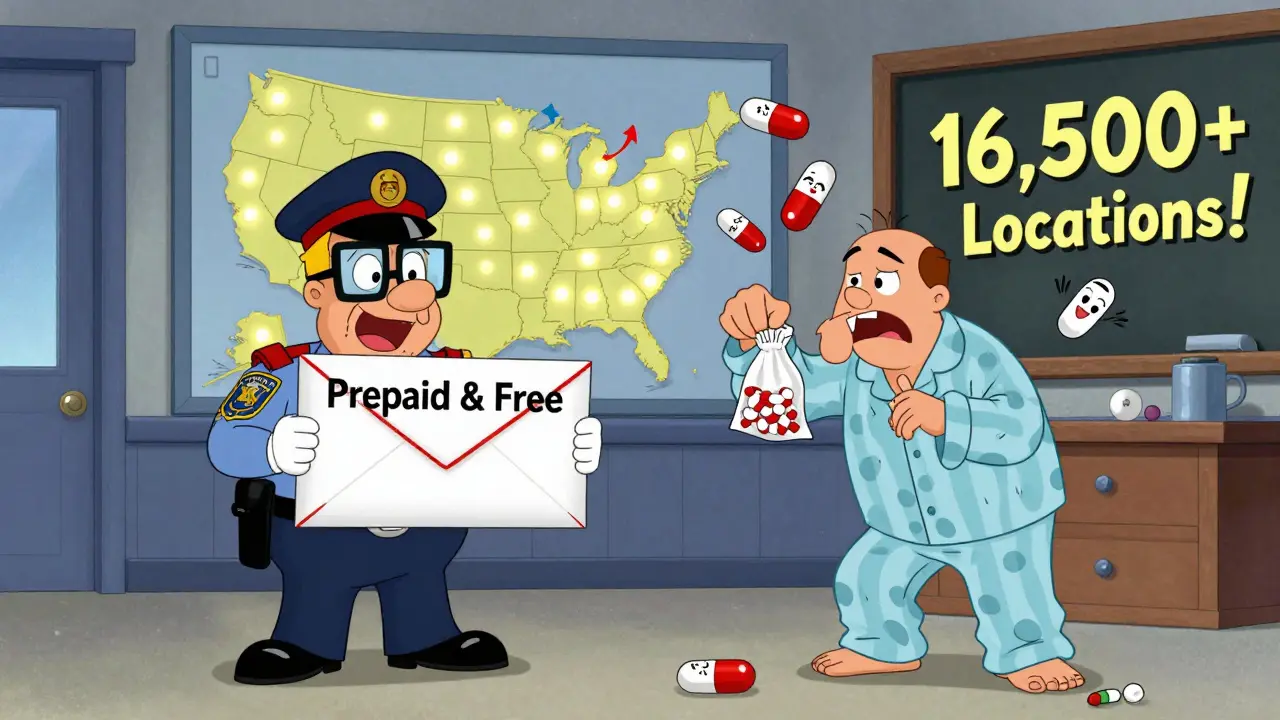
A drug take-back program is a government-approved system that lets you drop off unwanted, expired, or unused medications at secure locations. These programs are designed to keep pills out of the wrong hands, prevent accidental poisonings, and stop pharmaceuticals from polluting water supplies. They’re run by pharmacies, hospitals, police stations, and sometimes even community centers. The federal government set up the modern framework with the Secure and Responsible Drug Disposal Act of 2010. That law gave the DEA the power to create and regulate safe disposal options. Since then, the program has grown massively. By 2025, there were over 16,500 permanent drop-off locations across the country - more than double the number in 2020.How Do These Programs Actually Work?
There are three main ways to participate:- Permanent drop boxes - These are locked, secure containers usually found in pharmacies (like Walgreens or CVS), hospitals, or police stations. You can drop off meds anytime they’re open.
- Mail-back programs - You get a prepaid envelope from a pharmacy or health department. Put your meds inside, seal it, and mail it. No stamp needed.
- Biannual take-back events - The DEA runs National Prescription Drug Take Back Day twice a year, in April and October. Thousands of sites open up for one day only.
Permanent drop boxes are the most effective. They’re always available, so people are more likely to use them. Studies show communities with year-round drop boxes see 25% higher participation than those relying only on one-day events.
What Can You Drop Off?
You can bring almost any type of medication:- Prescription pills and liquids
- Over-the-counter drugs (like ibuprofen or allergy meds)
- Patches (like fentanyl or nicotine patches)
- Topical ointments and creams
- Vitamins and supplements
- Pet medications
You cannot drop off:
- Asthma inhalers or other aerosols
- Thermometers (especially mercury ones)
- Hydrogen peroxide
- Iodine-based medicines
- Alcohol or syringes
- Illicit drugs (like cocaine or heroin)
For inhalers and sharps, check with your local pharmacy - some have separate collection bins for those items.
How to Prepare Your Medications for Drop-Off
You don’t need to empty bottles or sort pills by type. Just follow these simple steps:- Keep medications in their original containers if possible.
- If the container is missing, put pills in a sealed plastic bag.
- Black out or remove your name and prescription number with a marker - but don’t throw away the bottle unless you’re sure you won’t need it later.
- Don’t mix different drugs in one bag unless you’re using a mail-back envelope.
Why remove personal info? So no one can trace the meds back to you. It’s not required, but it’s a smart privacy step.
Where to Find a Drop-Off Location Near You
The easiest way is to use the DEA’s official website. They have a searchable map of all 16,500+ authorized collection sites. Just enter your zip code, and it shows you nearby pharmacies, hospitals, or police stations with drop boxes. You can also call your local pharmacy. Most major chains - Walgreens, CVS, Rite Aid - have them. Some even offer drive-thru drop-off. Police departments often have them too, but if you’re uncomfortable around law enforcement, don’t worry - pharmacies are just as safe and more accessible. In rural areas, options are fewer. Only 63% of rural communities have a permanent drop box nearby, compared to 89% in cities. That’s why some places, like Broward County in Florida, send mobile units to schools, libraries, and churches. Ask your local health department if they run one.Why Mail-Back Isn’t Always the Best Option
Mail-back programs sound easy - and they are - but they’re not available everywhere. You usually have to pay for the envelope, or get it for free through a specific program. In 2023, only 63% of rural residents had access to mail-back, while 89% of urban residents did. They’re great if you’re homebound, live far from a drop box, or just prefer not to leave the house. But they’re slower. You have to wait for the envelope, fill it out, mail it, and then wait for it to be processed. Permanent drop boxes? You walk in, drop it, walk out. Done.What Happens to the Medications After You Drop Them Off?
Once collected, the meds are transported to licensed medical waste facilities. They’re not recycled, reused, or dumped in landfills. They’re destroyed by high-temperature incineration - the only method approved by the EPA and DEA. This prevents drugs from leaking into groundwater or ending up in the hands of teens or addicts. In 2025 alone, the DEA collected over 620,000 pounds of medication in one day - that’s more than 300 tons. Since 2010, they’ve collected nearly 20 million pounds total.Why This Matters Beyond Safety
Drug take-back programs aren’t just about keeping pills out of trash cans. They’re a public health tool. The CDC says over 100,000 Americans die each year from drug overdoses. Many of those involve prescription opioids that were never properly disposed of. A study in Denton, Texas, found that after launching a take-back program, unintentional poisonings dropped by 17%. Another study showed communities with permanent drop boxes saw a 19% reduction in teen prescription drug misuse within three years. They also protect the environment. The EPA warns that flushing meds contaminates rivers and lakes. Fish and wildlife are exposed to pharmaceuticals. Even trace amounts can disrupt ecosystems. Take-back programs stop that before it starts.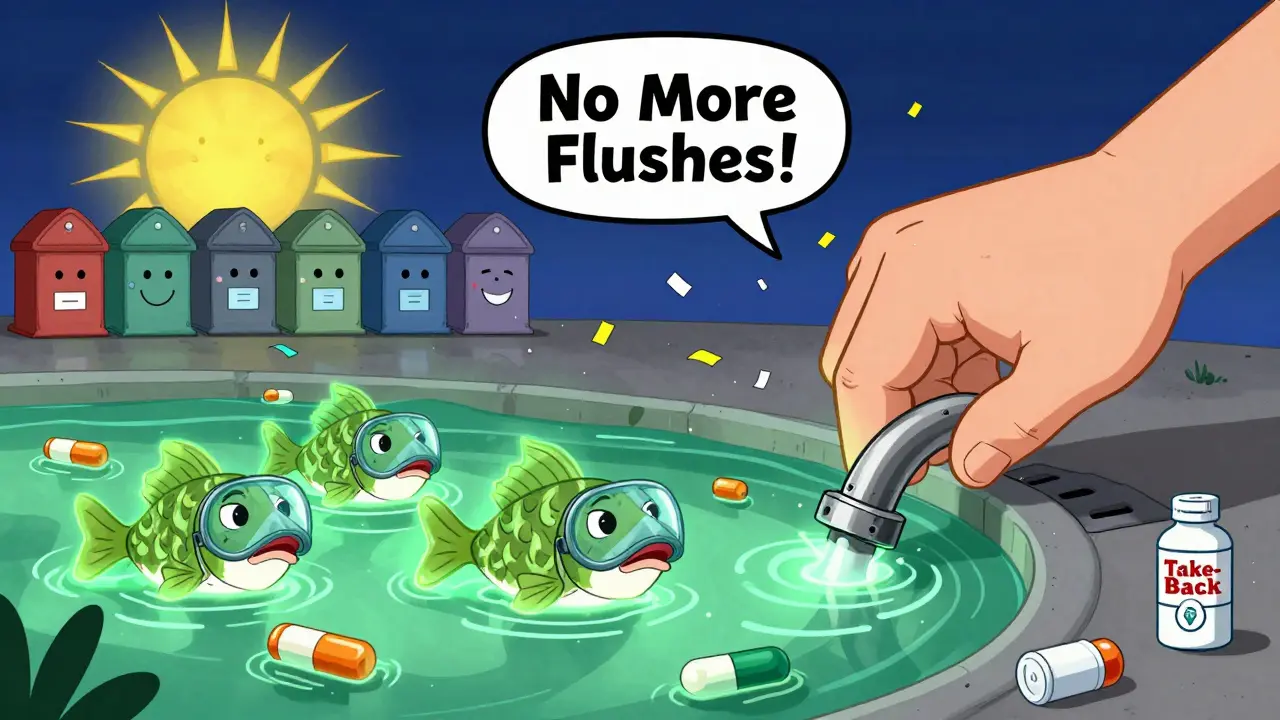
What If There’s No Drop Box Near You?
If you live in a rural area or somewhere without access, the FDA has a backup plan - but only as a last resort. Here’s what to do:- Take pills out of their original containers.
- Crush tablets or open capsules.
- Mix them with something unappetizing - kitty litter, coffee grounds, or dirt.
- Put the mixture in a sealed plastic bag or container.
- Throw it in the trash.
Never flush meds unless they’re on the FDA’s flush list - only about 15 drugs, mostly high-risk opioids like fentanyl patches. Even then, take-back is still better.
Who’s Behind These Programs?
The DEA runs the national framework, but local partners make it happen:- Pharmacies - Walgreens alone has over 1,600 drop boxes across 49 states.
- Law enforcement - Police stations often host drop boxes or events.
- Hospitals and clinics - Many have permanent collection points.
- Nonprofits and state health agencies - They run mail-back and mobile programs.
But here’s the catch: many pharmacists say they’re confused about what they’re allowed to accept. A 2023 survey found 68% of pharmacists weren’t sure about DEA rules. That’s why some locations turn away perfectly valid meds - not because they don’t want to help, but because they’re unsure.
What’s Changing in 2025 and Beyond?
The big shift? From events to everyday access. The DEA’s “Every Day is Take Back Day” campaign, launched in 2021, pushed communities to prioritize permanent drop boxes. Between 2020 and 2025, year-round locations jumped from 5,000 to over 16,500. New legislation is also on the horizon. A 2023 bill (H.R. 4278) would require Medicare Part D plans to cover the cost of mail-back envelopes - a game-changer for seniors. Right now, only 37% of Americans live within five miles of a permanent drop box. That number needs to go up. Some places are testing smart drop boxes with digital tracking. Others are partnering with food banks to offer free disposal during meal distribution days. The goal? Make it as easy as returning a library book.Final Thought: It’s Simple, It’s Safe, It’s Necessary
You don’t need to be a doctor or a policy expert to help. Just take your old meds to a drop box. It takes two minutes. It protects your kids, your neighbors, your water supply, and your community. If you’ve been holding onto that bottle of painkillers from last year’s surgery? Or those leftover antibiotics from your dog’s last infection? Don’t let them sit there. Take them in. Someone - maybe a teenager, maybe an older relative - could be at risk if they find them. Drug take-back programs aren’t perfect. They’re underfunded. They’re unevenly distributed. But they work. And they’re the best tool we have to stop the cycle of misuse before it starts.Can I drop off expired medications at any pharmacy?
Not every pharmacy has a drop box, but most major chains like Walgreens, CVS, and Rite Aid do. Call ahead to confirm. Smaller independent pharmacies may not participate. Always check the DEA’s website for verified locations.
Are drug take-back programs free to use?
Yes. Drop-off at permanent locations and DEA events is always free. Mail-back envelopes are often free too, especially if provided by your state or pharmacy. If you’re asked to pay, it’s not an official program.
Can I dispose of liquid medications in a drop box?
Yes. Liquid prescriptions, syrups, and even eye drops are accepted. Keep them in their original containers. Don’t pour them out or mix them with anything before dropping them off.
Why can’t I just flush old pills down the toilet?
Flushing meds contaminates water supplies and harms aquatic life. The EPA and FDA strongly discourage it. Only flush medications on the FDA’s flush list - about 15 high-risk drugs. For everything else, use a take-back program.
Do I need to bring ID to drop off medications?
No. You don’t need to show ID or sign anything. The process is anonymous. You’re not reporting anything - you’re just returning unused medicine. Your privacy is protected.
What about pet medications?
Yes, pet prescriptions are accepted at most drop-off locations. Dog antibiotics, cat pain meds, even flea treatments - all are safe to dispose of through take-back programs. Just keep them in their original containers.
How often do DEA take-back events happen?
Twice a year: once in April and once in October. But permanent drop boxes are open every day. You don’t have to wait for an event to safely dispose of your meds.
Can I drop off medications from a nursing home or hospital?
No. These programs are for household medications only. Nursing homes, hospitals, and clinics have their own regulated disposal systems. Don’t bring institutional waste to a public drop box.