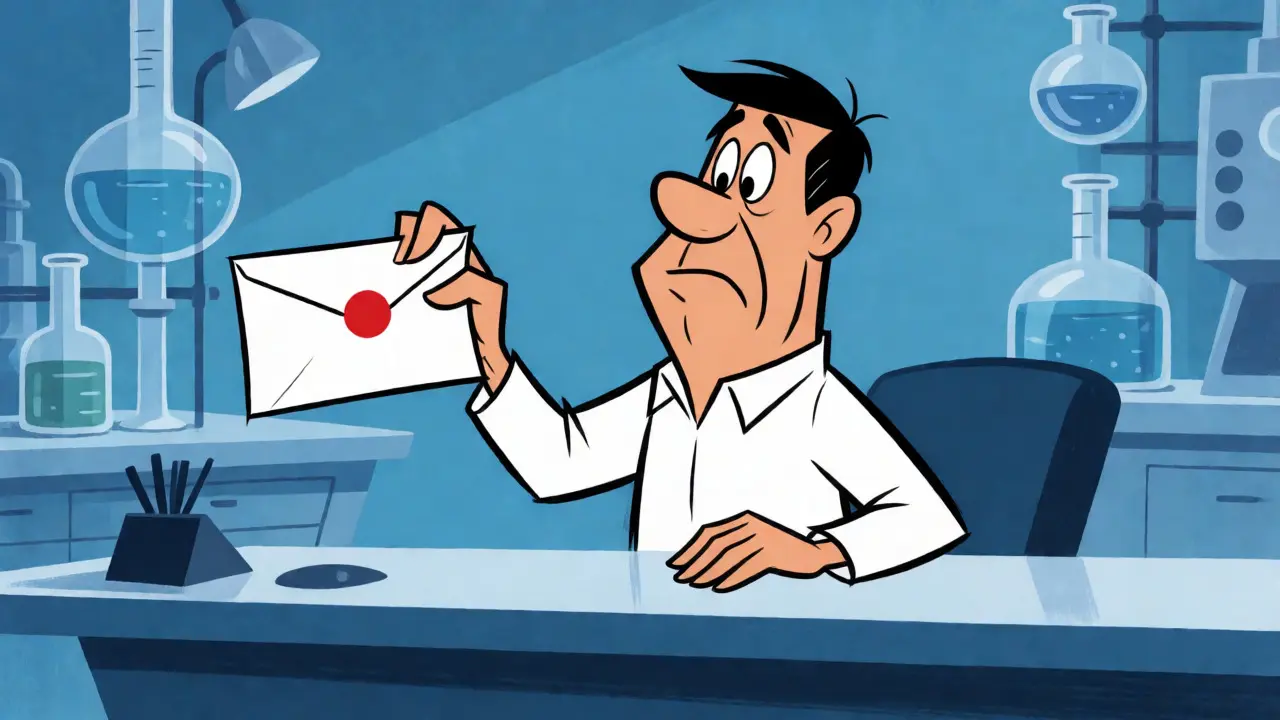
You just received a letter from the FDA. It’s not a thank-you note for your latest batch of sterile injectables. It’s a Warning Letter, and it means your facility failed to meet Current Good Manufacturing Practice (CGMP) standards. If you’re in pharmaceutical manufacturing, this document is a red flag that can stall product launches, drain budgets, and damage your reputation. But what exactly triggers these letters? And more importantly, how do you fix the problems before they escalate into import alerts or consent decrees?
What Exactly Is an FDA Warning Letter?
A Warning Letter is a formal notification issued by the U.S. Food and Drug Administration when a manufacturer violates regulations under the Federal Food, Drug, and Cosmetic Act. Think of it as the agency’s primary tool for addressing significant violations found during inspections. It sits right between a Form 483 observation report and severe actions like injunctions or criminal prosecution.
The FDA issues these letters when evidence shows a firm has violated the law, and the violation is serious enough to warrant regulatory action. For instance, in fiscal year 2023, the FDA issued 327 warning letters to pharmaceutical manufacturers globally. That’s a 12.7% jump from the previous year. These aren’t random acts of bureaucracy; they are targeted responses to specific failures in quality systems.
Common Triggers: Why Do You Get One?
You might wonder, "What did we do wrong?" The answer usually lies in specific sections of the Code of Federal Regulations (CFR), particularly 21 CFR Parts 210 and 211. These parts outline the requirements for drug manufacturing, processing, packing, or holding.
Analysis of recent warning letters reveals consistent patterns. According to Dr. Michael Swaen, inadequate investigation of out-of-specification (OOS) results is the single most common violation, appearing in 63.4% of pharmaceutical warning letters. This means if your lab finds a bad result and doesn’t thoroughly investigate why, you’re likely to hear from the FDA.
Other frequent culprits include:
- Inadequate Quality Unit Oversight: Found in 57.8% of cases. Your quality team must have the authority and resources to stop production if things look wrong.
- Aseptic Processing Failures: A 2022 study showed 78.3% of warning letters cited failures here, especially regarding media fill programs. If you make sterile products, your environment controls are under intense scrutiny.
- Data Integrity Issues: Now present in 67% of letters, up from 42% in 2019. The FDA is cracking down hard on electronic records and data governance.
The Anatomy of a Warning Letter
When you open that envelope, you’ll find a standardized format designed to be unambiguous. Each letter contains three core sections:
- Violation Details: Specific observations from the inspection. For example, a July 2025 letter to Daewoo Pharmaceutical cited "exposed skin in the ISO 5 area" and "use of non-sterile tape on the filling line."
- Regulatory Citations: Exact references to the CFR sections violated. This tells you precisely which rule you broke.
- Required Corrective Actions: What you need to do now. This often includes submitting complete results of examinations for retained samples and thorough investigations with Corrective and Preventive Actions (CAPA).
The FDA typically gives you 15 working days to respond initially. However, complex remediation plans may require extended timelines, which you must negotiate with the agency.
Impact on Business and Operations
Receiving a warning letter isn’t just a paperwork headache; it hits your bottom line. A 2023 survey by the Pharmaceutical Compliance Monitor found that 68% of companies halted new product submissions during remediation. The average delay in regulatory timelines was 8.7 months.
Consider the financial reality. One executive at a mid-sized generic manufacturer reported that a warning letter for inadequate visual inspection systems cost $4.2 million in immediate remediation and delayed a product launch by 14 months, resulting in $28 million in lost revenue. For smaller facilities, the burden can be crushing. One user noted that responding to a warning letter required hiring three full-time consultants at $250/hour, nearly bankrupting their 15-person operation.
How to Respond Effectively
Don’t panic, but don’t procrastinate either. An effective response requires a cross-functional team with expertise in microbiology, quality assurance, and regulatory affairs. Here is a practical approach:
| Component | Requirement | Common Pitfall |
|---|---|---|
| Root Cause Analysis | Must be supported by data, not just opinions. | Blaming human error without looking at system flaws. |
| CAPA Plan | Specific, measurable, and time-bound actions. | Vague promises like "we will train staff" without verification. |
| Verification | Prospective monitoring to prove fixes work. | Assuming the problem is gone because you fixed one instance. |
| Timeline | Clear milestones for implementation. | Overpromising on short deadlines for complex upgrades. |
Industry benchmarks suggest effective responses take 6-12 months of intensive effort. Median costs are $1.8 million for domestic facilities and $2.7 million for foreign ones. Be realistic about your capacity. If you underestimate the documentation required for CAPA systems, you risk receiving another letter later.
Trends and Future Outlook
The FDA isn’t slowing down. The issuance rate of pharmaceutical warning letters grew from 14.2 per month in 2018 to 27.3 per month in 2023. This increase correlates with higher FDA inspection resources, including a 28.5% budget increase for foreign drug facility inspections since 2020.
Geographically, Indian manufacturers received 38.7% of all warning letters in 2022, followed by U.S. manufacturers at 31.5%. This reflects both the volume of production and the FDA’s focus on global supply chains. Looking ahead, experts predict a 15-20% annual increase in warning letters through 2026, driven by stricter data integrity and aseptic processing controls.
There is also concern about consistency. A 2022 Government Accountability Office report found that 37% of similar CGMP violations received warning letters at one facility but only Form 483 observations at another. While frustrating, this inconsistency shouldn’t dictate your strategy. Assume every violation could lead to a warning letter and maintain rigorous standards.
Success Stories: Turning Things Around
It’s not all doom and gloom. Companies that respond well can recover quickly. Teva Pharmaceuticals’ 2021 remediation of a warning letter at its Plant 27 facility in Israel resulted in a 30% reduction in product defects and removal from import alert status within 11 months. The key was a comprehensive overhaul of their quality management system, not just patching the specific issue cited.
Ultimately, 94.7% of companies achieve regulatory compliance within 24 months of receiving a warning letter. The goal isn’t just to satisfy the FDA; it’s to build a robust quality culture that prevents future issues.
How long do I have to respond to an FDA Warning Letter?
The FDA typically allows 15 working days for an initial response. However, for complex remediation plans, you can request an extension. It is crucial to communicate with the agency early if you need more time to gather data and develop a comprehensive plan.
What is the difference between a Form 483 and a Warning Letter?
A Form 483 is issued at the end of an inspection to list observed conditions that may violate regulations. It is an advisory document. A Warning Letter is a formal enforcement action issued after the FDA reviews the company's response to the Form 483 and determines the violations are significant. A Warning Letter carries more weight and public visibility.
Do warning letters affect stock prices?
Yes, market analysis suggests that firms with active warning letters experience lower stock performance. A 2023 IQVIA analysis found that these firms saw 18.4% lower stock performance compared to industry averages over a 12-month period. Investors view warning letters as a risk to operational continuity and future revenue.
Can small manufacturers handle warning letters effectively?
Yes, but it requires significant resource allocation. Small manufacturers often hire external consultants to help draft responses and conduct root cause analyses. While costly, outsourcing expertise can prevent prolonged non-compliance. Early engagement with regulatory consultants is recommended to avoid missteps in the response process.
What happens if I ignore a Warning Letter?
Ignoring a Warning Letter can lead to escalated enforcement actions. These may include import alerts, which block products from entering the U.S., seizures of product, injunctions, or even criminal prosecution. The FDA views silence as a failure to address significant public health risks.