Colchicine-Antibiotic Interaction Checker
Check Your Medication Safety
This tool helps you identify dangerous drug combinations when taking colchicine with antibiotics. Based on the article, some antibiotics significantly increase colchicine toxicity risk.
Action Steps
Important Safety Note
Always discuss your medications with your doctor or pharmacist. This tool is for educational purposes only and should not replace professional medical advice.
When you take colchicine for gout or heart inflammation, you might think you’re just managing a simple condition. But if you also need an antibiotic like clarithromycin for a chest infection, you could be walking into a dangerous situation-without even knowing it. This isn’t a rare edge case. It’s happening to thousands of people every year, and the reason is hidden in the way your body processes these two drugs: through two critical systems that, when blocked together, turn a safe medication into a poison.
How Colchicine Works-and Why It’s So Dangerous
Colchicine isn’t a new drug. It’s been used for over 2,000 years, originally from the autumn crocus plant. Today, it’s prescribed for gout, pericarditis, and even after heart attacks to reduce inflammation. But its therapeutic window is razor-thin. The difference between a helpful dose and a toxic one is small. Toxicity can show up as muscle pain, vomiting, diarrhea, low blood cell counts, or even organ failure. And once it starts, it can spiral fast.
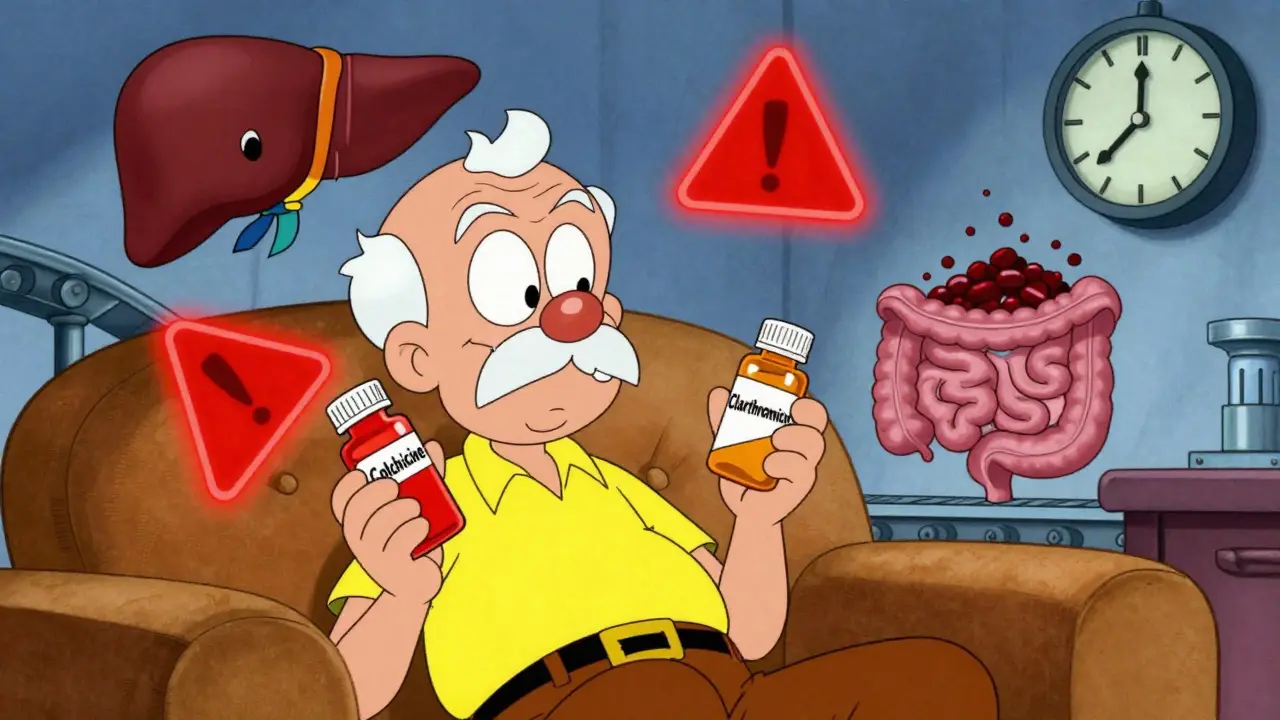
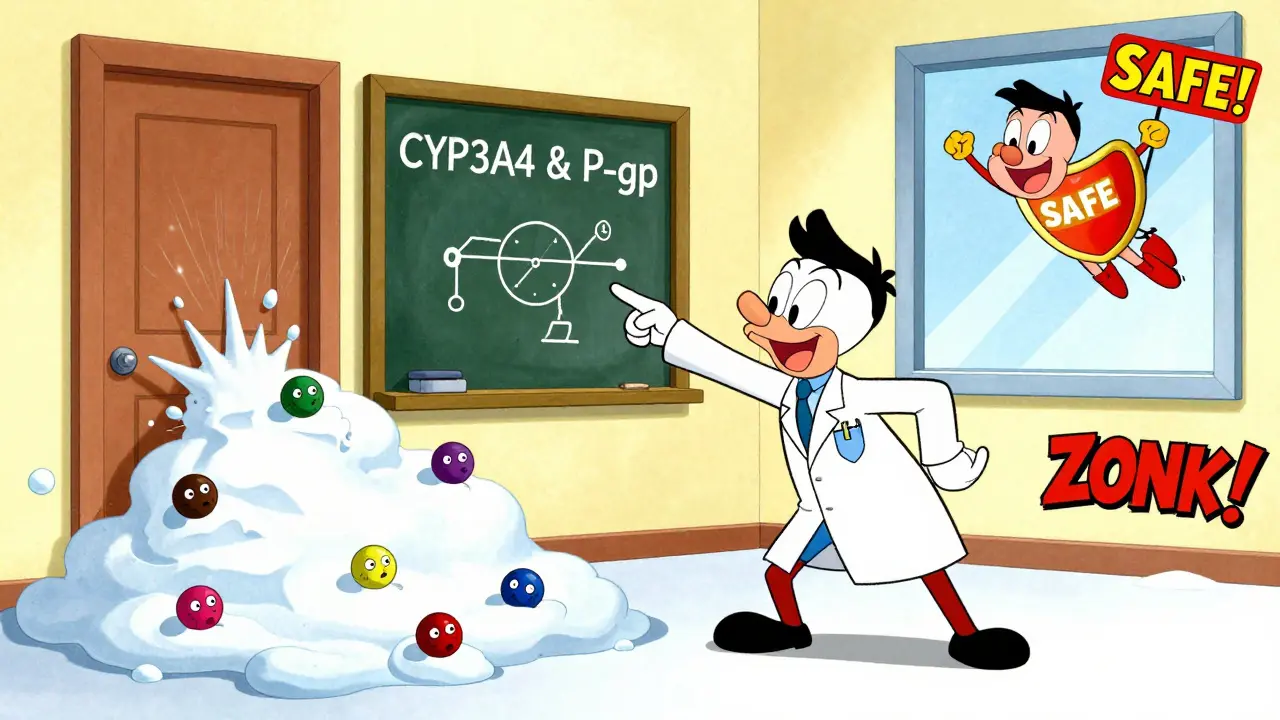
Colchicine doesn’t just float around in your bloodstream. It gets pulled into your liver and gut cells, where it’s supposed to be broken down and flushed out. Two systems handle this: CYP3A4, a liver enzyme that chemically breaks down the drug, and P-glycoprotein (P-gp), a transporter that pumps colchicine out of cells and back into your gut or kidneys for elimination. If either one is slowed down, colchicine builds up. If both are blocked? That’s when levels can jump 4x higher than normal.
Macrolides: Not All Antibiotics Are Equal
Macrolides are a class of antibiotics that include clarithromycin, erythromycin, and azithromycin. They all treat similar infections-sinusitis, pneumonia, bronchitis. But their effect on colchicine couldn’t be more different.
Clarithromycin is the worst offender. It doesn’t just inhibit CYP3A4-it’s one of the strongest inhibitors out there. At the same time, it blocks P-gp. This double hit can cause colchicine levels to spike dangerously. Studies show that when taken together, clarithromycin can increase colchicine concentration by more than 200%. In one 2019 case series, 12 patients developed severe toxicity after this combination, and three died.
Erythromycin is also risky, though less so. It’s a weaker CYP3A4 inhibitor and doesn’t block P-gp as strongly. Still, it’s not safe to combine with colchicine.
Azithromycin? That’s the exception. It barely touches CYP3A4 or P-gp. Multiple studies, including one tracking over 12,000 patients, show no increase in colchicine toxicity when azithromycin is used instead. If you need an antibiotic and are on colchicine, azithromycin is the only macrolide that’s generally safe.
The Science Behind the Collision
Here’s why this interaction is so sneaky: most people think drug interactions are about one pathway. But colchicine is caught in a trap where two systems work together. Think of it like a factory assembly line. CYP3A4 is the shredder that breaks down colchicine. P-gp is the conveyor belt that removes leftover material. If the shredder slows down, stuff piles up. If the conveyor belt stops, it piles up even faster. When both are blocked, the factory backs up completely.
Studies show that drugs like verapamil (a blood pressure med) and diltiazem (another heart drug) also raise colchicine levels. But macrolides are the most common culprits because they’re prescribed so often. The FDA issued a black box warning in 2010-the strongest possible alert-because of how often this interaction leads to hospitalization and death.
Even more concerning: many patients don’t realize they’re taking something that interacts. Over-the-counter supplements like St. John’s Wort or grapefruit juice can also inhibit CYP3A4. A 2023 survey of doctors found that 68% had seen at least one case where patients didn’t mention their herbal remedies-and that’s when things went wrong.
Real-World Consequences
The numbers don’t lie. Between 2015 and 2020, the FDA’s adverse event database recorded 147 cases of colchicine toxicity linked to macrolides. Sixty-three percent involved clarithromycin. Emergency rooms in the U.S. report the highest number of these cases. Why? Because patients often show up with sudden nausea, weakness, or confusion after starting an antibiotic. Doctors might miss the connection if they’re not looking for it.
One study found that 43% of internal medicine residents couldn’t identify the high-risk combination during training. After a 30-minute educational session, that jumped to 87%. That’s not a failure of knowledge-it’s a failure of awareness. These interactions aren’t taught well enough, and alerts in electronic health records often don’t trigger properly.
And here’s something counterintuitive: while early studies said colchicine-macrolide use led to pancytopenia (low blood cells), a 2022 study of over 12,000 people found the opposite. Why? Because hospitalized patients are monitored closely. In outpatient settings, people don’t get blood tests. They just feel sick, go home, and wait for the next appointment. By then, it’s too late.
What Should You Do?
If you’re on colchicine and your doctor prescribes an antibiotic, ask: Is this azithromycin? If not, ask why. If it’s clarithromycin or erythromycin, push back. There are alternatives. If you’re prescribed one of these, ask if your colchicine dose can be cut in half. The American College of Cardiology recommends this for moderate interactions. For strong ones? Avoid them entirely.
Don’t rely on pharmacy alerts. They’re often missed or overridden. Write down your medications. Bring a list to every appointment. Tell your doctor about every supplement, even if you think it’s harmless. Grapefruit juice? It’s a known CYP3A4 inhibitor. Turmeric? Some extracts can interfere. St. John’s Wort? It’s a big one.
There’s no routine blood test for colchicine levels in most hospitals. Only 37% of U.S. hospitals can test it. So you can’t just check your levels and feel safe. Prevention is your only tool.
The Bigger Picture
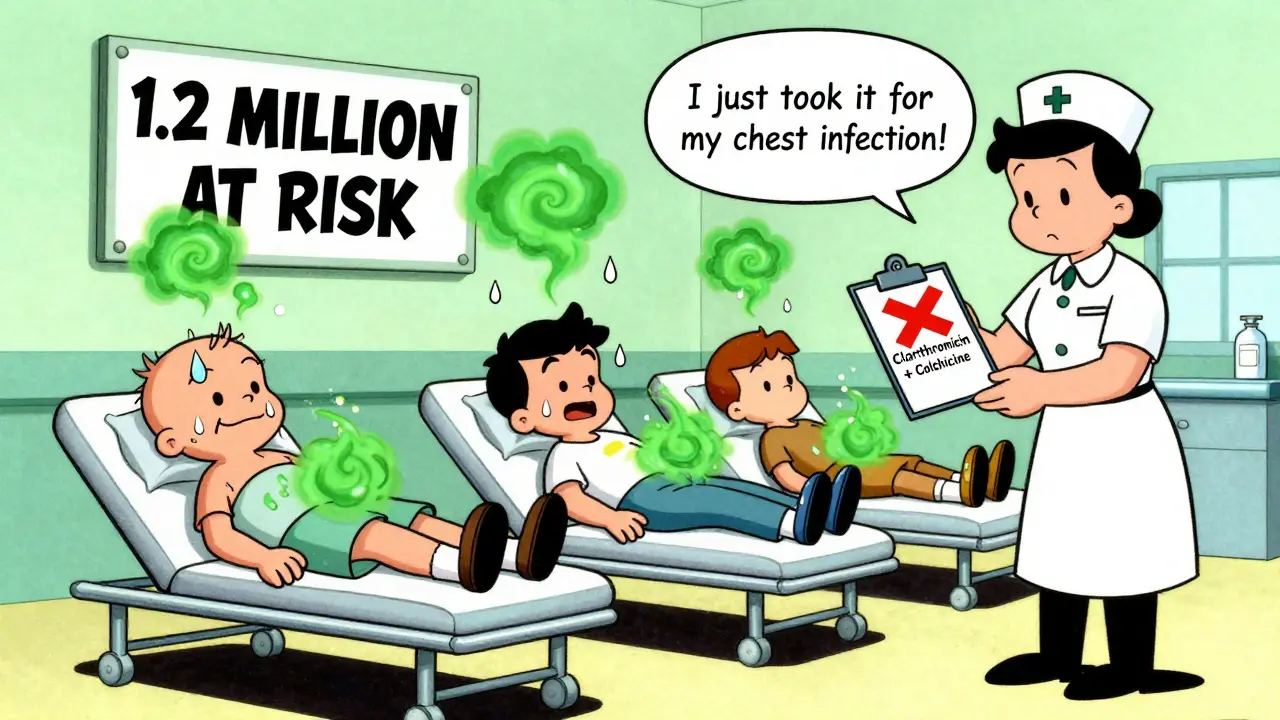
Colchicine use has exploded since 2010. It’s now prescribed for heart disease, not just gout. That means more people are taking it-and more people are being prescribed antibiotics. An estimated 1.2 million Americans each year get a potentially dangerous combo. That’s not a glitch. It’s a systemic blind spot.
Pharmaceutical companies are working on solutions. Takeda is testing a new version of colchicine that doesn’t interact with P-gp. Early trials show a 92% drop in interaction risk. But it’s still years away.
For now, the answer is simple: know the risks. Ask questions. Choose azithromycin. Avoid clarithromycin. Cut your dose if needed. And never assume your doctor knows every interaction-especially if they’re not a pharmacist.
What If You’ve Already Taken Both?
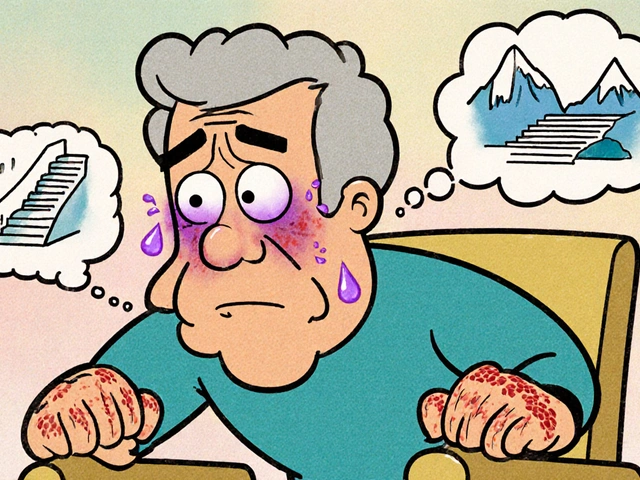
If you’ve taken colchicine and clarithromycin together, watch for:
- Severe diarrhea or vomiting that doesn’t stop
- Unusual muscle pain or weakness
- Fever, chills, or sore throat (signs of low white blood cells)
- Unexplained fatigue or dizziness
If you have any of these, go to the ER. Don’t wait. Tell them you took colchicine and an antibiotic together. This isn’t an allergy. It’s a toxic buildup. And it gets worse the longer you wait.
Can I take azithromycin with colchicine?
Yes. Azithromycin is the only macrolide antibiotic that does not significantly inhibit CYP3A4 or P-gp. Multiple studies show no increased risk of colchicine toxicity when taken with azithromycin. It’s the safest antibiotic option if you’re on colchicine.
Why is clarithromycin so dangerous with colchicine?
Clarithromycin strongly blocks both CYP3A4 (the liver enzyme that breaks down colchicine) and P-gp (the transporter that removes it from cells). When both systems are shut down, colchicine builds up to toxic levels-sometimes 4 times higher than normal. This can cause muscle damage, low blood cell counts, and organ failure. Even standard doses become dangerous.
Does erythromycin have the same risk as clarithromycin?
Erythromycin is still risky, but less so than clarithromycin. It inhibits CYP3A4, but not as strongly, and it has weaker effects on P-gp. Still, combining it with colchicine can lead to toxicity. It’s not safe. Always choose azithromycin instead.
Can I reduce my colchicine dose to stay safe?
Yes-if you must take a moderate inhibitor like diltiazem or verapamil, cutting your colchicine dose in half is recommended. But if you’re taking a strong inhibitor like clarithromycin, you shouldn’t take colchicine at all. Dose reduction doesn’t eliminate risk with strong inhibitors.
Are there blood tests to check colchicine levels?
Yes, but they’re rare. Only about 37% of U.S. hospitals can test for colchicine levels, and even then, results take days. Because of this, doctors rely on prevention-not monitoring. Avoiding the interaction is far safer than waiting for a blood test.
What should I do if I’m on colchicine and need an antibiotic?
Ask your doctor: "Is azithromycin an option?" If not, ask why. If they say clarithromycin or erythromycin is necessary, ask if you can stop colchicine temporarily. If you can’t stop it, ask for a 50% dose reduction and close monitoring. Never assume the interaction is known-it’s often missed.
Can grapefruit juice interact with colchicine?
Yes. Grapefruit juice is a known inhibitor of CYP3A4. Even small amounts can raise colchicine levels. If you take colchicine, avoid grapefruit, Seville oranges, and products containing them. The same goes for some herbal supplements like St. John’s Wort.
Next Steps
If you’re on colchicine, make this your routine:
- Keep a written list of every medication and supplement you take.
- Bring it to every doctor’s appointment, even for minor issues.
- Ask every prescriber: "Could this interact with colchicine?"
- If you’re prescribed an antibiotic, demand azithromycin as the first option.
- Learn the signs of toxicity: vomiting, muscle pain, weakness, fever.
- Go to the ER immediately if symptoms appear after taking antibiotics.
This isn’t about being paranoid. It’s about being informed. Colchicine saves lives. But it can kill if used carelessly. You have the power to prevent the mistake before it happens.