The U.S. Food and Drug Administration (FDA) doesn't just approve drugs and medical devices - it watches them after they hit the market. When something goes wrong, the FDA issues a FDA Safety Communications. These aren't vague warnings. They're detailed, dated, and legally grounded reports that tell doctors, pharmacists, and patients exactly what changed, why, and what to do. If you're researching past drug risks, device failures, or labeling updates, the FDA’s public archive is your most reliable source. But it’s not one single database. It’s a layered system built over more than a century. Knowing how to navigate it makes all the difference.
What’s in the FDA Safety Communications Archive?
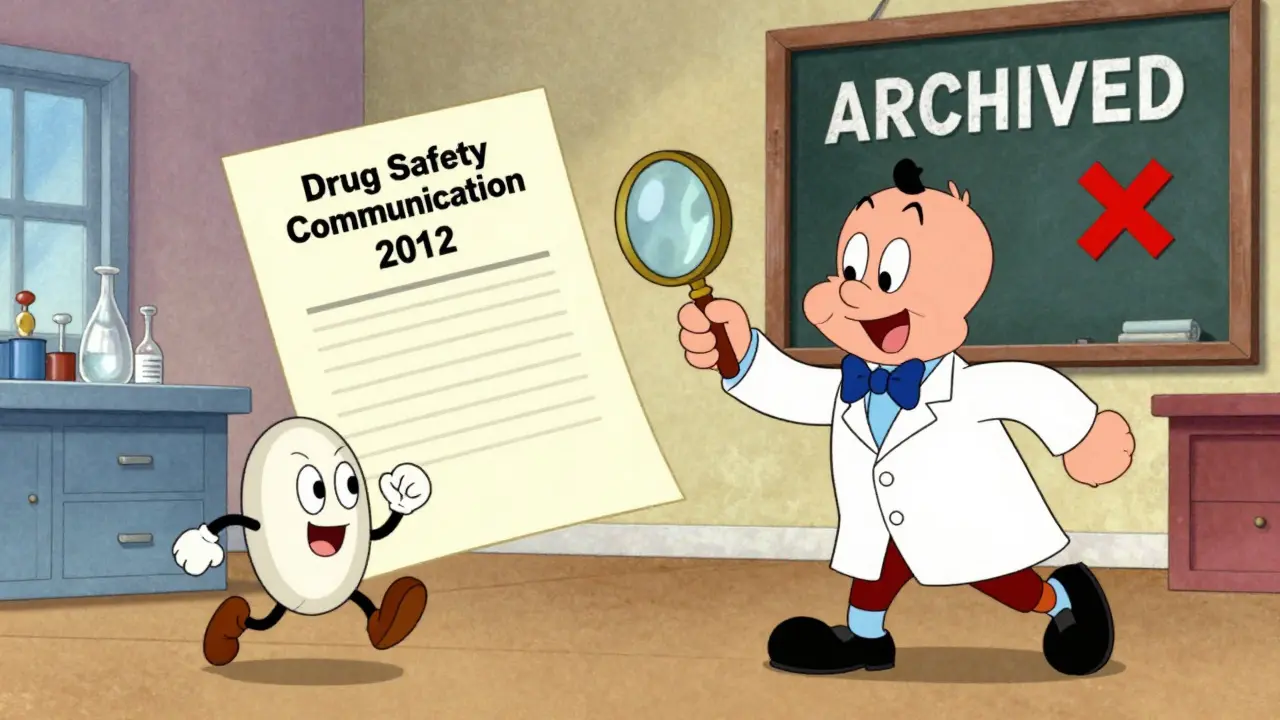
The archive isn’t a single file. It’s three main systems working in parallel, each with its own rules and history. First up: Drug Safety Communications (DSCs). These started being formally archived in 2010. Before that, the FDA issued safety notices, but they weren’t systematically collected. From 2010 to 2024, every public DSC is preserved. Older ones from 2010-2015 are still available - but marked as archived because newer versions replaced them. That’s key: if you find a 2012 warning about a drug, check if there’s a 2018 version. The newer one supersedes it. Then there’s the Drug Safety-related Labeling Changes (SrLC) Database. This one started in January 2016 and tracks exactly how drug labels changed. Not just any change - only those tied to safety. That includes updates to the boxed warning, contraindications, warnings and precautions, adverse reactions, drug interactions, and use in specific populations like pregnant women or the elderly. The FDA requires manufacturers to update labels under Section 505(o)(4) of the Federal Food, Drug, and Cosmetic Act. The SrLC Database records every one of those changes, with dates and regulatory reasons. Think of it as a public log of how drug safety information evolved after approval. For medical devices, the system is different. The Medical Device Safety Communications system includes alerts for recalls, malfunctions, and risks. As of September 29, 2025, the FDA expanded its program to include Early Alerts for all device types - not just high-risk ones. These are issued when the FDA believes a device may pose a serious risk before a formal recall is needed. Unlike drug communications, device alerts often include instructions for healthcare providers on how to monitor, replace, or stop using the product.How to Access the Archive - Step by Step
You don’t need special access. Everything is free on FDA.gov. Here’s where to go:- Go to www.fda.gov and click on "Drugs" in the top menu.
- Select "Drug Safety and Availability" from the dropdown.
- Under "Drug Safety Communications," you’ll see links to each year from 2010 to 2024. Click the year you need.
- For labeling changes since 2016, go to the SrLC Database. You can search by drug name, manufacturer, or change type.
- For medical devices, go to "Medical Devices" → "Recalls and Safety Alerts." Filter by "Early Alerts" or "Safety Communications."
Why the Archive Matters - Real Examples
In 2025, the FDA issued a warning against using epinephrine nasal solutions from two companies after reports of contamination. That alert is in the archive. But what if you wanted to know if this was the first time the FDA warned about nasal epinephrine? You’d go back to the SrLC Database and find that in 2020, the label for one product was updated to include a new warning about accidental injection into the bloodstream. That 2020 change was triggered by a case report. The 2025 alert built on that. Without the archive, you’d miss the pattern. Another example: the opioid crisis. The FDA’s DSCs from 2013 onward show a steady stream of warnings about extended-release opioids. Each one added more detail - about misuse, overdose risk, and required patient education. By 2018, the boxed warning was expanded. By 2021, the FDA required manufacturers to update patient counseling materials. The archive shows how the agency’s understanding evolved - not just in theory, but in documented, enforceable label changes. For devices, consider pacemakers. In 2017, the FDA issued a safety communication about a specific model that could deliver inappropriate shocks. The alert included instructions for doctors on how to reprogram the device. Later, in 2020, a recall was issued. The archive links the two. Without it, you’d think they were separate events. With it, you see the progression: warning → monitoring → recall.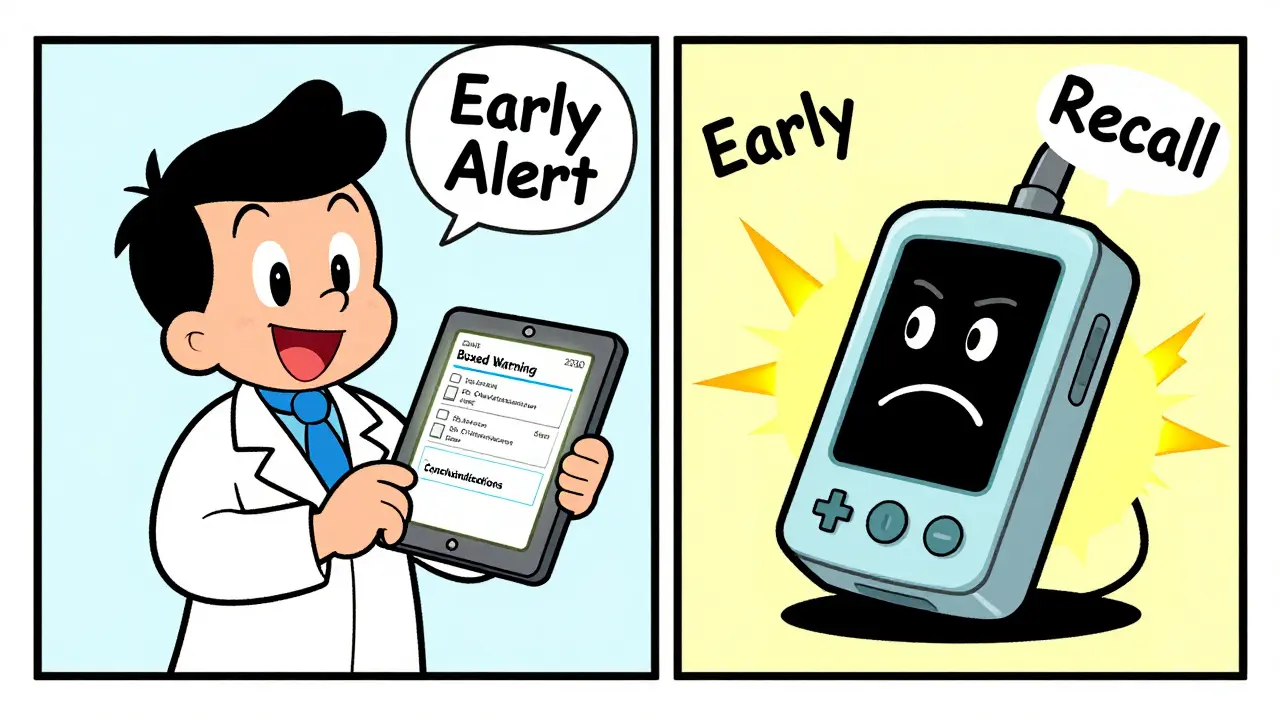
Limitations and Gaps in the Archive
The system is powerful, but it’s not complete. The SrLC Database only goes back to 2016. If you’re studying a drug like rosiglitazone (Avandia), which had major safety issues in 2007, you won’t find its labeling changes in the SrLC Database. You’ll need to dig into the FDA Archive or older press releases. Also, not all safety issues become public. The FDA doesn’t release every internal investigation or confidential manufacturer report. Some communications are sent only to healthcare providers via "Dear Doctor" letters and never posted publicly. And while the archive tracks changes, it doesn’t always explain why they happened. A label update might say "increased risk of liver injury," but not cite the exact study that triggered it. Another gap: historical data before 1990. The National Archives holds paper records from 1906 to 1978 - things like correspondence, inspection reports, and memos. But they’re not digitized. You’d need to visit Philadelphia or request copies. That’s not practical for most researchers.How This Compares to Other Systems
The European Medicines Agency (EMA) issues safety alerts, but its historical archive is less organized. Before 2015, EMA communications were scattered across different portals. The FDA’s system, by contrast, is designed for consistent retrieval. Health Canada’s "Recalls and Safety Alerts" combines drugs and devices into one list. That’s simpler for the public, but harder for researchers who need to isolate drug-specific trends. The FDA’s separation allows for deeper analysis. The CDC’s Health Alert Network focuses on outbreaks - flu, measles, food poisoning. It doesn’t track drug side effects. The FDA fills that gap. Together, they cover public health from two angles: infectious threats and product safety.What’s New in 2026?
In October 2023, the FDA announced a new resource to help researchers access historical drug approval data. This tool, still being rolled out, will link approval records with safety communications, making it easier to trace a drug’s entire lifecycle - from first approval to latest warning. It’s not fully public yet, but it’s a major step toward closing the pre-2016 gap. Also in 2025, the FDA expanded Early Alerts to cover all medical devices. That means even low-risk devices - like bandages or tongue depressors - now have a formal alert system if a pattern of failure emerges. This could mean more data in the archive, not less.
How to Use This Archive Effectively
If you’re a researcher, clinician, or patient advocate, here’s how to get the most out of it:- Always check the date. A 2015 alert may be outdated. Look for the most recent version.
- Use the SrLC Database to find exact labeling changes - not just summaries.
- For devices, combine Early Alerts with recall notices to see the full timeline.
- Use the FDA Archive to trace older communications. Try searching by drug name + "FDA warning" + year.
- If you can’t find what you need, email [email protected]. The Division of Drug Information responds to specific requests.
Frequently Asked Questions
Can I find FDA safety warnings from before 2010?
Yes, but not in the same format. The formal Drug Safety Communications archive starts in 2010. For earlier warnings, use the FDA.gov Archive to view old web pages, or search the National Archives for paper records from 1906-1978. Some pre-2010 alerts were published in the Federal Register or as press releases - those are harder to find but still accessible.
Is the SrLC Database only for prescription drugs?
Yes. The SrLC Database tracks labeling changes for human prescription drugs regulated under NDAs (New Drug Applications) and biological products under BLAs (Biologics License Applications). It does not include over-the-counter drugs, vaccines, or medical devices. OTC drug warnings are handled separately through general Drug Safety Communications.
How often does the FDA update the archive?
The Drug Safety Communications are updated weekly. The SrLC Database is updated daily with new labeling changes. Medical device alerts are posted as soon as the FDA completes its assessment. The archive itself doesn’t change - it’s a historical record - but new entries are added continuously.
Are all safety communications publicly available?
Most are. The FDA posts all communications intended for the public or healthcare providers. However, some internal reviews, confidential manufacturer submissions, or ongoing investigations are not made public. If you need information not found online, you can submit a Freedom of Information Act (FOIA) request through the FDA’s website.
Can I use this archive for legal or academic research?
Absolutely. Courts, academic institutions, and public health agencies regularly cite FDA safety communications in research papers, lawsuits, and policy reports. The archive is considered an official government record. Always cite the specific communication by date and title, and include the URL from FDA.gov.