When a child breaks out in hives after eating a peanut butter sandwich-or an adult struggles to breathe after a bite of shrimp-the clock starts ticking. In these moments, seconds matter. An anaphylaxis action plan isn’t just paperwork. It’s the difference between life and death.
What an Anaphylaxis Action Plan Really Is
An anaphylaxis action plan is a clear, step-by-step guide for responding to a severe allergic reaction. It’s not a suggestion. It’s a medical protocol, signed by a doctor, and required in schools and increasingly expected in workplaces. These plans tell exactly who to call, what symptoms mean, and-most importantly-when and how to use epinephrine.The CDC, FARE, and the Asthma and Allergy Foundation of America all agree: epinephrine is the only treatment that can stop anaphylaxis. Delaying it increases the risk of death by 83%. That’s not a statistic-it’s a reality for families and employees living with severe allergies.
A proper plan includes:
- A photo of the person with the allergy
- A list of confirmed allergens (peanuts, shellfish, latex, etc.)
- Clear symptoms: mild (itching, hives) vs. severe (trouble breathing, swelling of throat, dizziness)
- Exact instructions: “Give epinephrine immediately if two body systems are affected or if breathing or circulation is compromised”
- Emergency contacts and physician signature
Generic forms don’t cut it. A 2023 survey found school forms rated 2.8 out of 5 for clarity. FARE’s official template? 4.7 out of 5. The difference isn’t just design-it’s speed. And speed saves lives.
Why Schools Are Better Prepared Than Workplaces
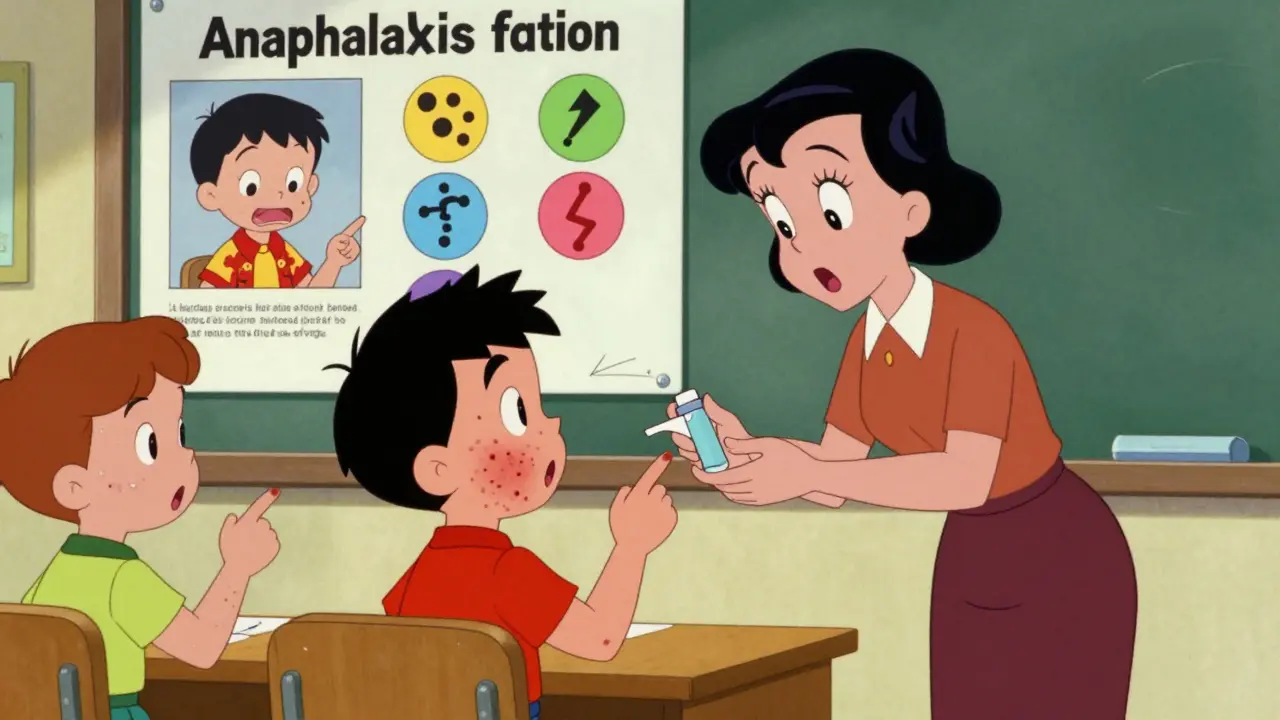
In the U.S., 49 states have laws requiring schools to have epinephrine available and staff trained to use it. That’s not an accident. It’s the result of decades of advocacy, data, and tragedy.Every food-allergic student in a public school should have an individualized emergency plan. That plan is backed by:
- State laws mandating epinephrine access
- Trained staff-ideally two per classroom
- Stock epinephrine on hand, unlocked and within 60 seconds
- Annual reviews and staff refreshers
According to the National Association of School Nurses, 78% of U.S. school districts use FARE’s standardized plan. When a reaction happens, teachers, aides, and nurses know what to do. One parent shared how her daughter had a reaction to a contaminated snack-epinephrine was given in 90 seconds. She walked out of the hospital hours later, unharmed.
Workplaces? Not even close.
Only 28 states have any specific anaphylaxis policies for workplaces. Just 34% of U.S. employers have formal protocols. In restaurants, retail stores, and offices, people with severe allergies often carry their own epinephrine-and pray someone else knows how to use it.
A server with a shellfish allergy told Reddit: “My manager refused to let me keep my epinephrine unlocked behind the counter. I had to run to the bathroom during a reaction because I couldn’t reach it.” That’s not an outlier. A FARE survey found 57% of employees with severe allergies experienced a reaction where coworkers hesitated to act. Why? Fear of legal liability. Lack of training. No clear plan.
What Every School Needs to Get Right
Schools that handle anaphylaxis well don’t just have a form on file. They build a culture of safety.Here’s what works:
- Training isn’t optional-it’s mandatory. Staff need 90-120 minutes of initial training, plus 60 minutes every year. Only 37% of schools do annual refreshers. That’s dangerous.
- Epinephrine must be accessible. The CDC and New York State’s 2024 guidelines say: no locked cabinets. No drawers. No “I’ll get it from the nurse’s office.” It must be within 60 seconds of any classroom, cafeteria, or bus.
- Plans are updated every year. Allergies change. Medications change. Emergency contacts change. If a plan is from 2022, it’s outdated-and potentially deadly.
- Everyone knows the signs. Not just nurses. Bus drivers, lunch staff, art teachers. A toddler with a runny nose and a rash might seem like a cold. But in a child with known allergies, that’s the start of anaphylaxis.
And don’t forget extracurriculars. Field trips, sports events, after-school clubs-all need the same plan. The CDC’s 2024 update specifically added protocols for these settings. Ignoring them is negligence.
Workplaces Can-and Must-Do Better
Workplaces aren’t schools. But they’re not lawless zones either. Under the Americans with Disabilities Act, employers must provide reasonable accommodations. For someone with anaphylaxis, that means:- Allowing the employee to carry epinephrine
- Storing stock epinephrine in common areas (break rooms, near entrances)
- Training managers and safety officers on how to respond
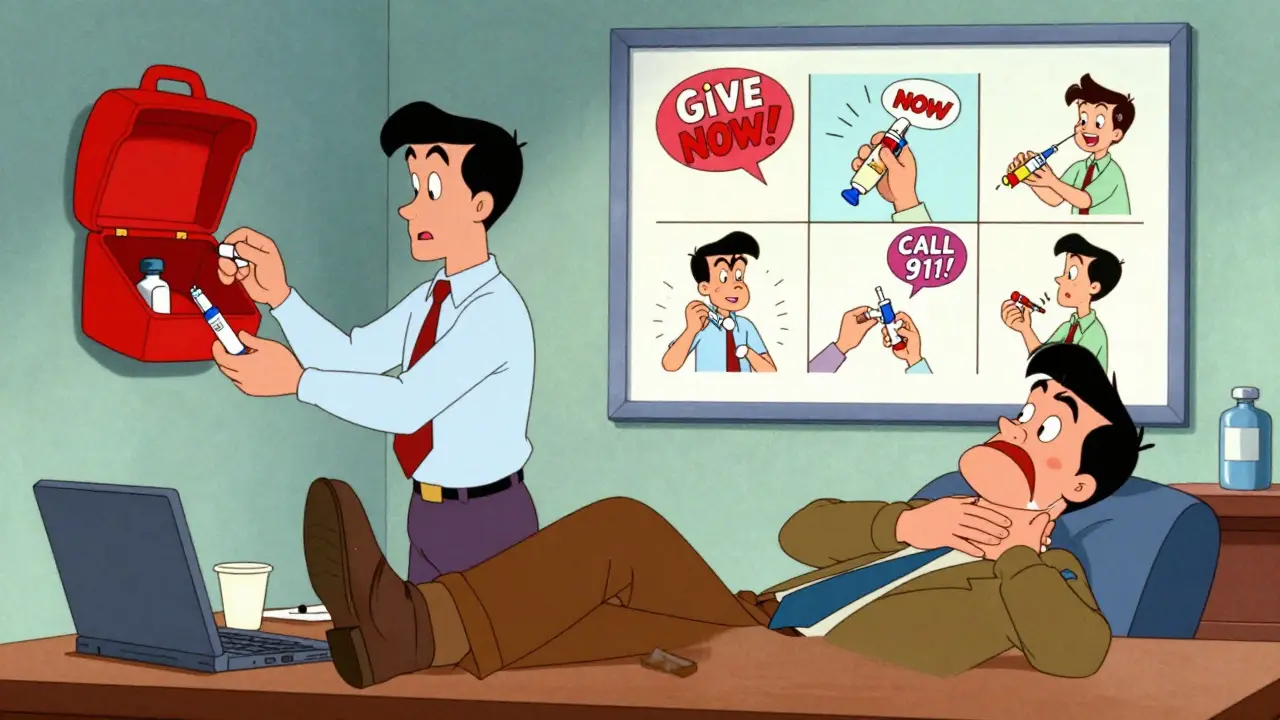
- Creating a clear policy: “If someone collapses with difficulty breathing, give epinephrine. Call 911. Do not wait.”
Some companies are stepping up. Tech firms with cafeterias now label all meals for allergens. Hospitals keep epinephrine in every wing. But most? Nothing.
OSHA doesn’t require anaphylaxis training. But it does require first aid readiness. And anaphylaxis is a medical emergency. If your workplace has a defibrillator, it should have epinephrine too.
Start small. One epinephrine auto-injector in the break room. A 15-minute safety talk during onboarding. A sign-up sheet for staff who want to be trained. These aren’t expensive. They’re essential.
Common Mistakes That Cost Lives
Even well-intentioned plans fail because of simple, avoidable errors:- “Watch and wait”-Waiting to see if symptoms get worse before giving epinephrine. The World Allergy Organization found complication rates jump 68% if epinephrine is delayed beyond five minutes.
- Using antihistamines instead-Benadryl doesn’t stop anaphylaxis. It might help a rash. But it won’t open a swollen airway.
- Not having a photo-In a panic, people forget who’s who. A photo on the plan helps staff identify the right person fast.
- Assuming the person will tell someone-During anaphylaxis, a person may be confused, unable to speak, or unconscious. Plans must be proactive, not reactive.
- One person is “in charge”-If that person is out sick, on vacation, or in another building, the plan fails. At least two trained staff must be available at all times.
Dr. Ruchi Gupta from Northwestern University says it plainly: “The single most important element in any anaphylaxis action plan is unambiguous epinephrine administration instructions-vague language costs lives.”

What You Can Do Right Now
If you’re a parent:- Ask your child’s school: “Do you use FARE’s official action plan template?”
- Ask: “Are two staff members trained per classroom? Is epinephrine unlocked and accessible?”
- Request a copy of the school’s allergy policy. If they don’t have one, push for it.
If you’re an employee with a severe allergy:
- Request a written accommodation under the ADA. Don’t ask-formally request.
- Offer to train staff. Bring FARE’s free training videos.
- Keep your epinephrine with you-but also ask if the company will store a backup in a common area.
If you’re a school administrator or HR manager:
- Download FARE’s 2023 action plan template. It’s free. It’s proven.
- Train your staff. Don’t wait for a crisis.
- Store epinephrine where it can be grabbed in under a minute.
- Review and update plans every year-on the same date.
There’s no excuse for inaction. Anaphylaxis isn’t rare. Eight percent of U.S. children have food allergies. That’s one in every classroom. And the numbers are rising.
Frequently Asked Questions
What should I do if someone is having an anaphylactic reaction?
Administer epinephrine immediately if symptoms involve breathing, throat tightness, dizziness, or two or more body systems (like hives and vomiting). Call 911 after giving the shot. Do not wait. Do not give antihistamines first. Epinephrine is the only treatment that stops anaphylaxis.
Can anyone use an epinephrine auto-injector?
Yes. Auto-injectors are designed for non-medical users. They have clear instructions and audible clicks. Training takes less than an hour. Most people can use one correctly after watching a 5-minute video. Fear of making a mistake shouldn’t stop someone from acting.
Is it legal to give epinephrine if I’m not a nurse?
In all 50 U.S. states, Good Samaritan laws protect people who give epinephrine in good faith during an emergency. Schools and many workplaces have legal immunity for trained staff who follow protocols. There is no legal risk in saving a life.
How often should an anaphylaxis action plan be updated?
At least once a year, or whenever there’s a change in the person’s health, allergies, or emergency contacts. Outdated plans are a major cause of response failures. The CDC and New York State both require annual reviews.
Can schools require parents to provide epinephrine?
No. Schools must provide access to epinephrine regardless of whether a student brings their own. The CDC and state laws require stock epinephrine to be available for any student or staff member experiencing a reaction. Relying solely on personal devices puts lives at risk.
Are there digital versions of anaphylaxis action plans?
Yes. FARE launched a digital platform in March 2024 that allows real-time updates to allergens, contacts, and emergency instructions. It’s been adopted by 22% of U.S. school districts. Digital plans reduce errors from outdated paper forms and ensure the latest info is always available.
What’s Next
The future of anaphylaxis safety is moving fast. New epinephrine devices with voice-guided instructions are expected in 2025. That could make workplace use easier. But technology won’t fix a culture of silence.The real change comes when every school, every office, every workplace says: “We will not wait. We will act.”
Because in an emergency, there’s no time for bureaucracy. Only action.