You might think that because a supplement is sold in a grocery store or online, it has to be safe. It’s natural, right? That logic feels comforting. But here is the hard truth: "natural" does not mean harmless. In fact, mixing dietary supplements with prescription medications is one of the most common causes of unexpected health crises.
Think about this for a second. About three out of four adults in the U.S. take some kind of supplement while also taking prescription drugs. Yet, only about a quarter of those people actually tell their doctor or pharmacist about it. Why? Because we assume our doctors know everything, or we’re too embarrassed to admit we’re taking things they didn’t prescribe. This silence creates a dangerous gap. Every year, roughly 23,000 people end up in emergency rooms because of bad reactions between supplements and medicines. Twenty percent of those cases are serious enough to require hospitalization.
The problem isn’t just that these products exist; it’s that unlike pharmaceuticals, supplements don’t need to prove they are safe before hitting the shelves. The Dietary Supplement Health and Education Act of 1994 set the rules, but it left a huge loophole. Manufacturers don’t have to show proof of efficacy or safety to the FDA before selling. There are over 85,000 different supplement products on the market today. Most of them haven’t been tested for how they interact with the pills you pop for blood pressure, cholesterol, or depression.
Why Your Body Reacts Differently When You Mix Them
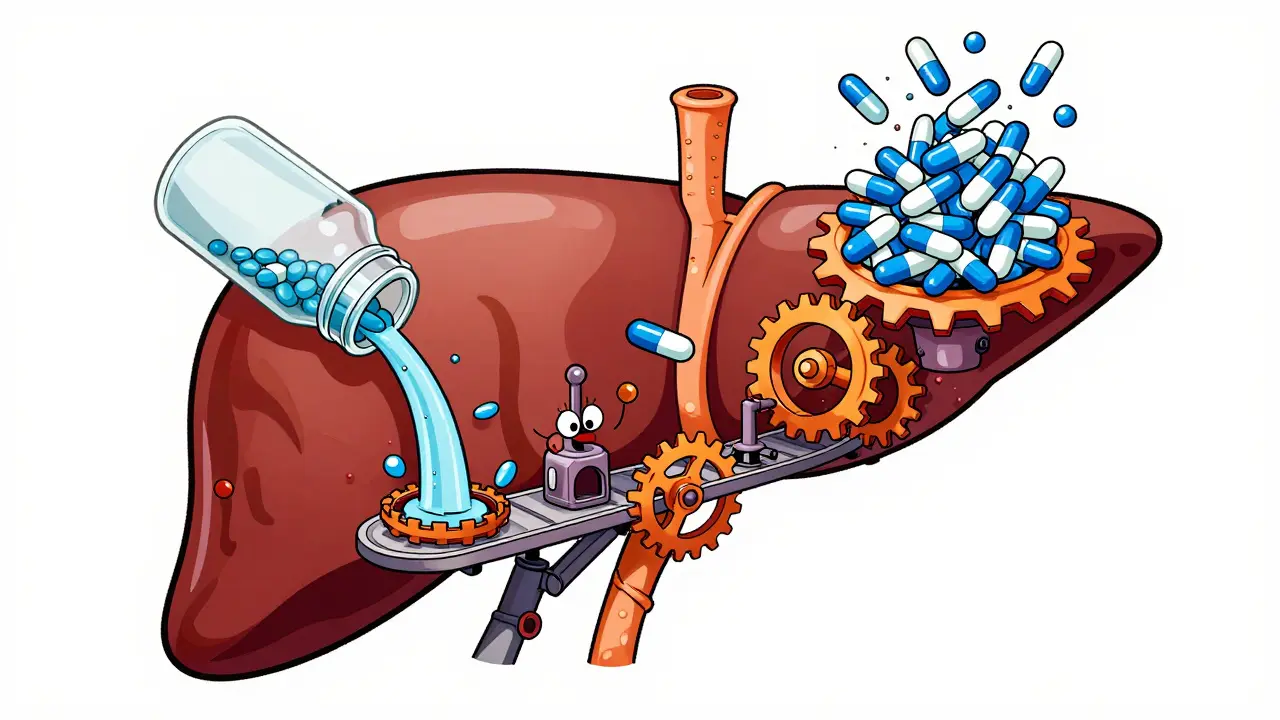
To understand the risk, you have to look at what happens inside your body. It’s not magic; it’s chemistry. When you take a supplement with a medicine, two main things can go wrong. First, the supplement might change how your body processes the drug. This is called a pharmacokinetic interaction. Imagine your liver is a factory that breaks down toxins. Some supplements turn up the speed of that factory, making your body flush the medicine out before it can do its job. Other supplements clog the factory, causing the drug to build up to toxic levels in your blood.
Second, the supplement might fight with or boost the effect of the medicine directly. This is a pharmacodynamic interaction. If you take a blood thinner like warfarin, you want it to keep your blood from clotting too easily. If you add a supplement that also thins the blood, you aren’t getting double protection-you’re risking a hemorrhage. If you take something that makes your blood clot more, you negate the medicine entirely, putting yourself at risk for a stroke or heart attack.
Experts at the American Academy of Family Physicians (AAFP) break supplements into risk tiers. Low-risk ones include things like black cohosh or milk thistle, though even these have caveats. Moderate-risk includes ginkgo biloba. High-risk includes goldenseal and St. John’s wort. Clinicians generally advise avoiding high-risk supplements with any medication. The difference between a low-risk herb and a high-risk one often comes down to how aggressively it messes with your liver enzymes, specifically the cytochrome P450 system.
The Big Three: Supplements That Demand Caution
While there are thousands of supplements, a few stand out as particularly volatile when mixed with standard medications. Knowing these names can save you a trip to the ER.
| Supplement | Primary Risk Mechanism | Affected Medications | Potential Consequence |
|---|---|---|---|
| St. John’s Wort | Induces CYP3A4 enzyme activity by 40-100% | Birth control, HIV meds, transplant drugs, antidepressants | Medication failure, unintended pregnancy, organ rejection |
| Ginkgo Biloba | Additive anticoagulant effect | Warfarin, aspirin, other blood thinners | Increased bleeding risk, elevated INR levels |
| Vitamin E (High Dose) | Inhibits vitamin K-dependent clotting factors | Warfarin and other anticoagulants | 25-30% increase in bleeding risk at doses >400 IU/day |
Let’s talk about St. John’s Wort. Many people take this herbal remedy for mild depression or anxiety. It sounds gentle. But Dr. Paul Offit, Chief of Infectious Diseases at Children’s Hospital of Philadelphia, calls it the most dangerous over-the-counter supplement available. Why? Because it interacts with more prescription drugs than almost any other supplement. It supercharges the enzyme CYP3A4 in your gut and liver. This means your body burns through certain medications much faster than intended.
If you are taking birth control pills, St. John’s wort can reduce their effectiveness by 40-50%. Users report stories like this all the time: “I took it for mood swings, didn’t realize it would make my birth control fail, and got pregnant.” For patients with HIV, it can slash drug concentrations by nearly 60%, leading to viral rebound and resistance. For organ transplant recipients, it can drop cyclosporine levels by half, triggering acute rejection. The data is stark: in 37 clinical trials analyzed by the AAFP, St. John’s wort consistently reduced plasma concentrations of critical meds by 30-80%.
Then there is Ginkgo Biloba. People take it for memory or circulation. But if you are on warfarin, adding ginkgo is like pouring gasoline on a fire. Studies show that 73% of patients on warfarin who added ginkgo needed dose adjustments compared to only 27% in control groups. In 15% of cases, international normalized ratio (INR) levels spiked dangerously high, indicating severe bleeding risk. Even Vitamin E, often seen as a healthy antioxidant, becomes risky at high doses. Taking more than 400 IU per day alongside blood thinners increases bleeding risk significantly by interfering with vitamin K.
The Seven Questions You Must Ask Yourself
Before you buy that bottle off the shelf, pause. You don’t need to be a pharmacist to stay safe, but you do need to ask the right questions. Healthcare providers often spend less than two minutes discussing supplement use during a typical 15-minute appointment. You have to drive this conversation. Here are seven specific questions to ask yourself-or better yet, your doctor or pharmacist-before combining anything new with your current regimen.
- Does this supplement affect my liver enzymes? Specifically, does it impact cytochrome P450 enzymes or drug transporters? If the label or research mentions CYP3A4, CYP2D6, or P-glycoprotein, proceed with extreme caution. These are the highways your drugs travel on. Blocking or speeding up traffic here changes how much medicine ends up in your bloodstream.
- Could this create an additive effect? Are you trying to treat the same symptom with both the pill and the supplement? For example, if you take blood thinners and add a supplement that also thins blood, you aren’t getting safer; you’re getting unstable. Ginkgo plus warfarin increases bleeding risk by roughly 35%.
- Is there evidence this reduces my medication’s effectiveness? Look for data showing whether the supplement lowers drug levels. St. John’s wort reduces digoxin levels by 25%. If your heart medication doesn’t reach therapeutic levels, your condition worsens silently until it’s too late.
- Has this specific combination been studied? Don’t rely on general advice. Only about 15% of supplements have formal interaction studies with common medications. If no study exists, assume there is a potential risk until proven otherwise. Absence of evidence is not evidence of absence.
- What should I monitor if I do take it? If your doctor says it’s okay to try, ask what numbers to watch. If you’re on anticoagulants, you’ll need frequent INR checks. If you’re on HIV meds, you’ll need viral load tests. Monitoring turns guesswork into data.
- Are there safer alternatives? Maybe you want energy. Instead of Asian ginseng, which has more complex interactions, consider American ginseng, which tends to have fewer documented conflicts. Always look for the path of least resistance regarding chemical complexity.
- What symptoms signal a dangerous interaction? Know the red flags. Serotonin syndrome, caused by mixing St. John’s wort with SSRIs like fluoxetine, presents with confusion, rapid heart rate, muscle rigidity, and high fever. Bleeding risks show up as unusual bruising, nosebleeds, or blood in urine. Recognizing these early saves lives.

Who Is Most at Risk?
Not everyone faces the same level of danger. If you are young, healthy, and take no medications, your risk from a single supplement is relatively low. But for vulnerable populations, the stakes are life-or-death. The American Society of Health-System Pharmacists (ASHP) explicitly discourages concurrent use of supplements and drugs for five critical treatment areas.
First, immunosuppressive therapy. Organ transplant patients live on a knife-edge. Too little drug, and the body rejects the organ. Too much, and toxicity sets in. Supplements can tip this balance. About 15% of transplant rejection cases involve supplement interactions. Second, cancer chemotherapy. Chemo drugs have narrow therapeutic windows. Twelve percent of treatment failures relate to supplement interference. Third, HIV treatment. Viral rebound due to drug inefficacy is often linked to St. John’s wort, accounting for 22% of such cases.
Fourth, anticoagulation therapy. Managing blood thinners is notoriously difficult. Eighteen percent of INR instability issues tie back to supplement use. Fifth, hormonal contraceptives. As mentioned, St. John’s wort renders birth control unreliable. If you fall into any of these categories, you must treat every supplement like a potential poison unless cleared by your specialist. The assumption that "natural equals safe" is, as Dr. Tieraona Low Dog of the Mayo Clinic puts it, the single most dangerous misconception in supplement use.
Navigating the Regulatory Gray Area
It helps to understand why this mess exists. The regulatory landscape for supplements is fragmented. The FDA cannot require pre-market safety testing for supplements. They can only act after a product is on the market and harm has occurred. This creates what Dr. Pieter Cohen of Harvard Medical School calls an "ongoing public health experiment where consumers are the test subjects."
However, things are shifting slightly. The FDA launched the Dietary Supplement Ingredient Database (DSID-6) in 2023, offering verified ingredient amounts. The NIH expanded its LiverTox database to track supplement-induced liver injury. Electronic health record systems like Epic now mandate supplement documentation fields, forcing doctors to log what you take. Still, a 2022 Government Accountability Office report found that 70% of supplement labels inaccurately represent ingredient quantities. If the label is wrong, the interaction risk is unpredictable. You might think you’re taking a safe dose, but the actual content could be double or triple what’s stated.
Pharmacists are stepping up. About 89% now routinely screen for interactions during medication therapy management. But primary care physicians lag behind, with only 32% systematically documenting supplement use. The burden falls heavily on you. Use resources like the Drugs.com interaction checker, but remember: user reports there are anecdotal. Real safety comes from professional verification. Never let a marketing claim override medical advice.
Can I take probiotics with antibiotics?
Generally, yes, but timing matters. Antibiotics kill bacteria, including the good kinds in probiotics. To maximize benefit, take probiotics at least two to three hours apart from your antibiotic dose. However, if you are severely immunocompromised, consult your doctor first, as there is a small risk of infection from certain probiotic strains.
Is it safe to take fish oil with blood thinners?
Fish oil has mild blood-thinning properties. At standard doses (up to 1 gram per day), the risk is usually low for most people. However, at higher doses (above 3 grams per day), it can significantly increase bleeding risk when combined with warfarin or aspirin. Always inform your doctor if you are taking high-dose omega-3s while on anticoagulants.
How long does it take for St. John’s Wort to stop interacting with my meds?
St. John’s Wort induces liver enzymes, which takes time to ramp up and time to fade. After stopping the supplement, it can take two to four weeks for your liver enzymes to return to normal baseline levels. During this period, your medication levels may remain altered, so continue monitoring closely with your healthcare provider.
Do vitamins count as supplements that interact with drugs?
Yes. Vitamins are considered dietary supplements. While many are safe, high doses of specific vitamins can cause serious interactions. Vitamin K interferes with warfarin. Vitamin E increases bleeding risk. Niacin can raise blood sugar and interfere with diabetes medications. Always treat multivitamins and single-vitamin supplements with the same scrutiny as herbal remedies.
What should I do if I suspect a supplement interaction?
Stop taking the supplement immediately and contact your healthcare provider or pharmacist. Do not wait for symptoms to worsen. Bring the supplement bottle with you so they can see the exact ingredients and dosage. If you experience severe symptoms like difficulty breathing, chest pain, or uncontrollable bleeding, seek emergency medical attention right away.