DIC Risk Calculator
ISTH DIC Assessment Tool
Calculate the ISTH score to determine if a patient has overt DIC based on lab values. A score of 5 or higher indicates overt DIC requiring immediate medical attention.
DIC Assessment Result
Important: This tool calculates the ISTH score based on published criteria. A score of 5 or higher indicates overt DIC requiring immediate medical attention. Always correlate with clinical findings and patient history.
Drug-induced disseminated intravascular coagulation doesn’t come with a warning label in most cases. You won’t see it listed in the patient information leaflet. It doesn’t show up on routine blood tests unless you’re specifically looking for it. But when it hits, it hits hard-rapidly, unpredictably, and often fatally. A patient on chemotherapy for colon cancer might start bleeding from their IV site. Another on a new blood thinner might develop unexplained bruising and low platelets. Within hours, their organs begin to fail. This isn’t a rare accident. It’s a predictable consequence of a hidden risk that many clinicians still miss.
What Exactly Is Drug-Induced DIC?
Disseminated Intravascular Coagulation (DIC) isn’t a disease. It’s a syndrome-a chain reaction gone wrong inside the bloodstream. Normally, your body uses clotting to stop bleeding after an injury. In DIC, that system goes haywire. Clots form everywhere-at the capillary level, in tiny vessels feeding your kidneys, lungs, liver. These clots use up your platelets and clotting factors. Once those run low, you start bleeding uncontrollably. It’s like your blood turns on itself.
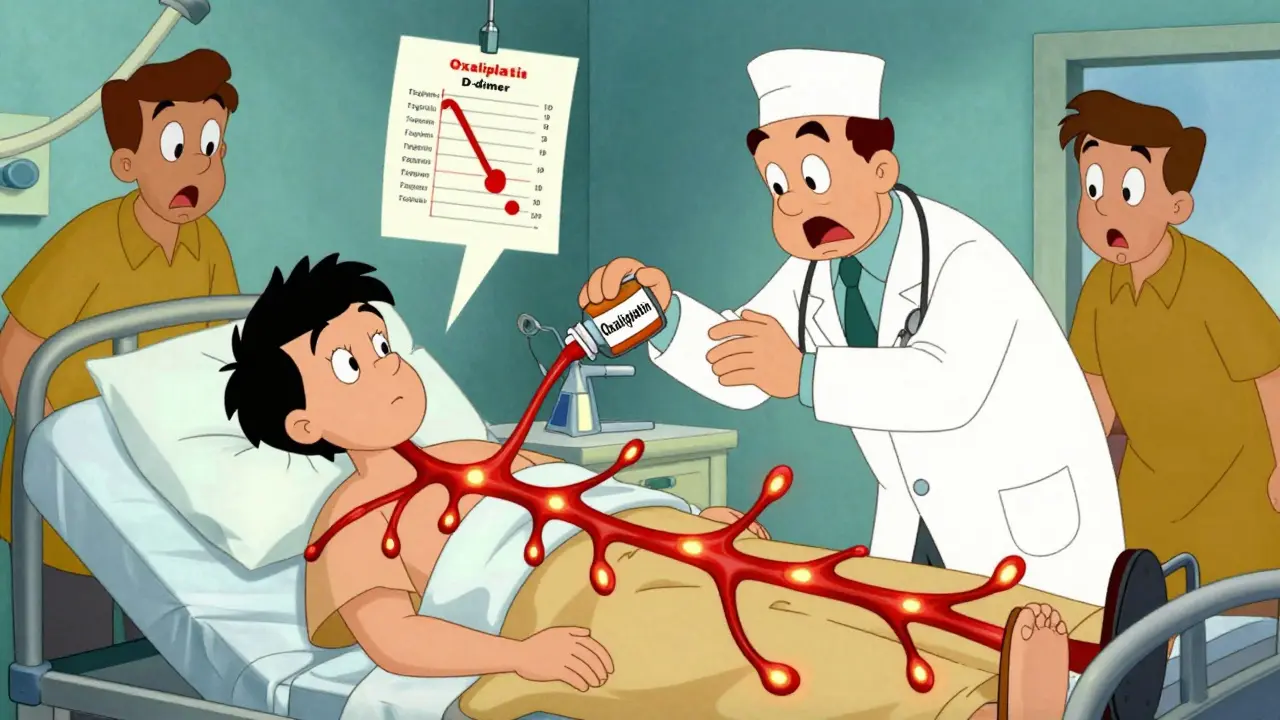
Drug-induced DIC happens when a medication triggers this cascade. The most common culprits? Cancer drugs like oxaliplatin and bevacizumab, anticoagulants like dabigatran, and certain antibiotics. These drugs don’t just cause side effects-they can directly activate the coagulation system. Some damage blood vessel walls. Others trigger tissue factor release, the main switch that starts clotting. In rare cases, the immune system reacts to the drug, attacking platelets and setting off clotting too.
According to the WHO’s global drug safety database, over 4,600 serious cases of drug-induced DIC have been reported since 1968. That’s not a small number. And here’s the problem: nearly half of the drugs linked to this condition aren’t even flagged for this risk in their official prescribing information. Doctors aren’t warned. Patients aren’t warned. So when symptoms appear, they’re mistaken for infection, liver failure, or just bad luck.
How to Spot It Before It’s Too Late
Early recognition saves lives. But DIC doesn’t announce itself with a single symptom. It shows up as a pattern-three or more lab abnormalities happening together. The International Society on Thrombosis and Haemostasis (ISTH) scoring system is the gold standard. It gives points for:
- Platelet count: under 50,000? That’s 2 points.
- Prothrombin time: longer than 6 seconds above normal? Another 2 points.
- Fibrin degradation products: very high? That’s 3 points.
- Fibrinogen: below 1.0 g/L? 1 point.
A score of 5 or higher means overt DIC. But you don’t wait for the score. If a patient on gemtuzumab ozogamicin suddenly has a platelet count of 32,000, a D-dimer 15 times above normal, and fibrinogen at 0.8 g/L-don’t wait for the math. Start acting.
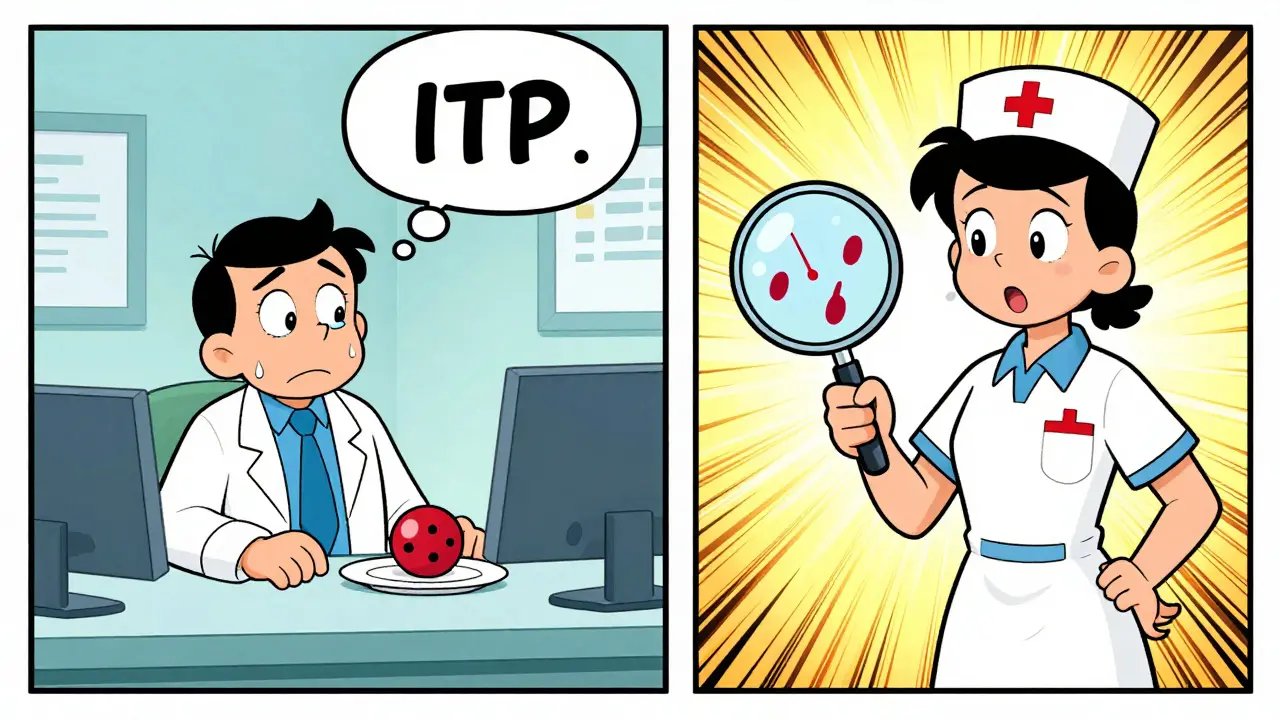
Clinicians often miss it because they’re looking for one thing. A low platelet count? They think ITP. A prolonged PT? They blame liver disease. But in drug-induced DIC, you get both-and more. You’ll also see:
- High D-dimer (often >10x upper limit)
- Low fibrinogen (<1.5 g/L, sometimes <0.8 g/L)
- Prolonged aPTT
- Microangiopathic hemolytic anemia (schistocytes on smear)
And the bleeding? It’s not just nosebleeds. Think oozing from IV sites, gum bleeding, blood in urine, internal bleeding into the abdomen or brain. In one case from Massachusetts General Hospital, a patient on dabigatran developed massive retroperitoneal hemorrhage within 12 hours of the first sign of low platelets. She survived only because her team recognized the pattern immediately.
Stop the Drug. Now.
The single most important step in drug-induced DIC? Stop the drug. No exceptions. No waiting for confirmation. No ‘let’s monitor for 24 hours.’ If you suspect a medication triggered this, discontinue it immediately.
That’s different from sepsis-induced DIC, where antibiotics come first. Here, the trigger is the drug. Continuing it is like pouring gasoline on a fire. In a 2021 case report, a patient with colon cancer developed DIC after oxaliplatin. The oncologist thought it was infection. They gave antibiotics and kept the chemo going. The patient died in 48 hours. When the same team saw a second case, they stopped the drug right away. That patient survived.
Some drugs have specific antidotes. Dabigatran? Give idarucizumab. It reverses the drug within minutes. Warfarin? Give vitamin K and fresh frozen plasma. But for most drugs-like bevacizumab or oxaliplatin-there’s no antidote. Just stop it. And don’t assume the reaction will stop on its own. DIC can keep progressing even after the drug is gone.
Supportive Care: What Works, What Doesn’t
Once you’ve stopped the drug, you’re in support mode. This isn’t about fixing the clotting system. It’s about replacing what’s been used up-and avoiding things that make it worse.
Platelets: Transfuse if the count is under 50,000 and there’s active bleeding. If there’s no bleeding but the count is below 20,000, transfuse anyway. Don’t wait for a bleed to happen. One ICU team in Edinburgh reported that patients who got platelets before bleeding started had a 35% lower mortality rate.
Fibrinogen: This is critical. If fibrinogen drops below 1.5 g/L, you’re in danger. Below 0.8 g/L? You’re at high risk of catastrophic bleeding. Replace it with fibrinogen concentrate or cryoprecipitate. Don’t use fresh frozen plasma for this-it’s inefficient and overloads volume. One study showed patients who got fibrinogen concentrate reached target levels 40% faster than those on plasma.
Red blood cells: Transfuse if hemoglobin drops below 7 g/dL. Don’t aim for 10. You’re not treating anemia-you’re preventing organ damage from low oxygen.
What NOT to do:
- Don’t give heparin unless you’re certain it’s safe. Heparin can help in some cases of DIC, but it’s dangerous if the patient has heparin-induced thrombocytopenia (HIT)-which can mimic DIC. Check for HIT antibodies first.
- Don’t give warfarin. It lowers protein C and S first, which can cause dangerous clots and even skin necrosis.
- Don’t give anticoagulants like antithrombin III or thrombomodulin routinely. Trials show they only help if the patient isn’t already on heparin. And even then, the benefit is small.
And never use antiplatelet drugs like aspirin or clopidogrel. They make bleeding worse.
The Hard Truth: Mortality Is Still High
Even with perfect care, DIC kills. Studies show mortality rates between 40% and 60% when multiorgan failure develops. That’s not because doctors aren’t trying. It’s because the body’s systems collapse too fast. The lungs fill with clots. The kidneys shut down. The brain bleeds. The liver can’t make more clotting factors.
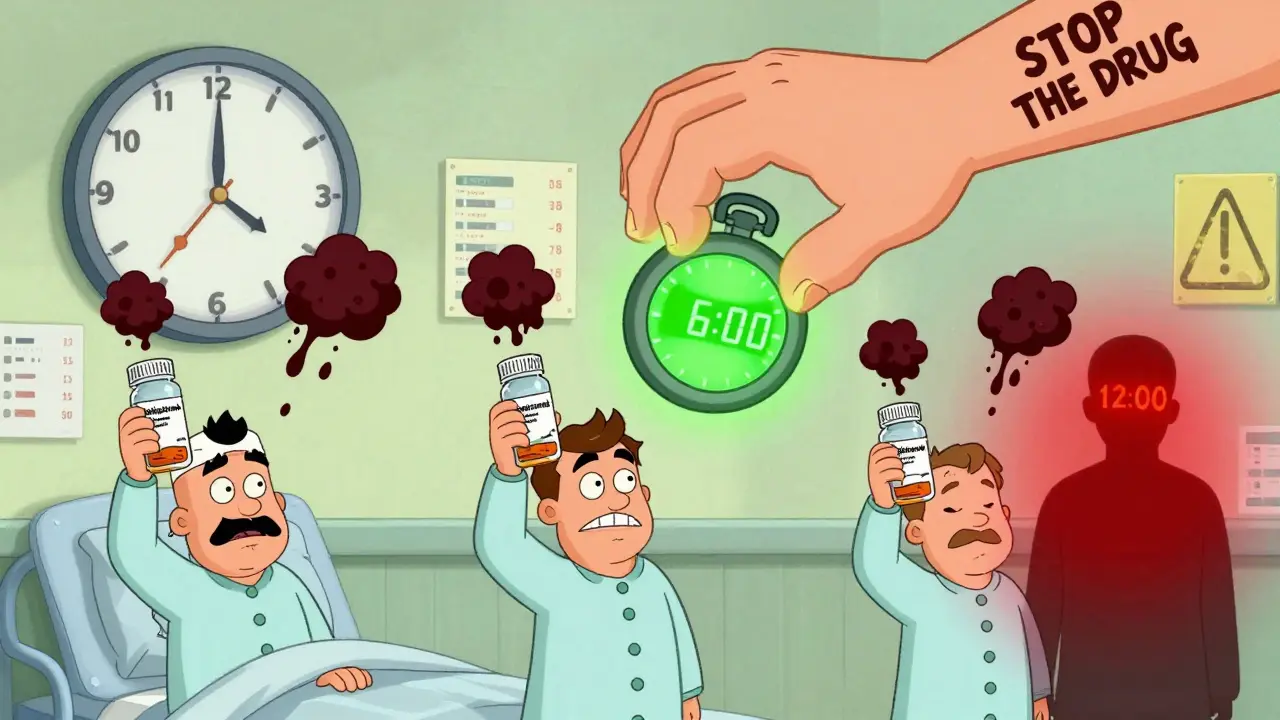
One ICU attending in Edinburgh shared their experience: over 15 years, they saw 12 confirmed cases of drug-induced DIC. Eight died. Most of the survivors had one thing in common-they were recognized within 6 hours of the first symptom. The ones who waited more than 12 hours didn’t make it.
The best predictor of survival? Speed. Speed of stopping the drug. Speed of lab testing. Speed of replacing fibrinogen and platelets. Not the type of ICU. Not the expensive new drug. Just speed.
What’s Changing Now?
There’s progress. In January 2023, the European Medicines Agency issued safety alerts for 7 cancer drugs linked to higher DIC risk. They now require updated risk management plans. The FDA has seen a 23% jump in DIC reports for monoclonal antibodies since 2021-partly because more doctors are reporting it.
Guidelines are catching up too. The International Council for Standardization in Haematology released the first consensus guidelines in 2022 for monitoring high-risk drugs. They recommend weekly blood counts and coagulation tests for patients on bevacizumab, gemtuzumab, or similar agents. That’s a big step. But it’s not yet standard everywhere.
Researchers are also looking at genetic markers. A trial right now (NCT04567891) is testing whether certain gene variants make some people more likely to develop DIC from drugs. That could one day let doctors avoid these drugs in high-risk patients before they even start treatment.
What You Need to Remember
Drug-induced DIC is rare-but deadly. It doesn’t care about your experience level. It doesn’t care if the drug is new or old. If it’s on the list, it can trigger this.
Here’s your checklist:
- Is the patient on a high-risk drug? (Cancer meds, anticoagulants, certain antibiotics)
- Are they bleeding or bruising unexpectedly?
- Is their platelet count dropping fast?
- Is their fibrinogen low and D-dimer sky-high?
If yes to three or more-act. Stop the drug. Order a full coagulation panel. Replace fibrinogen and platelets. Don’t wait. Don’t overthink it. This isn’t a mystery. It’s a medical emergency with a clear protocol.
And if you’re a patient or caregiver? Know the drugs you’re on. Ask your doctor: ‘Could this cause clotting or bleeding problems?’ Don’t assume it’s safe just because it’s prescribed. The truth is, many of these drugs aren’t even labeled for this risk. You have to be your own advocate.
Can a blood thinner like dabigatran really cause DIC?
Yes. Dabigatran is one of the most frequently reported drugs linked to DIC, with 94 confirmed cases in global safety databases. It doesn’t just thin the blood-it can trigger abnormal clotting in some people, leading to widespread microclots and then bleeding. If a patient on dabigatran suddenly develops low platelets and high D-dimer, DIC must be ruled out immediately. Idarucizumab can reverse it, but only if given early.
Is DIC the same as sepsis-induced coagulopathy?
No. While both involve abnormal clotting, the triggers are different. Sepsis-induced DIC is caused by infection and inflammation, and the first priority is antibiotics. Drug-induced DIC is caused by a medication, and the first priority is stopping that drug. The lab findings look similar, but the treatment path diverges at step one. Mistaking one for the other can be fatal.
Why don’t drug labels warn about DIC more often?
Because many drug manufacturers don’t report it, and regulators don’t always require it. A 2020 study found that 75% of drugs linked to DIC in global databases had no warning in their official prescribing information. This gap exists because DIC is rare and often misdiagnosed, so it’s not always recognized as a direct side effect. But as reporting improves, more labels are being updated-slowly.
Can DIC be prevented in patients on high-risk drugs?
Not completely, but you can reduce risk. For drugs like bevacizumab or gemtuzumab, guidelines now recommend weekly blood counts and coagulation tests during treatment. If platelets drop below 80,000 or fibrinogen falls below 1.8 g/L, delay the next dose and investigate. Some hospitals now screen for genetic markers in high-risk patients before starting treatment. Early detection is the best prevention.
What’s the survival rate if DIC is caught early?
If recognized and treated within 6 hours of symptom onset, survival rates can exceed 60%. If treatment is delayed beyond 12 hours, mortality jumps to over 75%. The key factors are stopping the drug immediately, replacing fibrinogen and platelets quickly, and avoiding harmful interventions like heparin or warfarin. Speed, not technology, saves lives.