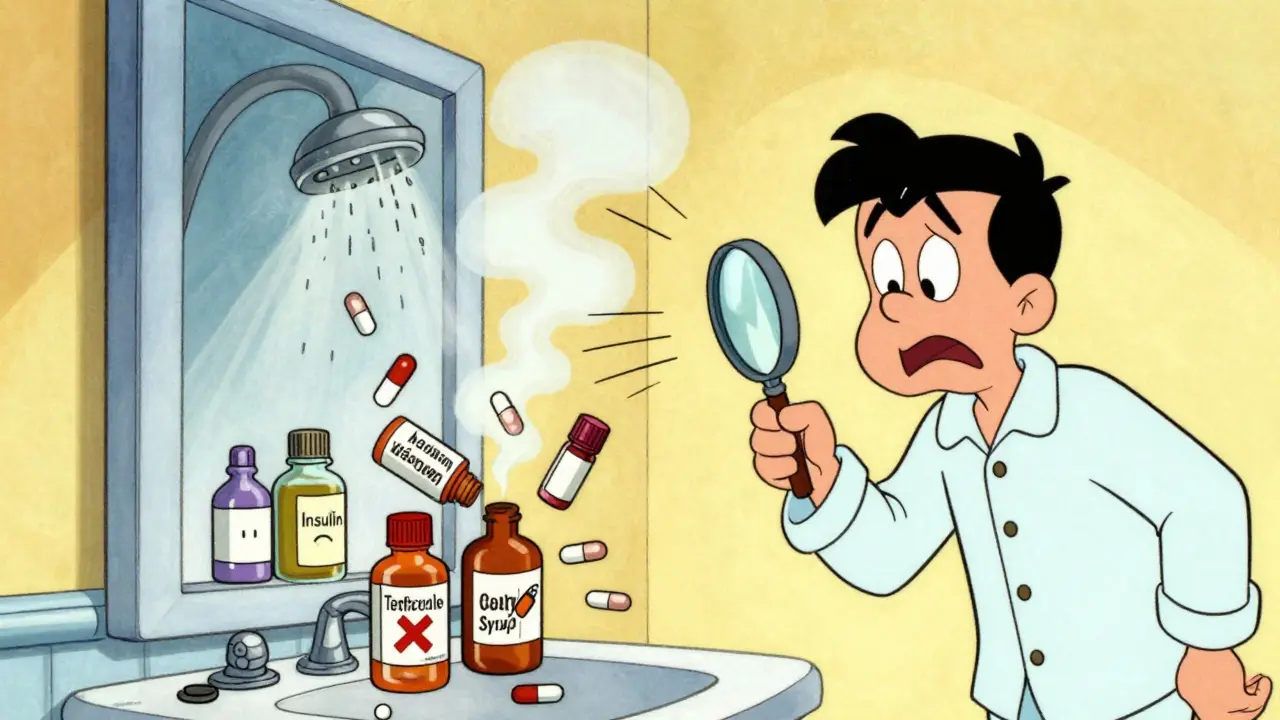
Most people don’t think about their medicine cabinet until they need something-and by then, it’s often too late. Maybe you’re reaching for painkillers from last winter’s cold, or you find an old antibiotic bottle tucked behind the toothpaste. You wonder: Is it still safe? The answer isn’t always obvious. But here’s the truth: expired drugs aren’t just useless-they can be dangerous.
Why Expired Medications Are a Real Risk
Expiration dates aren’t just paperwork. They’re based on real testing by manufacturers to show when a drug loses its strength or becomes unstable. The FDA says expired medications can change in chemical makeup, lose potency, or even break down into harmful substances. That’s not speculation-it’s science.
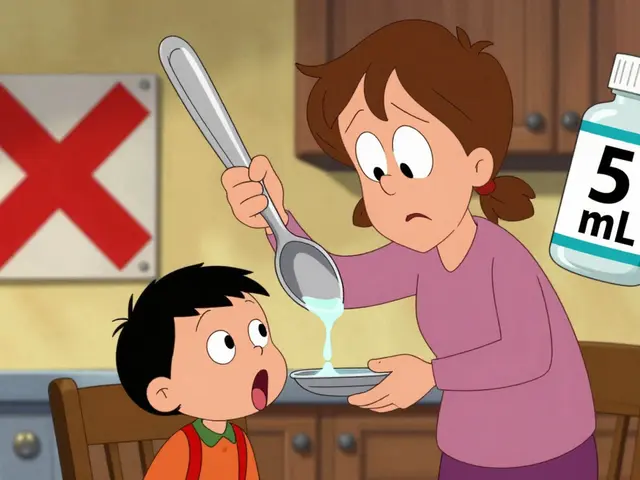
Take tetracycline antibiotics. If you take one past its expiration, it can damage your kidneys. Insulin? If it’s been sitting in a hot bathroom for months, it might not lower your blood sugar at all. Liquid antibiotics? They can grow bacteria. Epinephrine auto-injectors? A weak dose during an allergic reaction could be life-threatening.
And it’s not just about effectiveness. A cluttered cabinet increases the chance of accidental poisoning-especially in homes with kids or older adults. In 2022, U.S. poison control centers handled over 67,000 cases of children swallowing medicines from home cabinets. Older adults, who often take multiple pills, are 37% more likely to grab the wrong bottle when things are messy.
Where You Store Medicine Matters More Than You Think
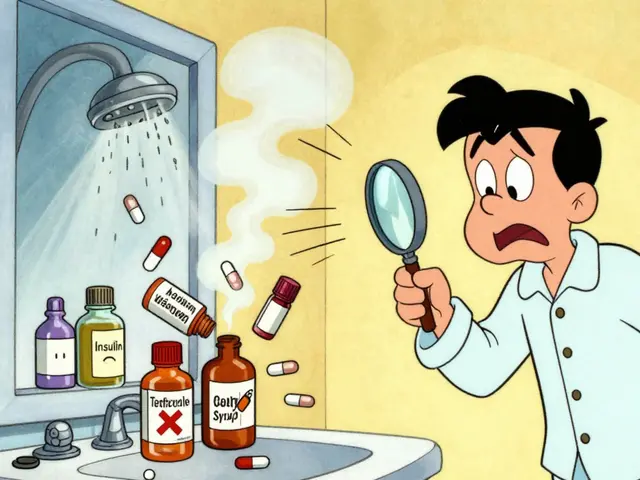
Most people keep their meds in the bathroom. It’s convenient. But it’s also the worst place in the house. Humidity from showers and steam can wreck pills, capsules, and liquids. Yale New Haven Health found that bathroom storage cuts potency by 15-25% in just six months. That means your pain reliever might only be working at 75% strength.
Instead, move everything to a dry, cool spot-like a kitchen cabinet away from the stove or sink. Avoid direct sunlight. Don’t leave them in the car or near a heater. The ideal temperature is below 77°F (25°C). If you live somewhere humid, like Edinburgh, this is even more critical.
What to Check: The Two-Minute Medicine Cabinet Audit
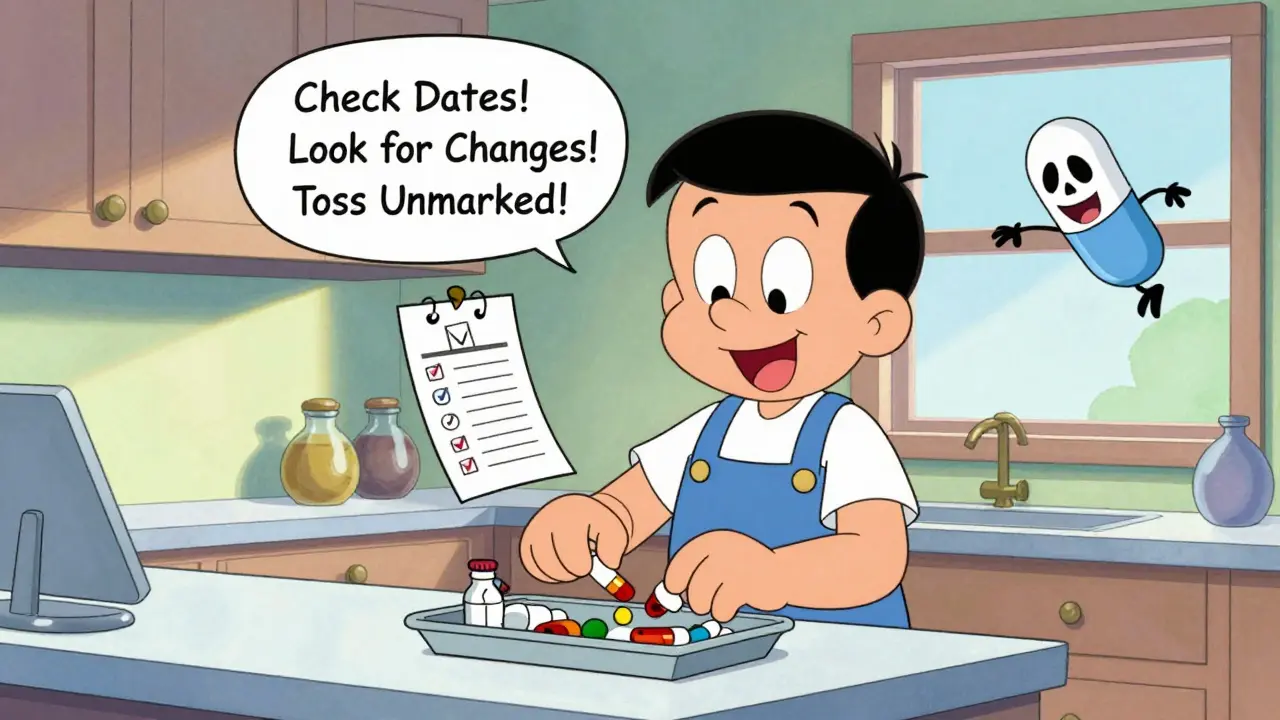
You don’t need to be a pharmacist to do this. Just grab a tray, empty everything out, and go through each item. Here’s your simple checklist:
- Check expiration dates on every bottle, box, and tube-even vitamins and supplements. Don’t assume they last forever.
- Look for changes: Has a pill turned yellow? Does liquid look cloudy? Does anything smell weird? If yes, toss it. These are signs the medicine has degraded.
- Get rid of unmarked containers. If you can’t read the label, you can’t know what it is. No exceptions.
- Apply the one-year rule for prescriptions. Even if the date says 2027, if it’s been over a year since you last filled it, throw it out. Most people don’t use prescription drugs for more than a year anyway.
- Remove anything you don’t use. That old anxiety pill from 2021? The cough syrup you never took? Out.
Pro tip: Do this twice a year-spring and fall. Align it with daylight saving time changes. It’s easy to remember because you’re already checking smoke detectors and batteries.
How to Dispose of Expired Medicine Safely
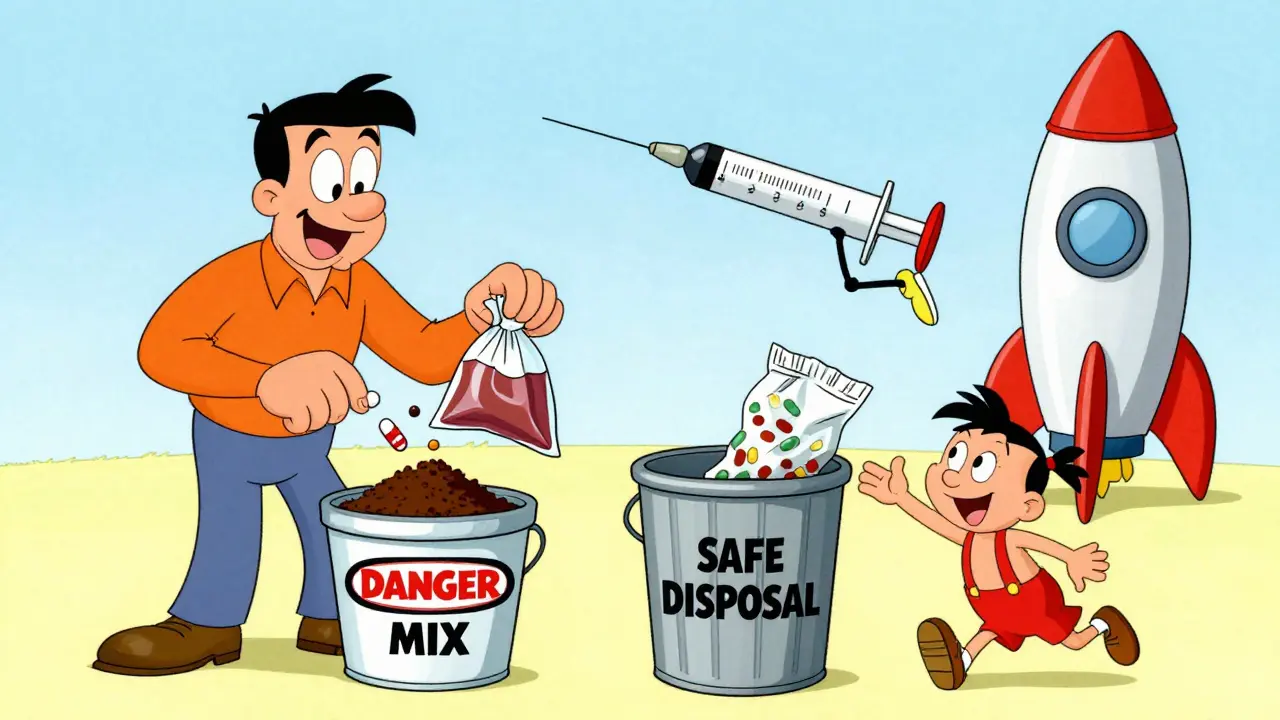
Never flush pills down the toilet. Don’t just throw them in the trash with the bottle still on. Both are risky and environmentally harmful.
The best way? Use a drug take-back program. The DEA runs National Prescription Drug Take Back Days twice a year, and there are over 14,600 permanent collection sites across the U.S. Pharmacies like CVS and Walgreens offer free mail-back envelopes too. Just ask at the counter.
If you can’t get to a drop-off site, here’s the FDA-approved home method:
- Remove pills from their original containers.
- Mix them with something unappetizing-used coffee grounds, cat litter, or dirt. Use at least twice as much filler as medicine.
- Put the mix in a sealed plastic bag or container.
- Scratch out your name and prescription info on the empty bottle before tossing it.
For needles or syringes? Use a rigid container like a plastic laundry bottle or an FDA-approved sharps container. Seal it with heavy-duty tape, label it "SHARPS," and put it in the trash. Never bend or break needles.
What to Keep in Your Cabinet
While you’re cleaning out the bad stuff, make sure you’ve got the essentials for minor emergencies:
- Adhesive bandages (at least 20 of various sizes)
- Gauze pads (10 or more)
- Adhesive medical tape
- Digital thermometer (no mercury)
- Alcohol wipes (10 or more)
- Hydrogen peroxide (for cleaning minor cuts)
- Petroleum jelly (for dry skin or minor burns)
- Scissors with blunt tips
- Tweezers (for splinters or ticks)
Keep these in a small, labeled bin. That way, when you need them, you’re not digging through expired pills.
The Bigger Picture: Why This Matters
Every year, 70% of misused prescription opioids come from home medicine cabinets. That’s not just a statistic-it’s someone’s parent, sibling, or teen. Expired antibiotics also contribute to antibiotic resistance. If a pill doesn’t work fully, it leaves behind bacteria that learn to survive. That’s how superbugs grow.
And it’s getting worse. In 2024, 34 states required pharmacies to include disposal instructions with every prescription. That’s up from just 12 states in 2020. People are finally waking up to the fact that medicine safety isn’t just about taking pills-it’s about storing and getting rid of them right.
There’s even new tech coming. Smart cabinets with humidity sensors and QR-code labels are being tested. They’ll alert you when your meds are at risk. But you don’t need a smart cabinet to stay safe. Just a little time twice a year.
Final Thought: When in Doubt, Throw It Out
You’ve got one job here: keep your home safe. Expired meds aren’t worth keeping. They don’t save money. They don’t help. And they might hurt.
So next time you see a bottle with a faded date, or a pill that’s cracked or discolored, don’t hesitate. Toss it. Clean it. Restock. Do it now. Your future self-and maybe someone else in your home-will thank you.