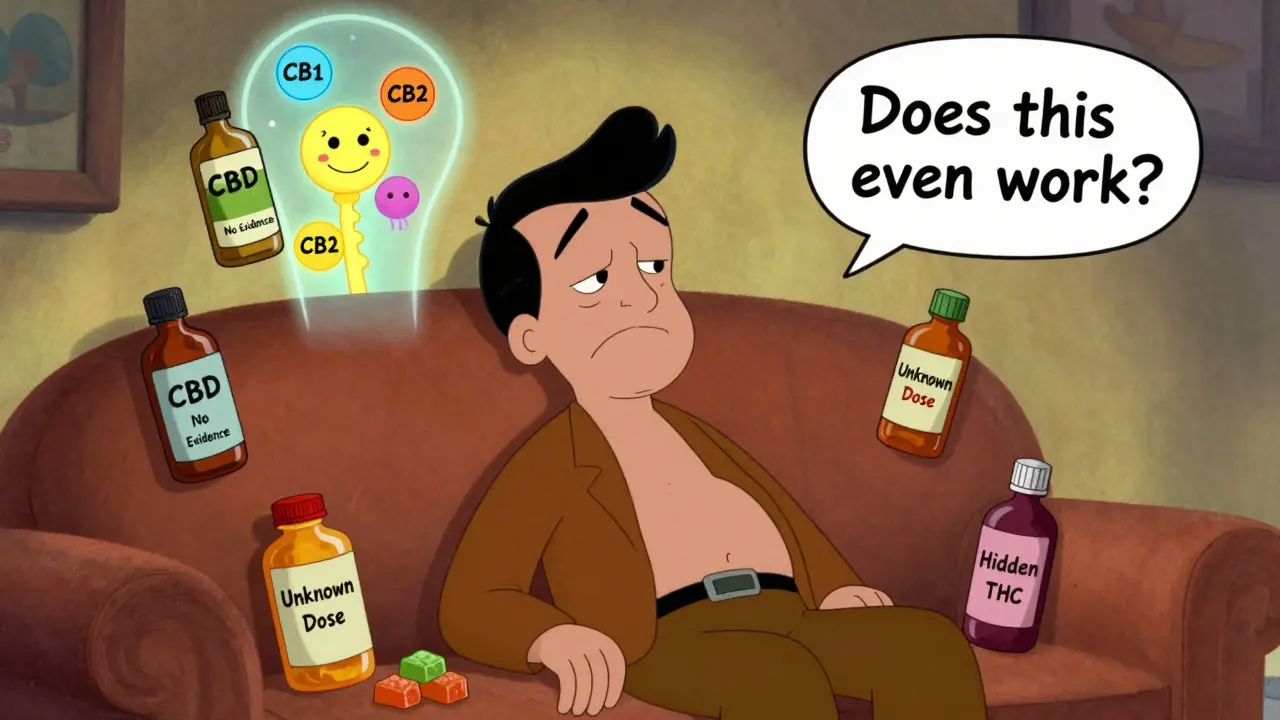
When you're living with chronic pain, the search for relief can feel endless. Opioids come with addiction risks. NSAIDs wear off or damage your gut. Physical therapy helps, but not always enough. So people turn to cannabinoids-CBD oil, THC gummies, cannabis tinctures-promised as natural, non-addictive solutions. But what does the science actually say? Is there real evidence behind the hype, or are people spending hundreds of dollars on products that do nothing?
What Are Cannabinoids, and How Do They Work?
Cannabinoids are chemical compounds found in the cannabis plant. The most studied ones for pain are THC (tetrahydrocannabinol), CBD (cannabidiol), CBG (cannabigerol), and CBN (cannabinol). They don’t work like aspirin or ibuprofen. Instead, they interact with your body’s endocannabinoid system-a network of receptors in your brain, nerves, and immune cells that helps regulate pain, mood, sleep, and inflammation.
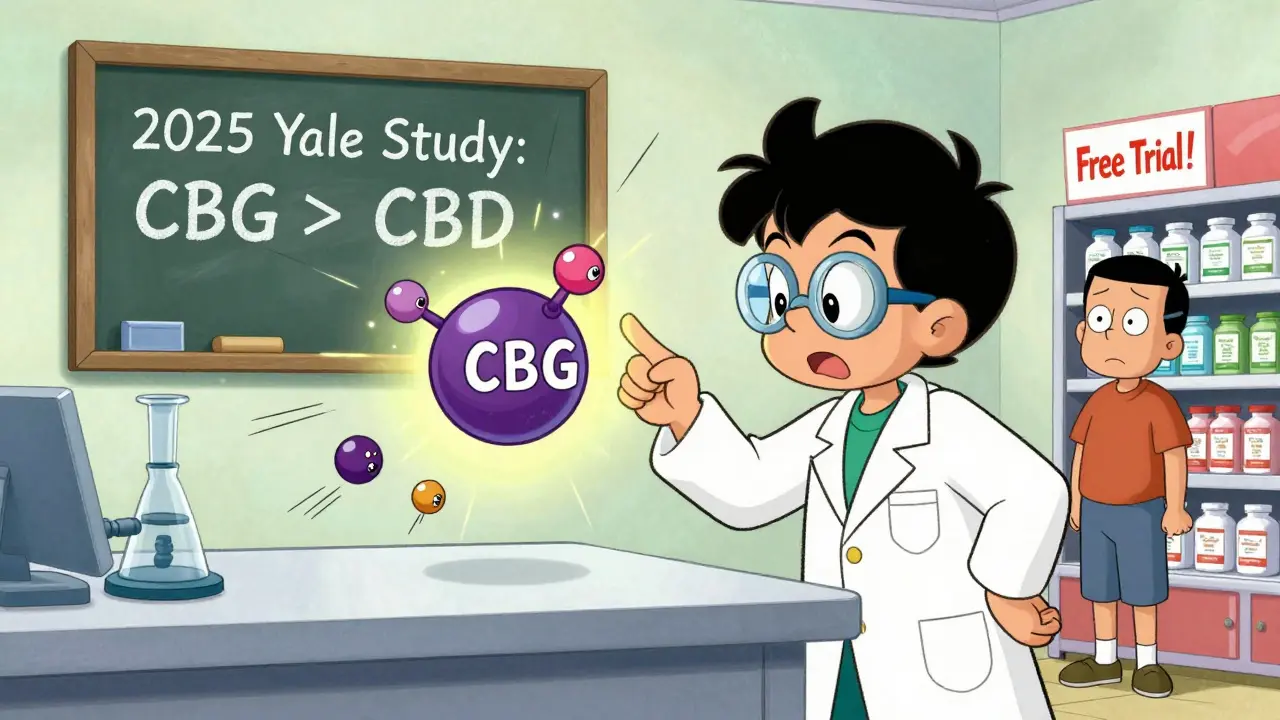
THC binds directly to CB1 receptors in the nervous system, which can reduce pain signals and create a sense of euphoria. CBD doesn’t bind strongly to these receptors. Instead, it influences them indirectly and may reduce inflammation and calm overactive nerves. A January 2025 study from Yale School of Medicine found that CBG, in particular, blocked a key protein involved in peripheral pain signaling, suggesting it could be more effective than CBD alone. That’s important because CBG doesn’t cause intoxication like THC.
Does CBD Actually Work for Pain?
Here’s the problem: a lot of what you hear about CBD comes from marketing, not medicine. A 2023 study from the University of Bath analyzed 16 high-quality clinical trials on pharmaceutical-grade CBD. Fifteen of them found no significant pain relief compared to placebo. That’s not a small difference-it’s a consistent pattern across multiple studies.
Harvard Medical School’s 2020 review echoed this: “There is currently no high-quality research study that supports the use of CBD alone for the treatment of pain.” The FDA has only approved CBD for two rare forms of childhood epilepsy-not for any type of pain. Yet, consumers spend billions on CBD products every year. One analysis of 14,500 online reviews found that 41% of negative reviews cited “no pain relief” as the main reason for dissatisfaction.
And here’s another issue: product quality is a mess. The same University of Bath study tested 60 over-the-counter CBD products. Some had zero CBD. Others had more than 2.5 times the amount listed on the label. Some even contained hidden THC-enough to cause a positive drug test or unwanted psychoactive effects. You can’t trust what you’re getting unless it’s from a regulated medical program.
THC and THC:CBD Combos Show More Promise
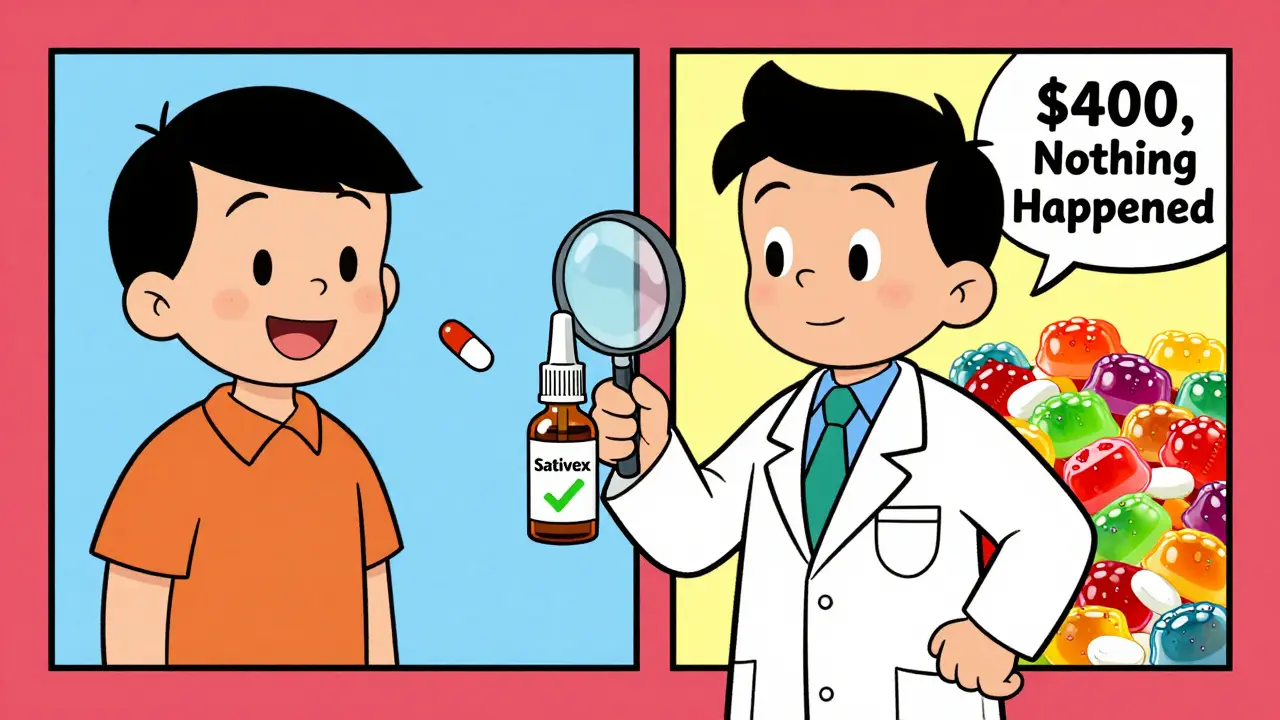
When THC is involved, the evidence changes. A 2015 JAMA meta-analysis found moderate-quality evidence that cannabinoids help with chronic pain, especially when they contain THC. The strongest support is for Sativex, a 1:1 THC:CBD spray approved by Health Canada and several European countries for nerve pain from multiple sclerosis and cancer pain that doesn’t respond to opioids.
Real patients report meaningful results. A testimonial from Leafly in 2023 described a person who reduced their daily oxycodone dose from 120mg to 30mg after switching to a THC:CBD tincture-while maintaining the same level of pain control and experiencing fewer side effects. This isn’t anecdotal magic. It’s a pattern seen in clinical settings where opioids are being tapered.
That’s why experts say: THC matters. CBD alone? Probably not. But THC with some CBD? That’s where the real benefit lies-for certain conditions.
What Types of Pain Do Cannabinoids Help?
Not all pain is the same. Cannabinoids aren’t a magic bullet for every ache. The strongest evidence exists for:
- Neuropathic pain-nerve pain from diabetes, shingles, or multiple sclerosis. The CDC acknowledges “a few studies have found that cannabis can be helpful in treating neuropathic pain.”
- Cancer-related pain-especially when opioids aren’t enough or cause too many side effects.
- Spasticity-muscle stiffness from MS or spinal cord injury.
For back pain, arthritis, or fibromyalgia? The data is weak. One Reddit user, u/PainWarrior22, reported a 30% reduction in fibromyalgia pain after two weeks of CBD oil. Another, u/TruthSeeker87, spent $400 on gummies and felt nothing. That’s the reality: some people get relief. Many don’t. And we can’t predict who will respond.
Dosing: How Much Should You Take?
There are no official guidelines. That’s because most products aren’t regulated. But based on clinical trials and expert recommendations:
- Start low. For THC: 2.5-5mg. For CBD: 10-20mg.
- Go slow. Wait 2-4 hours before taking more. Edibles take longer than tinctures or vapor.
- Track effects. Keep a journal: pain level, mood, sleep, side effects.
- Don’t self-substitute. Don’t quit opioids cold turkey for cannabinoids. Withdrawal can make pain worse. Work with a doctor.
The Yale 2025 study on CBG didn’t specify dosing, but it did show that even low concentrations of CBG had strong effects in lab tests. That suggests future pharmaceutical products might need far less than today’s CBD oils. But right now, we’re flying blind.
Safety: What Are the Real Risks?
Cannabinoids aren’t harmless. The JAMA review found that users were more likely to experience:
- Dizziness (9.2% vs 5.6% in placebo)
- Dry mouth (6.6% vs 2.5%)
- Nausea (5.4% vs 4.0%)
Higher doses of CBD may cause liver enzyme changes, especially if you’re taking other medications like blood thinners, antidepressants, or seizure drugs. These interact through the cytochrome P450 enzyme system, which breaks down most drugs. CBD can slow that process, leading to dangerous buildup.
THC carries additional risks: impaired judgment, anxiety, paranoia, and dependence. Long-term use may affect memory and motivation, especially in younger users. And if you’re using unregulated products, you might be ingesting pesticides, heavy metals, or synthetic cannabinoids like K2-some of which have sent people to the ER.
Why Is There So Much Confusion?
The answer is simple: politics and money.
The U.S. still classifies cannabis as a Schedule I drug-meaning the government says it has “no medical use” and “high abuse potential.” That blocks federal funding for research. Meanwhile, the CBD market exploded. In 2022, it hit $4.3 billion in sales. Companies aren’t waiting for FDA approval. They’re selling hope.
Dr. Chris Eccleston from the University of Bath put it bluntly: “CBD presents consumers with a big problem... It’s touted as a cure for all pain but there’s a complete lack of quality evidence.” He called it a trade on “hope and despair.”
But the science isn’t dead. Phase III trials are underway. GW Pharmaceuticals is testing a THC:CBD combo for cancer pain. Columbia University is studying CBD for chronic back pain. Results are expected by 2025. And if one of them passes, the FDA could approve a cannabinoid-based pain medication by 2027.
What Should You Do?
If you’re considering cannabinoids for pain:
- Don’t buy CBD off Amazon or gas stations. Quality is unregulated. You’re gambling.
- If you live in a state with medical cannabis, talk to a certified provider. Get a product with known THC:CBD ratios.
- For neuropathic or cancer pain, THC:CBD combinations are your best bet based on current evidence.
- Don’t replace opioids without medical supervision. Withdrawal can be dangerous.
- Watch for side effects. Dizziness, dry mouth, or fatigue? Lower your dose.
- Keep a pain journal. Track what works, what doesn’t, and how you feel.
The bottom line? Cannabinoids aren’t a miracle cure. But for some people, with the right product and medical guidance, they can be a valuable tool. The science is still evolving. What we know now is this: THC with CBD has more evidence than CBD alone. And CBG might be the next big thing-if it makes it out of the lab.
Can CBD alone relieve chronic pain?
Based on current clinical evidence, CBD alone does not reliably relieve chronic pain. Multiple high-quality studies, including a 2023 analysis of 16 randomized trials, found no significant benefit over placebo. While some individuals report subjective relief, there is no consistent, scientifically validated dose or mechanism for CBD to treat pain on its own. The FDA has not approved CBD for any pain condition.
Is THC safer than opioids for pain?
THC carries fewer risks of overdose and addiction than opioids, but it’s not risk-free. Opioids caused over 80,000 deaths in the U.S. in 2023. THC doesn’t cause fatal overdose, but it can lead to dependence, anxiety, impaired cognition, and worsened mental health in some users. For certain types of chronic pain-especially neuropathic or cancer-related-THC with CBD may offer comparable relief to opioids with fewer life-threatening side effects, but only under medical supervision.
Are CBD products regulated?
No, not in most places. In the U.S., the FDA has issued over 140 warning letters to companies making unapproved pain claims about CBD. Independent testing found that up to 70% of consumer CBD products contain inaccurate amounts of CBD, and some contain illegal levels of THC or contaminants like pesticides and heavy metals. Only products from state-regulated medical cannabis programs offer consistent quality.
What’s the difference between CBG and CBD for pain?
CBG (cannabigerol) and CBD (cannabidiol) are both non-intoxicating cannabinoids, but they work differently. A January 2025 Yale study found that CBG was more effective than CBD at blocking a key protein involved in peripheral pain signaling. CBG may have stronger anti-inflammatory effects and could be more potent at lower doses. However, CBG is not yet available in most consumer products and has not been tested in large human trials. CBD is widely available but lacks strong evidence for pain relief.
Should I try cannabinoids if I’m on other medications?
Talk to your doctor first. Both CBD and THC can interact with medications metabolized by the liver’s cytochrome P450 system, including blood thinners, antidepressants, seizure drugs, and some heart medications. These interactions can raise drug levels in your blood to dangerous levels. CBD has also been linked to liver enzyme changes at high doses. Never start cannabinoids without reviewing your full medication list with a healthcare provider.