
Imagine waking up every single day with a pounding headache. You reach for your pills, but they stop working or make you feel worse. This is the reality for millions of people living with chronic migraine, a condition defined by having headaches on 15 or more days per month, with at least eight of those featuring migraine symptoms.
For years, doctors had limited options for these patients. Then came a surprising solution that started in cosmetic clinics: Botox. Originally known for smoothing wrinkles, this treatment was discovered to help migraines when patients reported fewer headaches after facial injections. Today, it stands as one of the most effective preventive treatments available, but it isn't right for everyone. Understanding who benefits and how it works can save you time, money, and unnecessary pain.
How Botox Actually Stops Migraines
You might wonder how a muscle-relaxing injection stops a neurological storm. The answer lies deep within your nerve cells. The medical name for the Botox used in treatment is onabotulinumtoxinA. It works by blocking the release of specific chemicals that trigger pain signals.
When you have a migraine, your nerves release inflammatory proteins like calcitonin gene-related peptide (CGRP). These proteins sensitize your nerves, making them fire off pain signals even when there's no real threat. OnabotulinumtoxinA binds to nerve endings and prevents these chemicals from being released. It essentially cuts off the supply line of pain triggers before they can cause an attack.
This mechanism is different from oral medications. While some drugs block blood vessels or calm general brain activity, Botox targets the peripheral nerves directly. Dr. Stephen Silberstein, a leading headache expert, notes that Botox works on C-fibers (slow-pain fibers), while newer antibody treatments target delta fibers. This means they work on different parts of the pain pathway, which is why they can sometimes be used together for better results.
Who Is the Ideal Candidate?
Botox is not a first-line treatment for occasional headaches. If you get two or three migraines a month, this treatment is likely overkill and won't be covered by insurance. It is specifically approved for chronic migraine patients who meet strict criteria.
To qualify, you typically need:
- A diagnosis of chronic migraine (15+ headache days per month).
- Failure of at least three conventional preventive medications (such as beta-blockers, antidepressants, or anticonvulsants).
- Documentation of your headaches through a diary for at least three months.
Patient data shows that those with higher frequency-say, 20 or more headache days a month-often see the biggest absolute improvement. However, people with episodic migraine (fewer than 15 days) generally do not benefit significantly. Clinical trials showed that Botox failed to meet its primary goals for episodic patients, meaning the placebo effect was just as strong as the drug itself in that group.
The PREEMPT Protocol: What to Expect
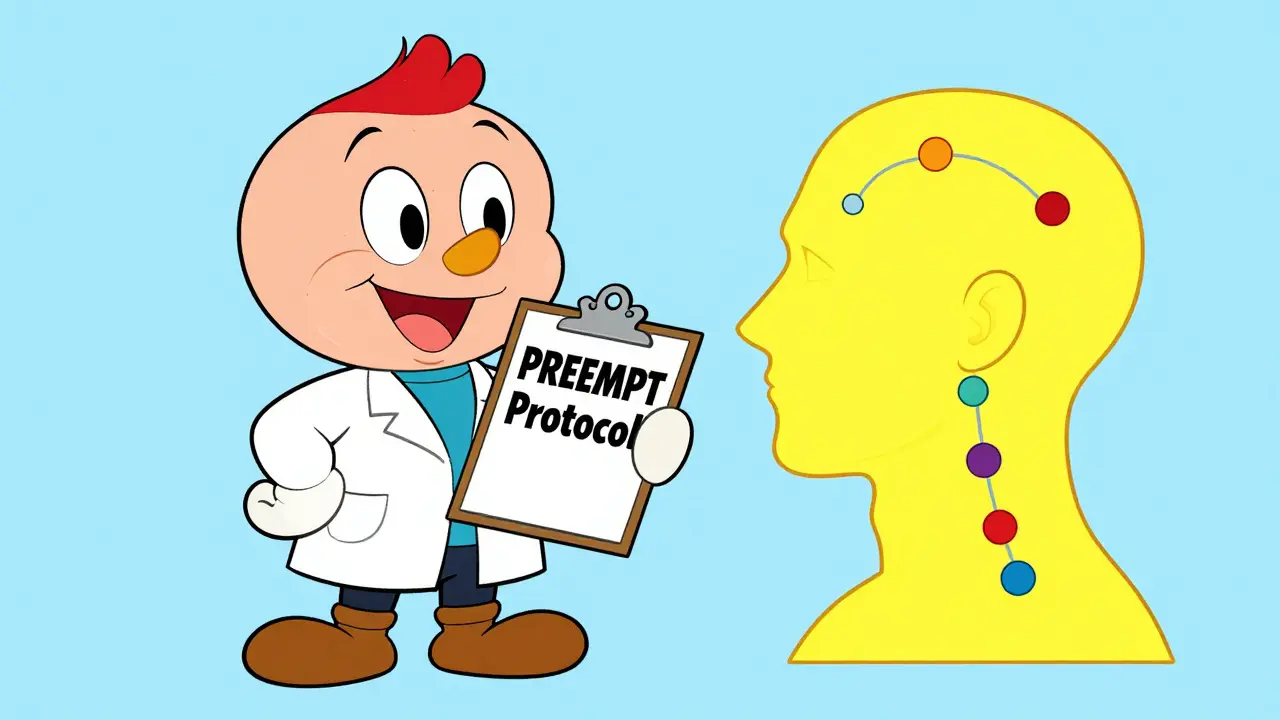
Getting Botox for migraine isn't like getting a quick cosmetic touch-up. It follows a strict medical guideline called the PREEMPT protocol. This ensures consistency and safety across all treatments.
During a session, a trained specialist administers 31 to 39 small injections across seven specific areas of your head and neck. These include the forehead, temples, back of the head, and neck muscles. The total dose ranges from 155 to 195 units. The entire process takes about 15 minutes.
You will need to return for this treatment every 12 weeks. Consistency is key. Most patients don't see the full benefit until their third or fourth cycle. A study published in the Journal of Neurological Sciences found that after 12 months of regular treatment, nearly two-thirds of patients experienced a 50% or greater reduction in headache days. That’s a massive quality-of-life change for someone who previously lived in constant pain.
| Treatment Type | Responder Rate (50%+ Reduction) | Common Side Effects | Administration |
|---|---|---|---|
| Botox (OnabotulinumtoxinA) | 47.2% | Neck pain, mild headache, eyelid droop | Injections every 12 weeks |
| Topiramate (Oral) | 38.5% | Numbness, taste changes, cognitive fog | Daily pill |
| Erenumab (CGRP Antibody) | 51.8% | Constipation, injection site reaction | Monthly injection |
| Propranolol (Beta-Blocker) | 35.1% | Fatigue, low blood pressure, cold hands | Daily pill |
Side Effects and Risks
Like any medical treatment, Botox comes with potential downsides. The good news is that serious side effects are rare. The most common issues are mild and temporary.
About 10% of patients report neck pain after the injections. This usually fades within a few days. Some people experience a slight drooping of the eyelid (ptosis) if the toxin spreads slightly to nearby eye muscles. This is also temporary and resolves as the medication wears off. Headache at the injection site occurs in roughly 7% of cases.
It is crucial to understand that Botox is a preventive treatment, not a rescue medication. It will not stop a migraine that has already started. You still need acute medications like triptans or gepants for breakthrough attacks. Also, because it involves needles, people with severe needle phobia may find the process stressful, though the injections are very fine.
Cost and Insurance Coverage
Money is often the biggest hurdle. Without insurance, a single treatment session costs between $1,500 and $1,800. That adds up to $6,000-$7,200 annually. For many families, this is prohibitive.
However, most major insurance providers in the United States cover Botox for chronic migraine if you meet the clinical criteria mentioned earlier. You will likely need prior authorization. This means your doctor must prove you have tried and failed other cheaper options first. Keep detailed headache diaries; they are your best evidence during the appeals process. According to the American Migraine Foundation, 85% of insurers cover the treatment once proper documentation is provided.
Real-World Patient Experiences
What does success look like? In patient surveys, those who respond well describe "significant improvement" rather than a total cure. One user on a migraine support forum shared that after three rounds of Botox, their monthly migraine days dropped from 25 to 8-10. More importantly, the severity decreased. Attacks that used to leave them bedridden for days became manageable moderate pains.
Not everyone has this success. About 40% of patients see minimal benefit. Reasons for dissatisfaction often include insurance denials, discomfort during injections, or inconsistent results between cycles. Patience is vital. Research shows that 61% of patients do not experience maximum benefit until their third or fourth treatment cycle. Quitting too early is a common mistake.
Future Directions and Alternatives
The landscape of migraine treatment is evolving. Newer drugs targeting CGRP directly, such as erenumab and fremanezumab, offer high efficacy rates (over 50% responder rate). Some experts now combine Botox with these antibodies for synergistic effects, achieving responder rates near 68% in recent studies.
In 2023, the FDA expanded approval to include adolescents aged 12-17 with chronic migraine, opening doors for younger patients who suffer from this debilitating condition. Researchers are also working on longer-acting formulations that could extend the treatment interval from 12 weeks to 16 or 20 weeks, reducing the burden of frequent clinic visits.
If Botox doesn't work for you, don't lose hope. The field is moving fast. Neuromodulation devices, new oral CGRP inhibitors, and personalized medicine approaches are offering new paths to relief. Discuss all options with a headache specialist to find the strategy that fits your unique biology and lifestyle.
Does Botox cure migraines permanently?
No, Botox does not cure migraines. It is a preventive treatment that reduces the frequency and severity of attacks while you continue receiving injections. The effects wear off after about 12 weeks, so ongoing treatment is necessary to maintain benefits. If you stop the injections, your migraine frequency will likely return to pre-treatment levels.
How long does it take for Botox to start working for migraines?
Most patients notice some improvement within the first 30 days, but the full effect often takes longer. Studies show that 61% of patients do not experience maximum benefit until their third or fourth treatment cycle (around 9-12 months). Consistency is key; missing appointments can reduce effectiveness.
Can I use Botox if I only get occasional migraines?
Generally, no. Botox is FDA-approved specifically for chronic migraine (15+ headache days per month). Clinical trials showed it was not significantly more effective than placebo for episodic migraine (fewer than 15 days). Insurance companies will also deny coverage for episodic migraine patients.
Is Botox safe for long-term use?
Yes, extensive post-marketing surveillance over more than 12 years has shown no serious safety signals. Long-term studies indicate that patients can receive injections indefinitely without developing resistance or cumulative toxicity. The most common long-term consideration is the need for consistent clinic visits every 12 weeks.
What happens if Botox doesn't work for me?
If you don't see significant improvement after 3-4 cycles, your doctor may switch strategies. Options include trying CGRP monoclonal antibodies (like erenumab or galcanezumab), adjusting oral preventives, or combining therapies. Some patients respond better to neuromodulation devices or lifestyle interventions tailored to their specific triggers.





Categories