Antidepressants aren’t magic pills. They don’t instantly fix how you feel. But for millions of people struggling with depression, anxiety, or other mental health conditions, they can make a real difference - if chosen and used wisely. The key isn’t just taking any pill off the shelf. It’s understanding which type might work for you, what side effects to expect, and how to stay safe while using them.
What Are the Main Types of Antidepressants?
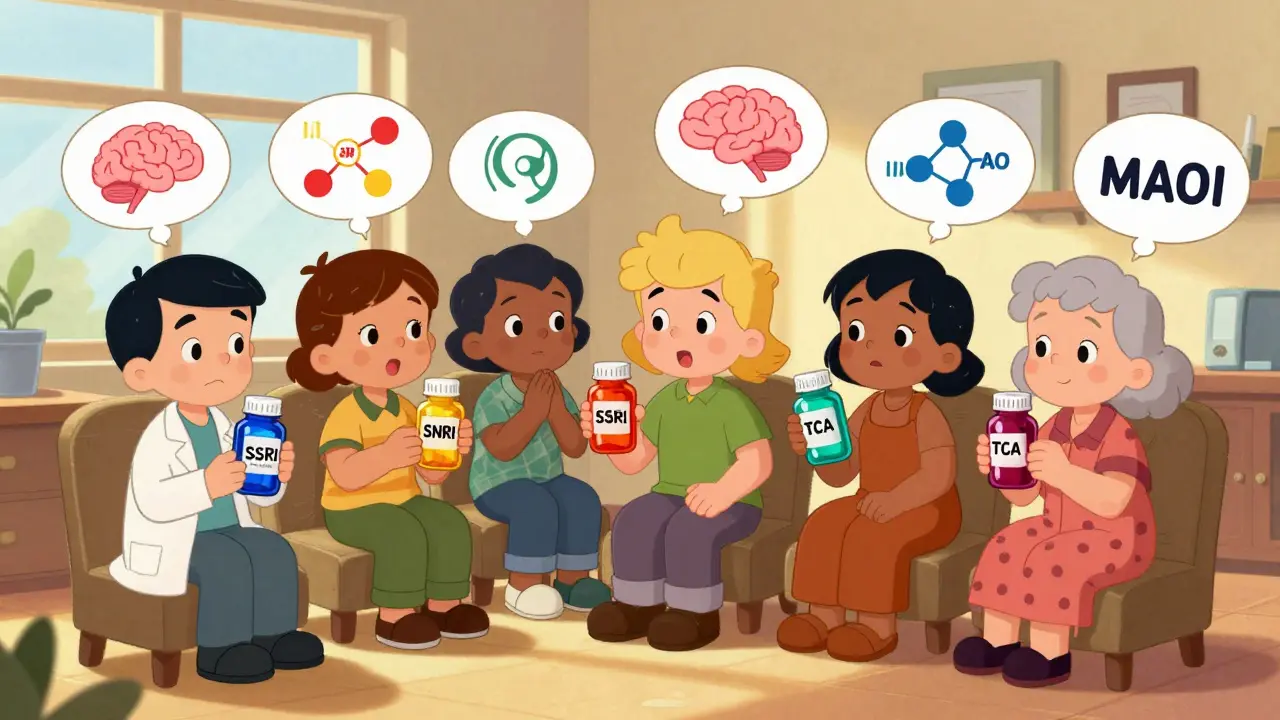
There are five main classes of antidepressants used today. Each works differently in the brain, and each comes with its own set of pros and cons.
SSRIs (Selective Serotonin Reuptake Inhibitors) are the most common. These include fluoxetine (Prozac), sertraline (Zoloft), escitalopram (Lexapro), and citalopram (Celexa). They boost serotonin, a brain chemical tied to mood. Because they’re generally well-tolerated, doctors start here for most patients. SSRIs cause fewer side effects than older drugs and are safe for long-term use.
SNRIs (Serotonin-Norepinephrine Reuptake Inhibitors) like venlafaxine (Effexor) and duloxetine (Cymbalta) affect both serotonin and norepinephrine. These are often used when SSRIs don’t help enough, or when someone also has chronic pain - duloxetine is approved for nerve pain and fibromyalgia.
Bupropion (Wellbutrin) is an atypical antidepressant. It doesn’t touch serotonin. Instead, it boosts dopamine and norepinephrine. That makes it a good choice for people who struggle with low energy or who want to avoid sexual side effects. It’s also used for smoking cessation.
TCAs (Tricyclic Antidepressants) like amitriptyline and nortriptyline were the first antidepressants developed in the 1950s. They work, but they come with a heavier side effect load: dry mouth, blurred vision, dizziness, weight gain, and heart rhythm changes. Today, they’re usually only used if newer drugs fail.
MAOIs (Monoamine Oxidase Inhibitors) like phenelzine and tranylcypromine are rarely used now. They require strict dietary rules - no aged cheese, cured meats, or red wine - because they can cause dangerous spikes in blood pressure. They’re reserved for treatment-resistant depression when nothing else works.
How Long Do Antidepressants Take to Work?
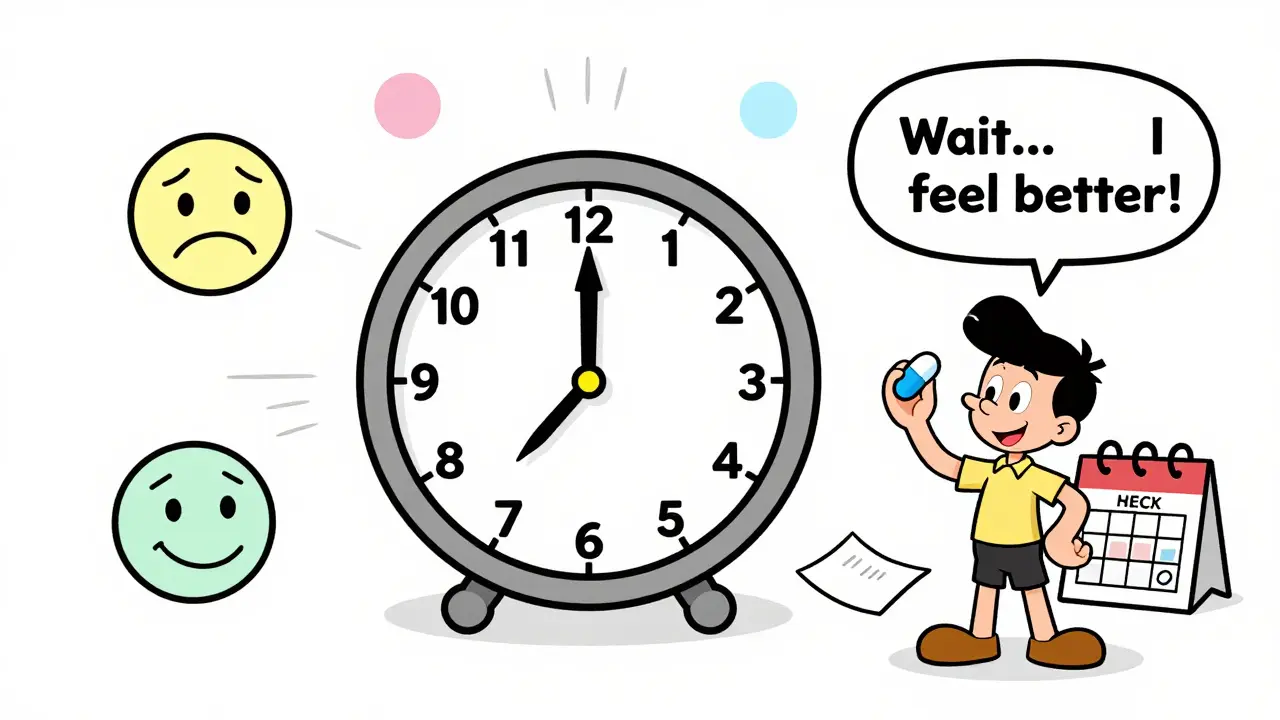
One of the biggest surprises for new users is how long it takes. You won’t feel better after a few days. It usually takes 4 to 6 weeks to notice any change. Full benefits can take up to 12 weeks. This delay frustrates many people. Some stop taking the pill too soon, thinking it’s not working. But if you stop before 6 weeks, you’re not giving it a fair shot.
Doctors recommend sticking with the same medication for at least 6 to 8 weeks before deciding to switch. Patience matters. The brain needs time to adapt to the chemical changes.
What Are the Most Common Side Effects?
All antidepressants come with side effects. Most are mild and fade within a few weeks. But some stick around - and they can be hard to live with.
- Nausea - Happens in 15-20% of people, especially in the first two weeks. Taking the pill with food helps.
- Sexual problems - This is the most common long-term issue. Up to 56% of people on SSRIs report lower libido, trouble getting aroused, or delayed orgasm. It’s not rare - it’s expected.
- Weight gain - About half of long-term users gain weight. Some drugs like mirtazapine and paroxetine are more likely to cause this than others like bupropion.
- Drowsiness or insomnia - Some make you sleepy (like mirtazapine), others keep you awake (like fluoxetine). Timing the dose - morning or night - can help manage this.
- Emotional blunting - Some people say they feel ‘numb.’ They’re not depressed, but they’re not joyful either. It’s a quiet side effect that’s hard to describe until it’s gone.
These aren’t just ‘annoyances.’ They affect whether someone stays on the medication. If side effects are too tough, talk to your doctor. Switching drugs or adding another (like bupropion to counter sexual side effects) can help.
When Are Antidepressants Dangerous?
Most people use antidepressants safely. But there are serious risks - especially early on.
Increased suicidal thoughts - This is real, and it’s why the FDA requires a black box warning. The risk is highest in people under 25. It’s rare, but it happens. If you or someone you know feels worse, more anxious, or has new thoughts of self-harm in the first few weeks, call your doctor immediately. Don’t wait. Don’t assume it’s ‘just adjusting.’
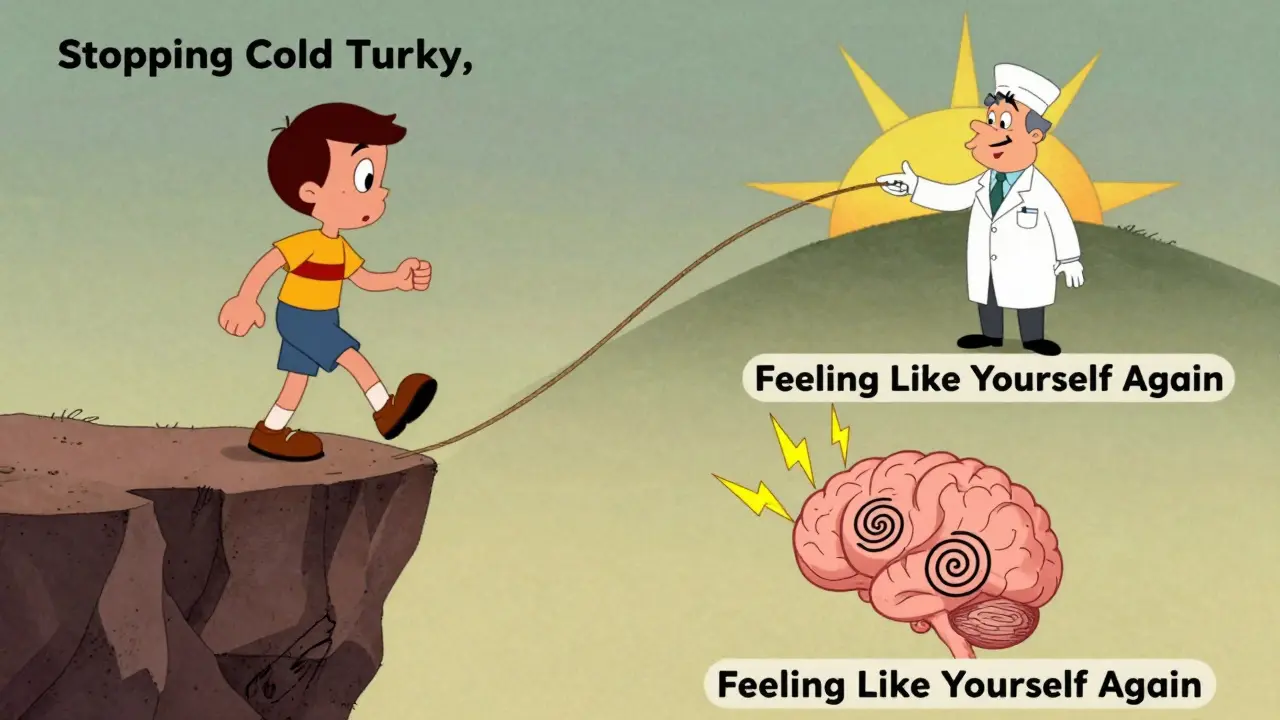
Withdrawal symptoms - Stopping abruptly can cause dizziness, electric-shock feelings in the head, nausea, anxiety, and sleep problems. This is called antidepressant discontinuation syndrome. It affects 50-70% of people who quit cold turkey. Some drugs, like paroxetine, have very short half-lives and cause worse withdrawal than others like fluoxetine. Always taper off slowly under medical supervision.
Pregnancy risks - Using antidepressants in the third trimester can cause temporary symptoms in newborns: jitteriness, trouble feeding, low blood sugar, and breathing issues. But for many women, the risk of untreated depression is greater. The American College of Obstetricians and Gynecologists says the benefits often outweigh the risks. Never stop without talking to your OB-GYN and psychiatrist.
Drug interactions - Antidepressants are processed by the liver. Mixing them with other meds - like blood thinners, painkillers, or even St. John’s Wort - can be dangerous. Always tell your doctor about every supplement and over-the-counter pill you take.
What Does the Evidence Say About Effectiveness?
Antidepressants aren’t perfect, but they work - for the right people.
A major 2018 study in The Lancet analyzed over 500 trials. It found that antidepressants are about 50% more effective than placebo in treating moderate to severe depression. For mild depression, the benefit is small - often no better than therapy or exercise.
Escitalopram and sertraline ranked highest for both effectiveness and tolerability. Paroxetine and mirtazapine were also strong, but more likely to cause weight gain or drowsiness. Bupropion was less effective for depression but better for energy and sex drive.
For people with severe depression, combining antidepressants with talk therapy - especially cognitive behavioral therapy - gives the best results. Neither alone works as well as both together.
How Do You Know Which One Is Right for You?
There’s no test to predict which antidepressant will work for you. It’s trial and error.
Most people try 2 or 3 different drugs before finding one that fits. That’s normal. Don’t feel like you’ve failed if the first one doesn’t work.
Here’s how to think about it:
- If you’re tired and sluggish - try bupropion or SNRIs.
- If you’re anxious with racing thoughts - SSRIs like sertraline or escitalopram are good starts.
- If you have chronic pain - duloxetine might help both mood and body.
- If you’re worried about weight gain or sex drive - avoid paroxetine and mirtazapine.
- If you’ve tried SSRIs before and they didn’t work - consider an SNRI or bupropion.
Genetic testing for drug metabolism (like CYP2D6 or CYP2C19) is becoming available. It can tell if you’re a fast or slow metabolizer. But it’s not yet standard practice. Don’t rely on it alone.
What About Cost and Access?
Generic SSRIs like sertraline and citalopram cost as little as $4 a month with insurance. Brand-name drugs like vortioxetine can run over $500 without coverage. Most insurers cover generics well.
Access isn’t just about money. Many people struggle to find a psychiatrist. Primary care doctors prescribe most antidepressants, but they often don’t have time for follow-up. Make sure you have a plan for regular check-ins - every 1-2 weeks at first, then monthly. Track your mood, sleep, and side effects. Bring that list to your appointments.
What’s New in Antidepressant Treatment?
Science is moving fast. In 2023, the FDA approved zuranolone (Zurzuvae), the first oral pill for postpartum depression that works in days, not weeks. It’s a neuroactive steroid, not a traditional antidepressant.
Esketamine (Spravato), a nasal spray for treatment-resistant depression, works within hours. But it’s expensive, requires clinic visits, and isn’t for everyone.
Researchers are now looking at genetic markers to predict who responds to which drug. Early studies suggest we might soon be able to match patients to medications with 70% accuracy - instead of the current 40-60%.
But for now, the best tool is still: patience, communication, and persistence.
Final Thoughts
Antidepressants are tools - not cures. They don’t fix your life. But they can give you the mental space to fix it yourself. Many people say they feel like they’ve been given a second chance. Others feel trapped by side effects. Both are true.
The goal isn’t to find the ‘best’ antidepressant. It’s to find the one that helps you live better, with fewer downsides. That might take time. It might take trying a few. But it’s worth it.
If you’re on one, don’t stop without talking to your doctor. If you’re thinking about starting one, ask questions. Know the risks. Know the timeline. Know you’re not alone.
How long do antidepressants take to start working?
Most people start noticing small improvements after 4 to 6 weeks. Full benefits often take 8 to 12 weeks. It’s important to stick with the medication for at least 6 weeks before deciding if it’s working. Stopping too early can make you think it doesn’t help - when it just hasn’t had time yet.
Do antidepressants cause weight gain?
Yes, about half of long-term users gain weight. Some drugs are more likely to cause this than others. Paroxetine, mirtazapine, and amitriptyline are high-risk. Bupropion and sertraline are less likely to cause weight gain. If weight becomes a problem, talk to your doctor about switching or adding strategies like diet and exercise.
Can antidepressants make depression worse?
In the first few weeks, some people - especially those under 25 - may feel more anxious, agitated, or have new thoughts of self-harm. This is rare but serious. It’s not a sign the drug isn’t working - it’s a warning sign. If this happens, contact your doctor immediately. Do not stop the medication on your own.
Is it safe to take antidepressants during pregnancy?
Antidepressants used in the third trimester can cause temporary symptoms in newborns, like jitteriness or feeding problems. But for many women, the risk of untreated depression - including harm to the baby - is greater. The American College of Obstetricians and Gynecologists says the benefits often outweigh the risks. Never stop or start medication during pregnancy without consulting both your OB-GYN and psychiatrist.
What’s the best way to stop taking antidepressants?
Never stop suddenly. Withdrawal symptoms - like dizziness, brain zaps, nausea, and anxiety - affect 50-70% of people who quit cold turkey. The safest way is to taper slowly under medical supervision. Drugs with shorter half-lives (like paroxetine) need slower tapers than longer-acting ones (like fluoxetine). Your doctor can create a personalized plan.
Are generic antidepressants as good as brand-name ones?
Yes. Generic versions of SSRIs like sertraline, citalopram, and fluoxetine are chemically identical to their brand-name counterparts. They’re just cheaper. Most doctors start with generics because they’re just as effective and cost a fraction of the price. Insurance usually covers them at the lowest tier.