
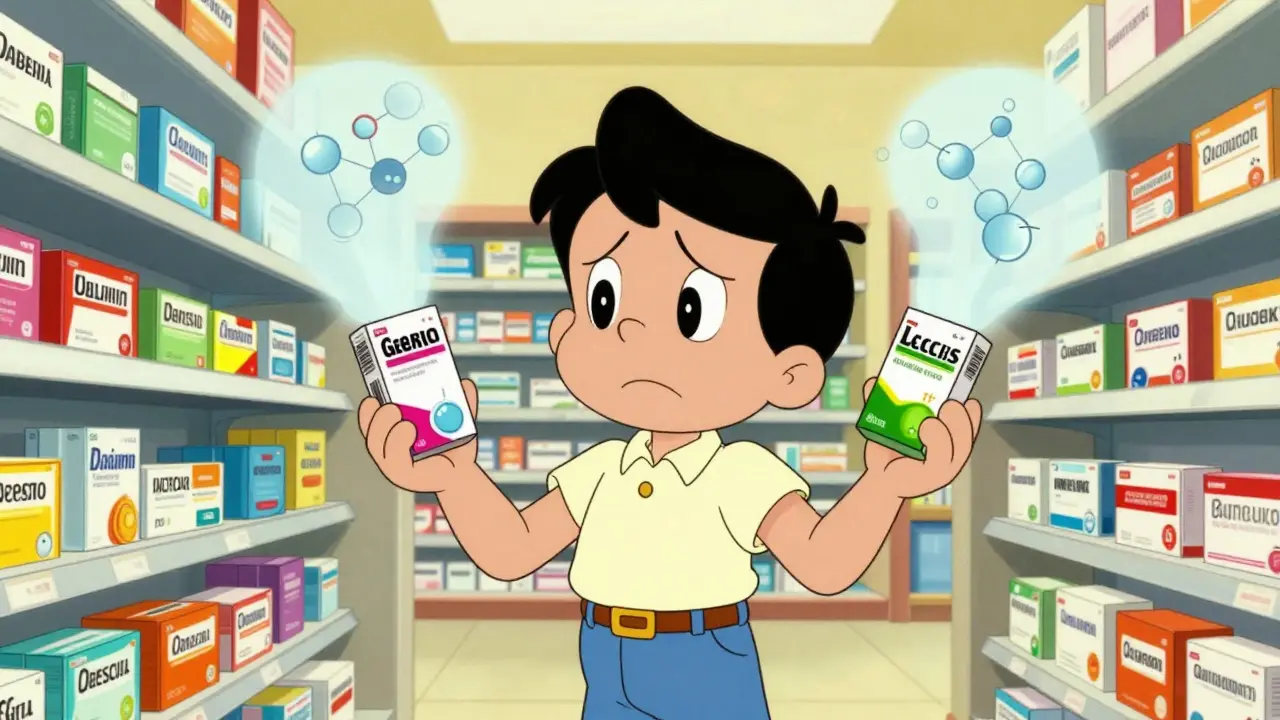
Walk into any pharmacy aisle and you are staring down a wall of colorful boxes promising relief from headaches, congestion, or insomnia. It is easy to grab the brand that looks familiar or matches your symptoms on the front panel. But here is the trap: different brands often contain the exact same chemical doing the heavy lifting. If you do not know what those chemicals are called, you risk doubling up on doses, triggering allergic reactions, or worse-accidental toxicity. Understanding active ingredients is not just about reading small print; it is about taking control of your health without needing a medical degree.
What Exactly Is an Active Ingredient?
When you buy an over-the-counter (OTC) medication, the box contains two types of substances. There are inactive ingredients, which help bind the pill together, add flavor, or preserve shelf life. Then there are active ingredients. These are the specific chemical compounds responsible for producing the therapeutic effect you are looking for. Whether it is reducing fever, blocking histamines during an allergy attack, or numbing a sore throat, the active ingredient does all the work.
The U.S. Food and Drug Administration (FDA) mandates that these ingredients be listed clearly on every OTC product sold in the United States. This requirement stems from the 1997 Food and Drug Administration Modernization Act, which led to the standardized "Drug Facts" labeling format fully implemented by April 1999. Before this standardization, studies showed that nearly 80% of consumers could not correctly identify what was actually in their medicine. The current system forces manufacturers to list the generic name and the exact quantity per dose unit right at the top of the label.
Why are active ingredients more important than brand names?
Brand names are marketing tools designed to build recognition, but they do not indicate the chemical content. Two products with completely different brand names can contain the identical active ingredient in the same concentration. Relying on brand names alone can lead to accidental overdoses if you take multiple products thinking they are different medications when they are chemically the same.
Decoding the Drug Facts Label
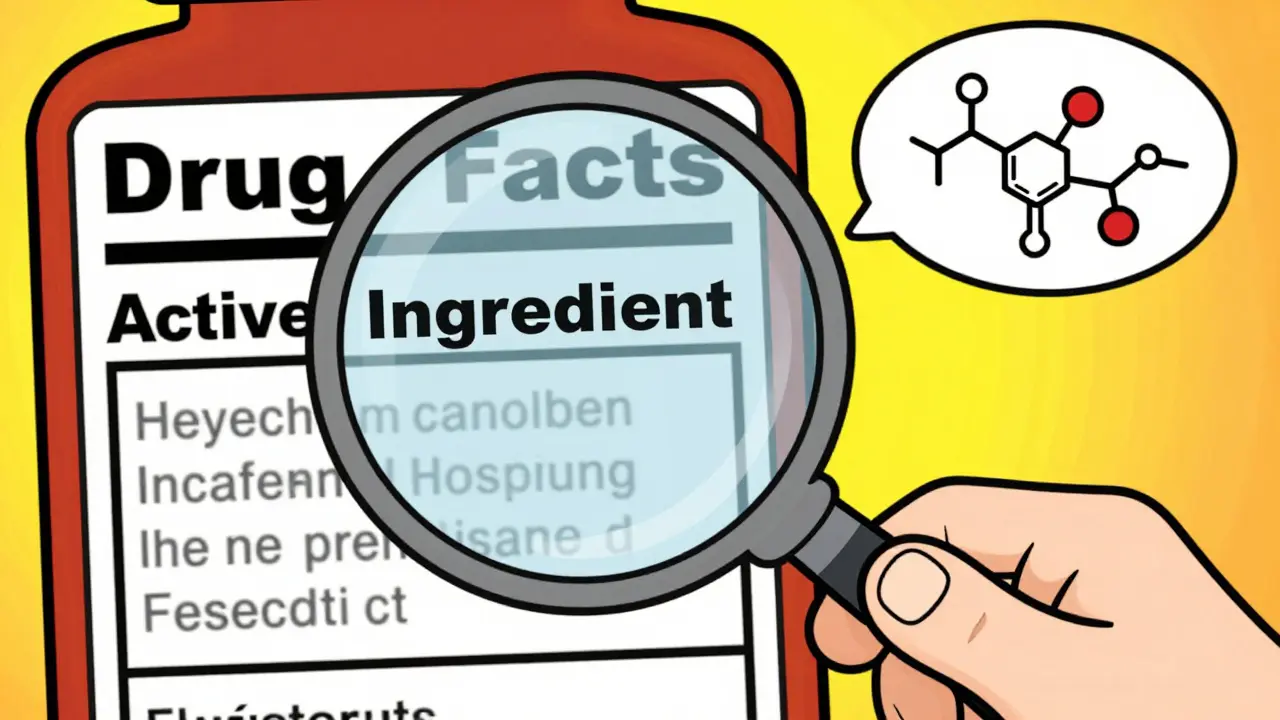
The "Drug Facts" label is your primary tool for safe shopping. It is not optional decoration; it is a regulated document with seven specific sections. The very first section, titled "Active Ingredient(s)," is where you need to focus your attention immediately. By law, this section must appear before any other information, including warnings or directions.
You will see the generic name of the drug followed by its strength. For example, instead of saying "Pain Reliever," the label will state "acetaminophen 325 mg." The FDA requires these amounts to be listed in milligrams (mg) for solid doses like tablets or capsules, or as a ratio for liquids, such as "30 mg per 5 mL." You will never see percentage concentrations for internal oral medications, except in rare topical cases like antifungal creams where weight-to-weight percentages (e.g., "clotrimazole 1% w/w") are used.
If a product treats multiple symptoms, known as a combination product, each active ingredient must be listed separately with its own specific concentration. A multi-symptom cold tablet might list "acetaminophen 325 mg, dextromethorphan hydrobromide 15 mg, phenylephrine hydrochloride 5 mg." Each of these numbers matters because they determine how much of each chemical enters your bloodstream. Misreading these values can lead to taking too much of one component while under-dosing another.
The Danger of Duplication
The most common error shoppers make is assuming that different package designs mean different medicines. Dr. Karen Mahoney, Deputy Director of the FDA's Division of Nonprescription Drug Products, noted that 70% of OTC medication errors occur because consumers fail to check active ingredients. This leads to accidental overdoses when people combine products that share the same active compound.
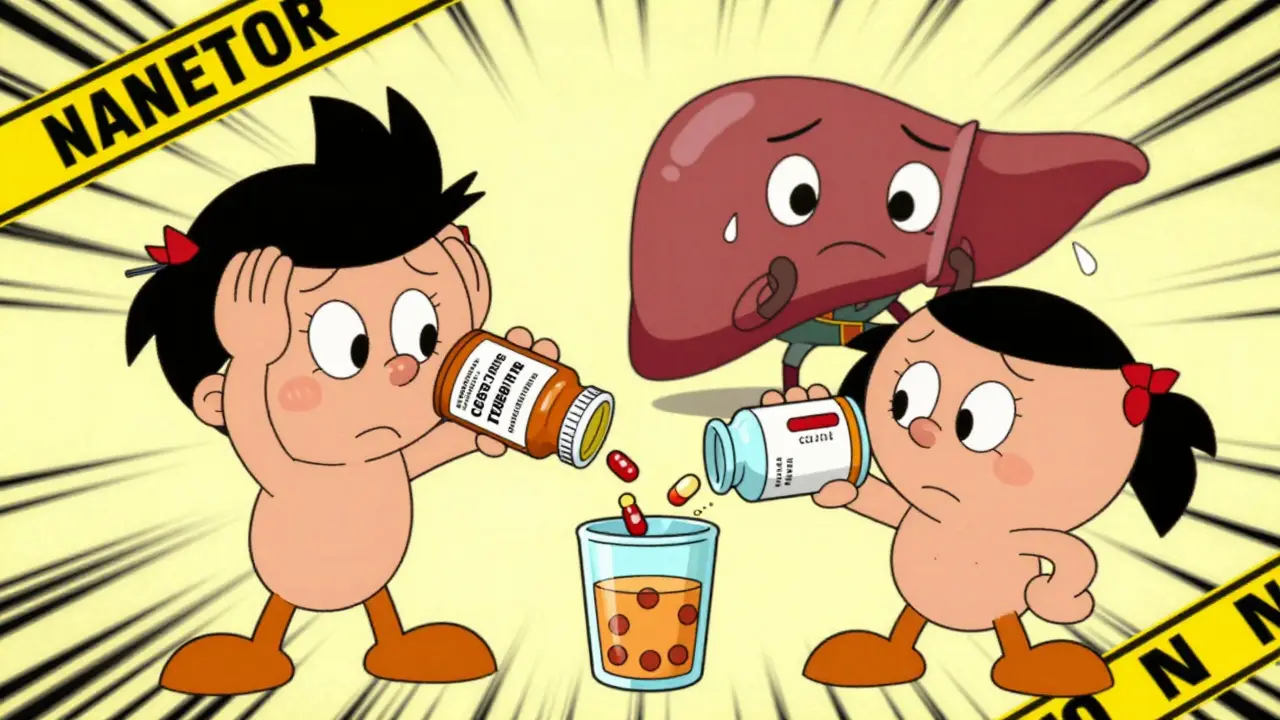
Consider acetaminophen, the active ingredient in Tylenol. It is also found in Excedrin, TheraFlu, NyQuil, and dozens of prescription painkillers. A shopper might take two Tylenol tablets for a headache, then later drink a cup of TheraFlu Nighttime for a cold, unaware that the liquid also contains 650 mg of acetaminophen per dose. Exceeding the maximum daily limit of 4,000 mg for adults can cause severe liver damage. In fact, the FDA has implemented strict Risk Evaluation and Mitigation Strategies (REMS) for acetaminophen, requiring prominent liver warnings on all labels.
This confusion extends beyond pain relievers. Antihistamines like diphenhydramine (found in Benadryl) are often hidden in sleep aids and nighttime cold formulas. Taking a dedicated sleep aid alongside a nighttime cold medicine can result in a double dose of sedating antihistamines, leading to dangerous drowsiness or cognitive impairment, especially in older adults.
| Generic Active Ingredient | Primary Purpose | Common Brand Names Containing It | Max Daily Dose (Adults) |
|---|---|---|---|
| Acetaminophen | Pain/Fever Relief | Tylenol, Excedrin, TheraFlu, NyQuil | 4,000 mg |
| Ibuprofen | Inflammation/Pain | Advil, Motrin, Nurofen | 1,200 mg (OTC limit) |
| Naproxen Sodium | Inflammation/Pain | Aleve, Anaprox | 660 mg (first day), then 440 mg |
| Diphenhydramine HCl | Allergy/Sleep Aid | Benadryl, ZzzQuil, Sominex | 300 mg |
| Loperamide | Diarrhea Control | Imodium, Lomotil (Rx) | 8 mg (OTC limit) |
How Monographs Regulate Safety
You might wonder why you can buy these powerful chemicals without a prescription. The answer lies in the FDA's OTC Drug Review process, established in 1972. This system created "monographs"-legal documents that specify which active ingredients are generally recognized as safe and effective (GRASE) for self-treatment. As of late 2022, there were over 800 distinct active ingredients approved across 107 therapeutic categories.
These monographs set strict limits on concentration. For instance, the internal analgesic monograph permits acetaminophen concentrations between 250-1,000 mg per dosage unit but caps the daily intake. Similarly, the antihistamine monograph limits diphenhydramine to 50 mg per dose for adults and 25 mg for children. These limits are not arbitrary; they are based on decades of clinical data regarding safety margins.
The regulatory landscape shifted significantly with the CARES Act of 2020. This legislation transformed the monograph system from an administrative guideline to a legislative requirement. Manufacturers now face enforcement actions if their products do not comply with final monograph orders. This change ensures that the active ingredients you find on shelves meet rigorous, legally binding safety standards rather than just industry recommendations.
Practical Steps for Safe Shopping
Knowing the theory is helpful, but applying it in a busy pharmacy requires a strategy. The FDA recommends a four-step process that takes less than a minute but can prevent serious harm. First, locate the "Active Ingredient" section. Second, verify that the ingredient matches the symptom you are treating. Third, check the amount per dose. Fourth, and most critically, confirm that this ingredient does not duplicate any other medication you are currently taking.
Dr. Sarah Vinson, a pediatrician at Nationwide Children's Hospital, emphasizes that parents should spend at least 45 seconds examining the label. Her hospital's studies showed that this brief pause reduces medication errors by 68%. When buying multiple products, use the "Active Ingredient Cross-Check" method recommended by the American Society of Health-System Pharmacists. Write down the active ingredient from each box before you leave the store. If you see "acetaminophen" on both the headache box and the cold box, choose only one.
Be aware of inactive ingredients too. While they do not treat symptoms, some people have allergies to dyes, preservatives, or fillers. A user on Drugs.com reported an allergic reaction to Red Dye #40 in a children's liquid ibuprofen, highlighting that the "Inactive Ingredients" section at the bottom of the label is worth a quick glance if you have known sensitivities.
Future Changes: Digital Labels and QR Codes
The way we read drug labels is evolving. The FDA has proposed draft guidance requiring all OTC medications to provide scannable QR codes by 2026. These codes will link to digital Drug Facts labels containing full ingredient information, including detailed allergen warnings for inactive components. Pilot testing indicated that this digital approach improved comprehension by 47% among consumers with limited health literacy.
Additionally, the Consumer Healthcare Products Association launched a $4.2 million campaign called "Know Your Active Ingredients" in early 2023. Early results show a 19% reduction in acetaminophen-related emergency visits in participating retail chains. These initiatives suggest that future shopping will involve less guesswork and more direct access to comprehensive safety data via mobile devices.
Frequently Asked Questions
Can I take two different brands of pain reliever together?
Only if they contain different active ingredients. For example, you can safely alternate acetaminophen (Tylenol) and ibuprofen (Advil) as they work differently. However, you should never take two products that both contain acetaminophen, such as Tylenol and Excedrin, as this can quickly exceed the safe daily limit and cause liver damage.
Why does my medicine list "hydrochloride" or "hydrobromide" after the name?
These terms refer to the salt form of the active ingredient, which helps stabilize the drug and improve absorption. For instance, "diphenhydramine hydrochloride" is the stable form of diphenhydramine. You do not need to worry about the salt part; focus on the main chemical name (diphenhydramine) to avoid duplication.
Are OTC drugs weaker than prescription drugs?
Often, yes. OTC versions typically contain lower concentrations than their prescription counterparts. For example, OTC ibuprofen is limited to 200 mg per tablet with a max daily dose of 1,200 mg, whereas prescription ibuprofen can range from 400-800 mg per tablet. Always follow the OTC dosing instructions unless directed otherwise by a doctor.
What should I do if I accidentally took too much of an active ingredient?
Contact Poison Control immediately at 1-800-222-1222 in the US or seek emergency medical attention. Do not wait for symptoms to appear. Overdose symptoms, particularly from acetaminophen, can be delayed but may cause irreversible organ damage. Bring the medication packaging with you to show healthcare providers exactly what was ingested.
Do I need to check active ingredients for topical creams?
Yes. Topical medications also have active ingredients, such as clotrimazole for fungal infections or hydrocortisone for itching. Using multiple topical steroids simultaneously can thin the skin and cause systemic absorption issues. Always check the percentage strength (e.g., 1% vs 2%) to ensure you are using the correct potency for your condition.


Categories