Imagine spending 20 minutes of your shift just double-checking whether you can legally swap a brand-name drug for a generic in a different state. For pharmacists working in telepharmacy or multi-state chains, this isn't a hypothetical-it's a daily headache. While we often think of medicine as a standardized science, the laws governing generic substitution laws are a fragmented patchwork of 51 different regulatory frameworks (50 states plus DC).
The core problem is that there is no single "national law" telling a pharmacist when they can substitute a drug. Instead, they have to navigate a mix of mandatory and permissive systems that can change the moment they cross a state line. This doesn't just create administrative burnout; it introduces real risks of medication errors and legal liability.
| Framework Type | What it Means | Prevalence | Typical Impact |
|---|---|---|---|
| Mandatory | Pharmacists must substitute unless the doctor says "Dispense as Written." | 19 States | Higher generic use, lower costs. |
| Permissive | Pharmacists may substitute, but it is not required. | 31 States + DC | Variable generic uptake. |
| Restrictive | Requires explicit prescriber or purchaser authorization. | A few (e.g., Oklahoma) | Slower substitution rates. |
How Generic Substitution Actually Works
At its heart, substitution is about Therapeutic Equivalence, which is the determination that a generic drug will produce the same clinical effect and safety profile as the brand-name version. Most states rely on the FDA Orange Book, a massive database that lists approved drugs and their equivalents. If a drug has an "A" rating in the Orange Book, it's generally considered a slam dunk for substitution. However, some states don't stop there; 18 states add their own extra criteria on top of the FDA's findings, making the process more complex.
States also use different "formulary" approaches to manage these lists. Some use a positive formulary, which is basically a "yes list" of generics that are officially approved for substitution. Others use a negative formulary, which is a "no list" of drugs where substitution is strictly forbidden. If you're a pharmacist in New York, you might have more flexibility based on broad therapeutic determinations, whereas in California, the rules are tied much more tightly to the Orange Book's specific designations.
The Liability Gap: Where Pharmacists Take the Risk
One of the most stressful parts of this system is the legal gray area regarding liability. In a perfect world, a pharmacist following the law wouldn't be held responsible if a patient had an adverse reaction to a therapeutically equivalent generic. But that's not the reality in nearly half the country. About 24 states do not provide explicit liability protection for pharmacists who perform substitutions.
This creates a "fear factor" in the pharmacy. For example, a pharmacist in Connecticut might hesitate to substitute a high-risk medication like warfarin-even if it's clinically appropriate-simply because they aren't legally shielded from a potential lawsuit. This effectively kills the cost-saving potential of generics in those specific scenarios.
The Biologic Divide: Why Biosimilars are Different
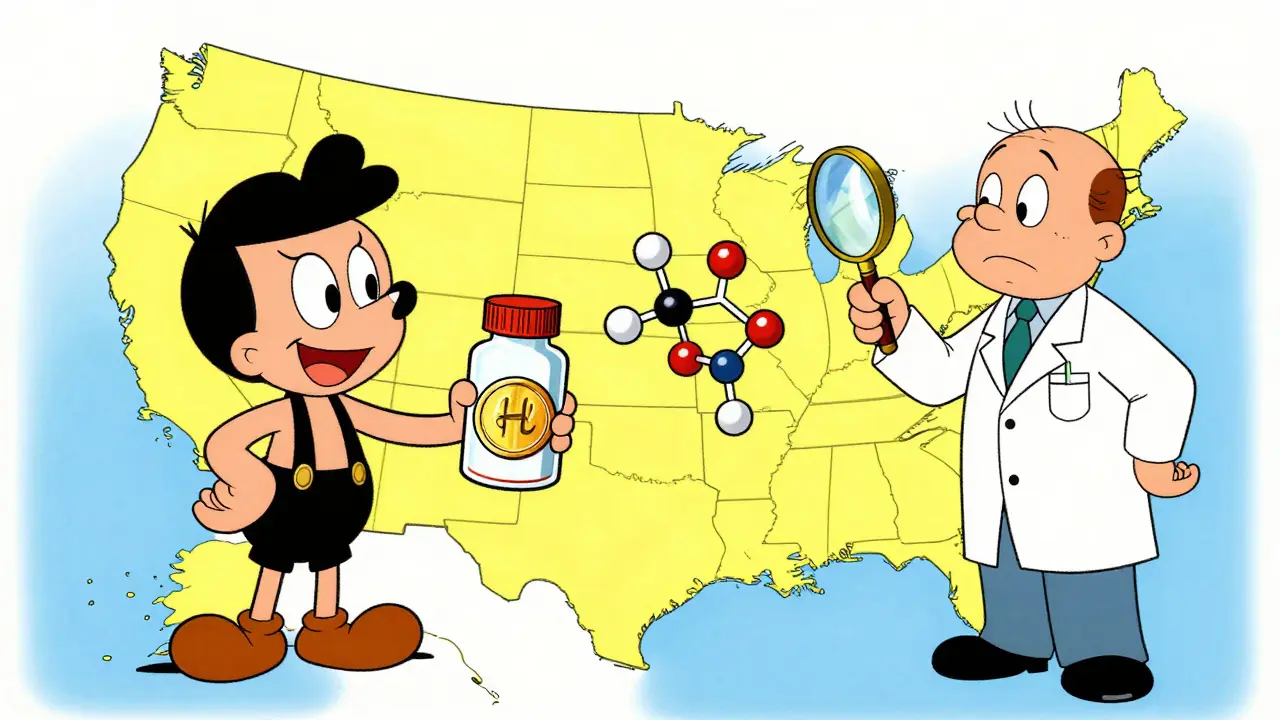
If you think small-molecule generics (like a standard tablet) are complicated, Biosimilars are a different beast entirely. Biosimilars are highly similar versions of complex biologic medicines, which are grown in living cells rather than chemically synthesized. Because they are so molecularly complex, almost no state treats them the same way as traditional generics.
About 90% of states have much stricter rules for biosimilars. In 45 states, the pharmacist must notify the physician after a biologic substitution is made. California takes this a step further, requiring this notification within five days via an electronic system the doctor can access. This high barrier to entry is why biosimilars only have about a 14% uptake rate, while traditional generics are used in over 90% of prescriptions.
The Real-World Cost of Fragmentation
This isn't just a paperwork problem; it's an economic one. When substitution laws are mandatory, the healthcare system saves money. The Congressional Budget Office estimated that generics saved the U.S. $1.68 trillion between 2008 and 2017. In states with mandatory laws, per capita prescription costs are about $55 lower annually compared to permissive states.
However, the cost of *managing* these laws is huge. Large pharmacy chains spend an average of $1.2 million per state every year just to keep their compliance systems updated. For independent pharmacies, the burden is even heavier. Because they lack the massive legal teams of a corporate chain, 68% of independent pharmacies report more substitution-related errors than their corporate counterparts.

Moving Toward a National Standard
The pharmacy world is hitting a breaking point with this fragmentation. In 2024, the National Association of Boards of Pharmacy started a project to move from 51 unique frameworks down to just three regional models. The goal is to stop the madness of state-by-state variation and make it easier for pharmacists to practice safely across borders.
There is also a push for federal preemption, where the federal government would set one national standard for substitutions. While this faces political hurdles because states like to keep control over their own pharmacy practice, 72% of pharmacy association leaders support it. They argue that the current system is an obsolete relic from the 1970s that no longer fits a modern, integrated healthcare system.
What is the difference between mandatory and permissive substitution?
In mandatory states, pharmacists are required to substitute a generic unless the doctor specifically writes "dispense as written." In permissive states, the pharmacist can choose to substitute, but they aren't forced to do so by law.
Does the FDA decide which drugs can be substituted?
The FDA provides the primary reference through the Orange Book, which identifies therapeutic equivalence. However, individual state laws decide if and how pharmacists are allowed to use that information to make a substitution.
Why are biosimilar laws more strict than generic laws?
Biologics are larger, more complex molecules than the small-molecule chemicals used in standard generics. Because they are harder to replicate exactly, states impose stricter notification requirements for doctors and patients to ensure safety.
Do patients always have to be notified when a drug is substituted?
No. It depends on the state. About 20 states do not require explicit patient notification, while others require it regardless of whether the packaging mentions the generic name.
Are pharmacists legally protected if a substitution goes wrong?
It depends on the state. About 26 states provide explicit liability protection, but 24 states do not, meaning pharmacists in those regions may be more vulnerable to lawsuits.
Next Steps for Compliance
If you are a pharmacy owner or a practitioner operating in multiple states, don't rely on memory. Use updated tools like the National Association of Boards of Pharmacy's online resource, which is updated quarterly. For those using automated systems, look for software like ScriptPro that integrates real-time state rules to reduce manual verification errors.
If you're a patient, the best way to ensure you're getting the right medication at the best price is to ask your pharmacist directly: "Is this a mandatory substitution state, and do I have a choice in the generic brand used?" Being proactive can help you avoid the confusion created by these fragmented laws.