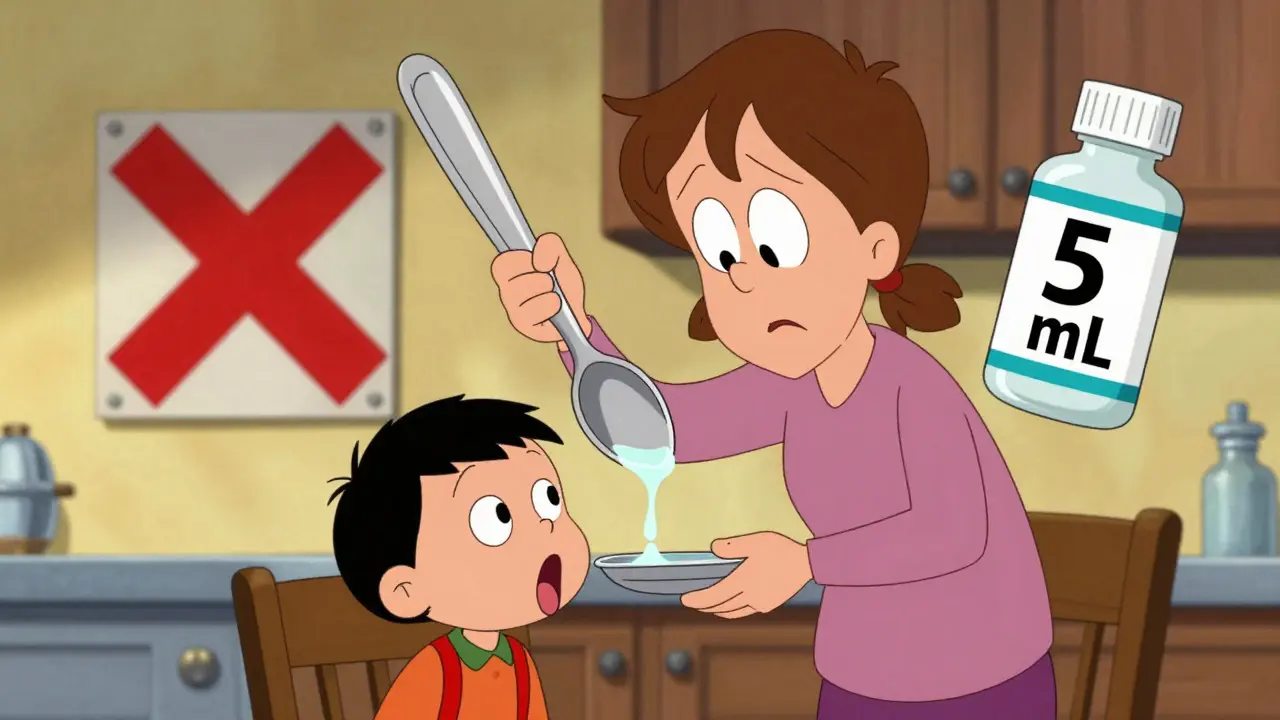
Every year, more than 10,000 calls to U.S. poison control centers are made because a child was given the wrong dose of liquid medicine. The biggest reason? Parents using a kitchen spoon.
It seems harmless. You’re in a hurry. The medicine bottle says "teaspoon," and you grab the one from the drawer. But here’s the truth: a household teaspoon is not a teaspoon. It’s a gamble. One might hold 3 milliliters. Another might hold 7. That’s a 40% difference. For a child, that’s not a small mistake-it could mean a trip to the ER or worse.
Why Kitchen Spoons Are a Risk
Medicine labels say "teaspoon" or "tsp," and many parents assume that means the spoon in their silverware drawer. But a standard medical teaspoon is exactly 5 milliliters (mL). A household teaspoon? It varies wildly. Research from the Consumer Medication Safety Institute shows they hold anywhere from 3 mL to 7 mL. That’s not a typo. That’s a real range you can’t control.
And it gets worse. If you accidentally use a tablespoon instead of a teaspoon-because you mixed them up-you’re giving three times the dose. The CDC’s "Spoons are for Soup" campaign spells this out clearly: a tablespoon is for soup, not medicine. Yet, a 2016 study in Academic Pediatrics found that when labels used the word "teaspoon," one in three parents considered using a kitchen spoon. When labels used "mL," fewer than 1 in 10 did.
Even small errors matter. Children’s bodies are smaller. Their organs process medicine differently. A dose that’s fine for an adult could be toxic for a toddler. A dose that’s too low won’t treat the infection. And because liquid medicines are involved in over 80% of pediatric home dosing errors, this isn’t a rare problem-it’s one of the most common.
What Happens When You Get It Wrong
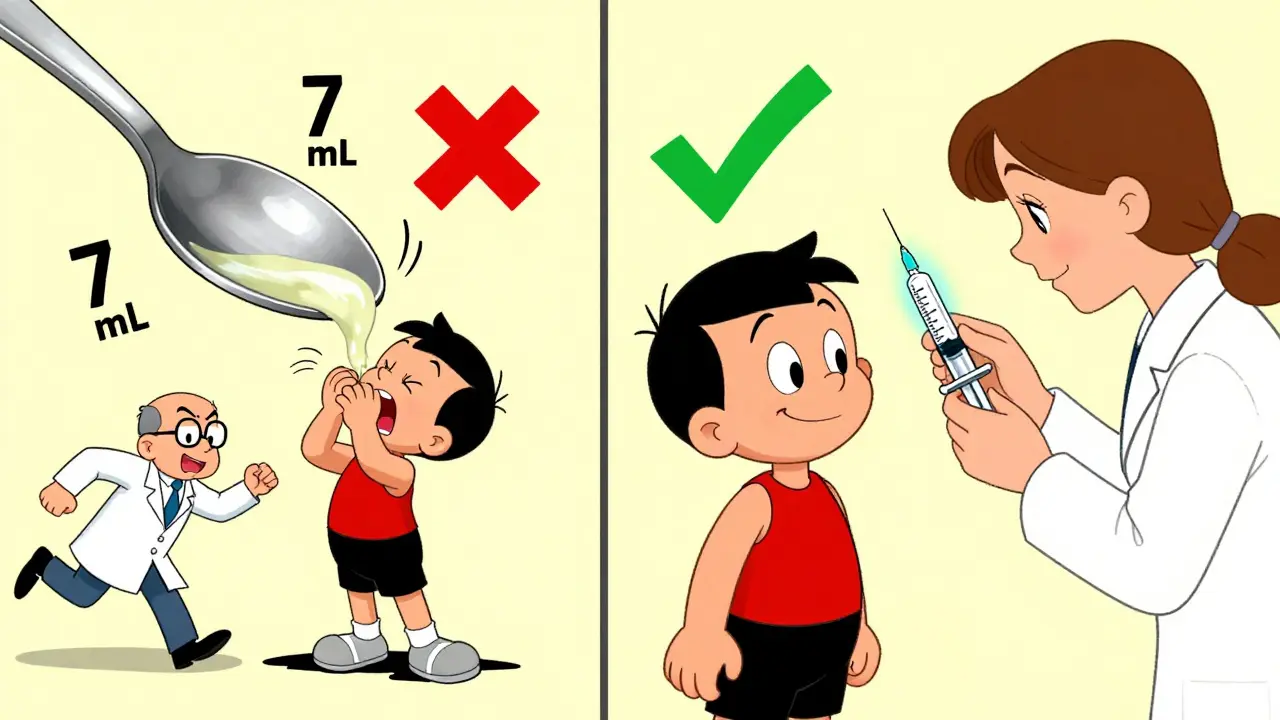
Let’s say your child has an ear infection. The doctor prescribes 5 mL of amoxicillin twice a day. You use a spoon you think is right. But your spoon holds 7 mL. That’s 40% too much. Over a few days, that extra medicine builds up. Your child gets drowsy, vomits, or develops a rash. You think it’s a side effect. It’s actually an overdose.
On the flip side, if your spoon holds only 3 mL, you’re giving 40% too little. The infection doesn’t clear. The fever comes back. You take your child to the doctor again. You’re stuck in a loop because the medicine wasn’t working-not because it was the wrong drug, but because it was the wrong amount.
A 2014 NIH-funded study in Pediatrics found that nearly 40% of parents made mistakes when measuring liquid medicine with household spoons. Over 41% didn’t even get the dose right that was prescribed. These aren’t careless parents. They’re tired, stressed, and trusting what looks familiar.
The Right Tools: Oral Syringes and Dosing Cups
The solution isn’t complicated. It’s simple: use the right tool. And it’s not a spoon.
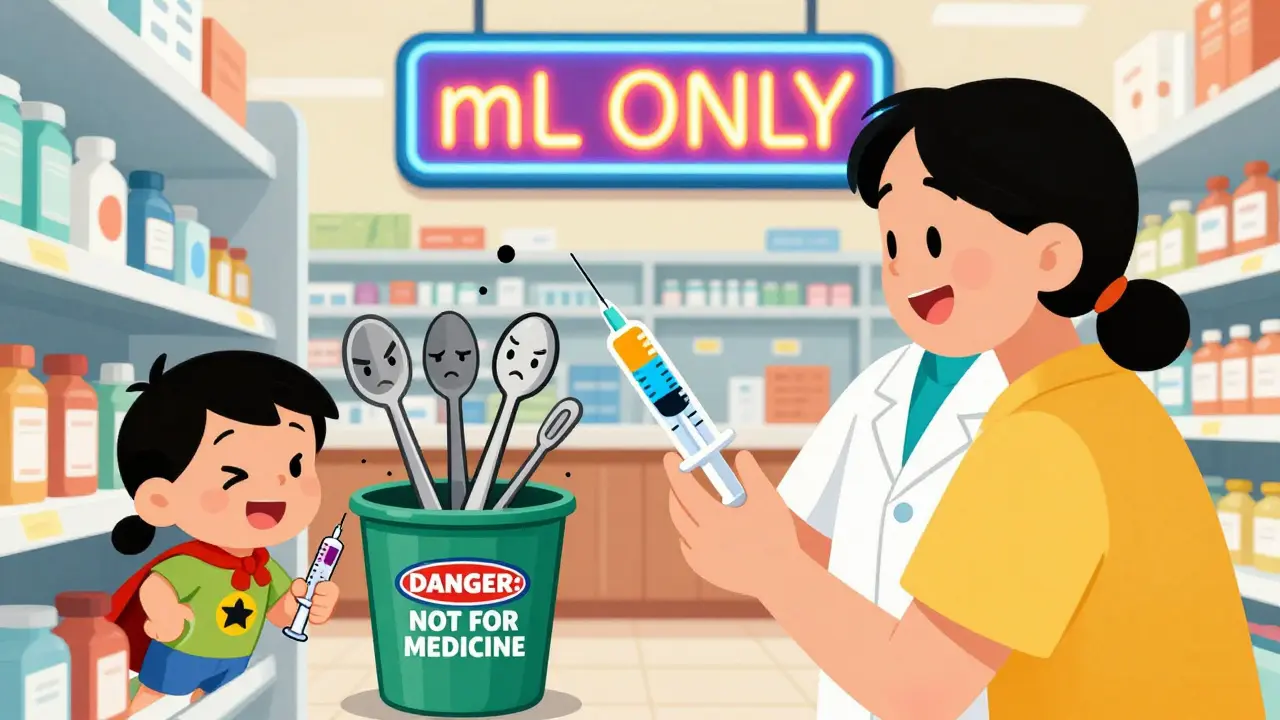
Oral syringes are the gold standard. They’re marked in milliliters (mL), often down to 0.1 mL. That means you can give 3.5 mL exactly. No guessing. No estimating. Just read the line and push the plunger. They’re especially critical for doses under 5 mL, where even a 1 mL error matters. A 2023 study in Frontiers in Public Health found oral syringes had the lowest rate of dosing errors by far.
Some medications come with a dosing cup. These are better than spoons, but only if they’re marked in mL and you read them at eye level. Many dosing cups only have lines at 5 mL, 10 mL, 15 mL. If your child needs 7 mL, you’re forced to guess between lines. That’s still risky. Oral syringes don’t have that problem.
Medicine droppers? They’re okay, but harder to control. It’s easy to squeeze too hard or let too much drip out. Syringes give you full control.
Here’s what to do:
- If the medicine comes with a syringe or cup-use it. Don’t throw it away.
- If it doesn’t come with one-ask your pharmacist for one. They’re usually free.
- Always read the numbers on the syringe or cup, not the bottle.
- Hold the syringe at eye level. Don’t tilt it. Don’t guess.
- Give the medicine slowly, between the cheek and tongue-not straight down the throat.
Why "mL" Matters More Than "tsp"
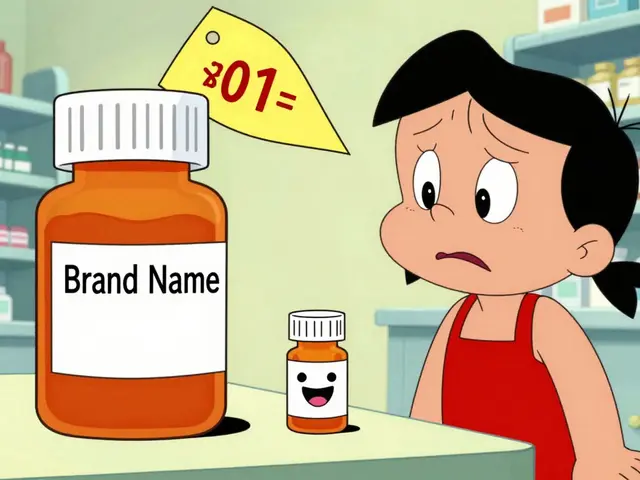
Labeling is part of the problem. If a bottle says "give 1 tsp," parents think: "I know what a teaspoon is." But they don’t. Not really.
When labels switched to "give 5 mL," parents made fewer mistakes. The 2016 study showed a 23.3 percentage point drop in people choosing kitchen spoons. That’s huge. It’s not just about the tool-it’s about the language.
The FDA and the American Academy of Pediatrics now push for milliliter-only labeling on all pediatric liquid medicines. Some manufacturers are doing it. Others still mix "tsp" and "mL." That’s dangerous. You shouldn’t have to decode the label.
Here’s the rule: if it says "tsp" or "teaspoon," ask for a new label in mL. If it says "mL," you’re already ahead.
What to Do If You’ve Been Using a Spoon
If you’ve been using a kitchen spoon to give medicine, you’re not alone. About 75% of Americans still do it, according to the Consumer Medication Safety Institute. But now you know better.
Stop right now. Don’t wait for the next dose. Get the right tool today.
- Call your pharmacy. Ask for a free oral syringe.
- Check the medicine bottle. Does it come with one? If so, use it.
- Write down the dose in mL. Put it on a sticky note next to the medicine.
- Keep the syringe with the medicine. Don’t let it get lost in a drawer.
Pharmacists at Aspirus and other health systems now routinely hand out oral syringes with every pediatric liquid prescription. They know how often mistakes happen. They’re trying to fix it. You can help too.
What to Remember
- Household spoons are not measuring tools. They’re for eating.
- Milliliters (mL) are for medicine. Always look for them.
- Oral syringes are the most accurate. Use them whenever possible.
- Ask for help. If you don’t have a syringe, your pharmacist will give you one.
- Measure at eye level. Don’t hold the syringe up. Look straight at the line.
This isn’t about being perfect. It’s about reducing risk. A child’s life doesn’t depend on how careful you are. It depends on how accurate your tool is.
Can I use a kitchen teaspoon if I fill it to the brim?
No. Even if you think you’re being careful, kitchen spoons vary too much in size. One might hold 3 mL, another 7 mL. That’s a 140% difference. You can’t control it. Always use a medical syringe or dosing cup marked in milliliters.
What if the medicine doesn’t come with a syringe?
Ask your pharmacist. They are required to provide a proper measuring device if one isn’t included. Most pharmacies keep oral syringes on hand for this exact reason. They’re free. Don’t assume you don’t need one-every liquid medicine does.
Is a dosing cup better than a spoon?
Yes, if it’s marked in milliliters and you read it at eye level. But it’s not as precise as an oral syringe, especially for doses like 3.5 mL or 7.2 mL. Syringes allow you to measure down to 0.1 mL. Dosing cups usually only have marks at 5 mL intervals. For accuracy, syringes win.
Why do labels still say "teaspoon" if it’s dangerous?
Because the industry is still transitioning. The FDA and AAP recommend milliliter-only labeling, but not all manufacturers have changed yet. Always ask for the dose in mL, and if the label says "tsp," request a new label or write the mL equivalent on it yourself.
Can I use a regular syringe from the drugstore for medicine?
No. Regular syringes are for injections, not oral use. They’re not designed to be safe for the mouth, and their tips can be sharp. Only use oral syringes marked for liquid medicine. They have wide, soft tips and are labeled in mL.