
Many people take fiber supplements to help with digestion, lower cholesterol, or manage blood sugar. But if you’re also on medication, you might be unknowingly reducing how well your drugs work. Fiber doesn’t just pass through your system-it can grab onto medications and carry them out before your body has a chance to absorb them. This isn’t a myth. It’s backed by studies, doctors, and pharmacies. The good news? You don’t have to stop taking fiber. You just need to separate your doses correctly.
Why Fiber Interferes With Medications
Fiber supplements like psyllium (Metamucil), methylcellulose (Citrucel), or inulin don’t break down in your stomach or intestines. Instead, they swell up, add bulk to stool, and speed up how fast things move through your gut. That’s great for constipation. But when a pill and a fiber capsule hit your system at the same time, the fiber can physically trap the drug molecules. Think of it like a sponge soaking up water-except the sponge is fiber, and the water is your medication. This isn’t true for every drug. Some medications slip right past fiber without issue. But for others, even a small drop in absorption can make a big difference. Drugs with a narrow therapeutic index-where the difference between an effective dose and a toxic one is tiny-are especially vulnerable. That includes thyroid meds, heart drugs, antidepressants, and diabetes pills. A 1993 study found that people taking levothyroxine (Synthroid) with psyllium husk absorbed significantly less of the drug. Their thyroid hormone levels dropped, and their cholesterol went up. Another study showed that fiber reduced the absorption of lithium, a mood stabilizer, enough to trigger relapses in bipolar patients. These aren’t rare cases. They’re documented, repeatable, and preventable.Which Medications Are Most at Risk?
Not all drugs react the same way to fiber. Here are the ones you need to be most careful with:- Levothyroxine (for hypothyroidism): Fiber binds to it tightly. Even a 10% drop in absorption can throw your thyroid levels off, leading to fatigue, weight gain, or heart problems.
- Metformin (for type 2 diabetes): Fiber can slow down how fast metformin enters your bloodstream, which might make it less effective at controlling blood sugar.
- Lithium (for bipolar disorder): Changes in absorption can lead to dangerous fluctuations in blood levels. Too little, and symptoms return. Too much, and you risk toxicity.
- Olanzapine (for schizophrenia and bipolar): Fiber reduces how much of the drug gets into your system, which can make it harder to manage mood swings or psychosis.
- Carbamazepine (for seizures and nerve pain): Studies show fiber can lower its concentration in the blood.
- Warfarin (blood thinner): While not directly absorbed by fiber, fiber can affect gut bacteria that help process warfarin, leading to unpredictable INR levels.
Some medications, like statins (e.g., rosuvastatin) or blood pressure pills, seem unaffected by fiber supplements. But don’t assume yours is safe. Always check with your pharmacist or doctor.
How Far Apart Should You Take Them?
The advice isn’t vague. Major health sources agree on timing:- Harvard Health: Take fiber supplements two to three hours before or after your medication.
- WebMD: Take fiber supplements at least two hours apart from other drugs.
- FreeRX Blog: For metformin, lithium, and olanzapine, wait four hours after taking the drug before taking fiber.
- Mayo Clinic: General rule-separate by two hours for any medication that’s critical to your health.
So what does this look like in real life?
If you take levothyroxine first thing in the morning on an empty stomach, don’t take your Metamucil until at least 2-3 hours later-say, after lunch. If you take your metformin with dinner, wait until the next morning to take your fiber supplement. If you’re on lithium and take it at night, skip the fiber supplement before bed. Fiber can cause bloating and gas, which might keep you awake anyway.
Don’t rely on “I usually take it at night.” Timing matters. Consistency matters more. Pick a schedule and stick to it. Use phone alarms if you have to.

What About Fiber From Food?
This is a common question. If you eat a bowl of oatmeal with berries, a side of broccoli, and whole grain toast, does that interfere with your meds? The short answer: probably not-unless you’re eating a massive amount all at once. Fiber from whole foods is spread out, mixed with other nutrients, and doesn’t come in concentrated doses like supplements. Your body processes it differently. Studies show that dietary fiber doesn’t significantly affect drug absorption the way isolated supplements do. But there’s an exception: if you’re taking levothyroxine, even a high-fiber breakfast can reduce absorption. So if you take your thyroid pill in the morning, wait at least 30-60 minutes before eating your bran muffin. Same goes for other critical meds. You don’t need to avoid fiber-rich meals. Just time them right.How to Make This Easy
Managing medication timing with fiber can feel overwhelming. Here’s how to simplify it:- Write it down. Make a chart: Medication | Time | Fiber? Yes/No. Tape it to your fridge.
- Use pill organizers. Get one with compartments for morning, afternoon, evening, and night. Put your fiber supplement in a different section than your meds.
- Set phone reminders. Label them clearly: “Take Synthroid,” “Wait 3 hours,” “Take Metamucil.”
- Ask your pharmacist. They can flag which of your meds interact with fiber. Most pharmacies offer free med reviews.
- Don’t take fiber at bedtime. It can cause bloating, cramps, and gas-bad for sleep. Plus, you’re more likely to forget the timing gap if you’re half-asleep.
One patient in Edinburgh told me she used to take her Metamucil with her evening tea. After switching to mid-afternoon, her thyroid levels stabilized within six weeks. No other changes. Just timing.
What If You Forget?
You took your fiber 30 minutes after your pill. What now? Don’t panic. One slip-up won’t ruin your treatment. But don’t make it a habit. If it happens occasionally, just wait until tomorrow to get back on schedule. If it happens often, reassess your routine. Maybe you need to switch to a different fiber supplement, or take it at a different time of day. If you’re on a medication like levothyroxine and you’re unsure whether you absorbed enough, talk to your doctor. They can check your TSH levels and adjust your dose if needed.Fiber Is Still Important
Don’t let this scare you away from fiber. The benefits are real. People who eat enough fiber have lower risks of heart disease, stroke, type 2 diabetes, and colon cancer. The average adult in the U.S. eats only 15 grams of fiber a day. Experts recommend 21-30 grams. Most of us are falling short. Fiber supplements can help fill the gap-but they’re not a replacement for real food. Fruits, vegetables, legumes, nuts, and whole grains give you more than just fiber. They give you vitamins, antioxidants, and phytonutrients that supplements can’t replicate. So keep eating your apples and beans. Just separate them from your pills.Bottom Line
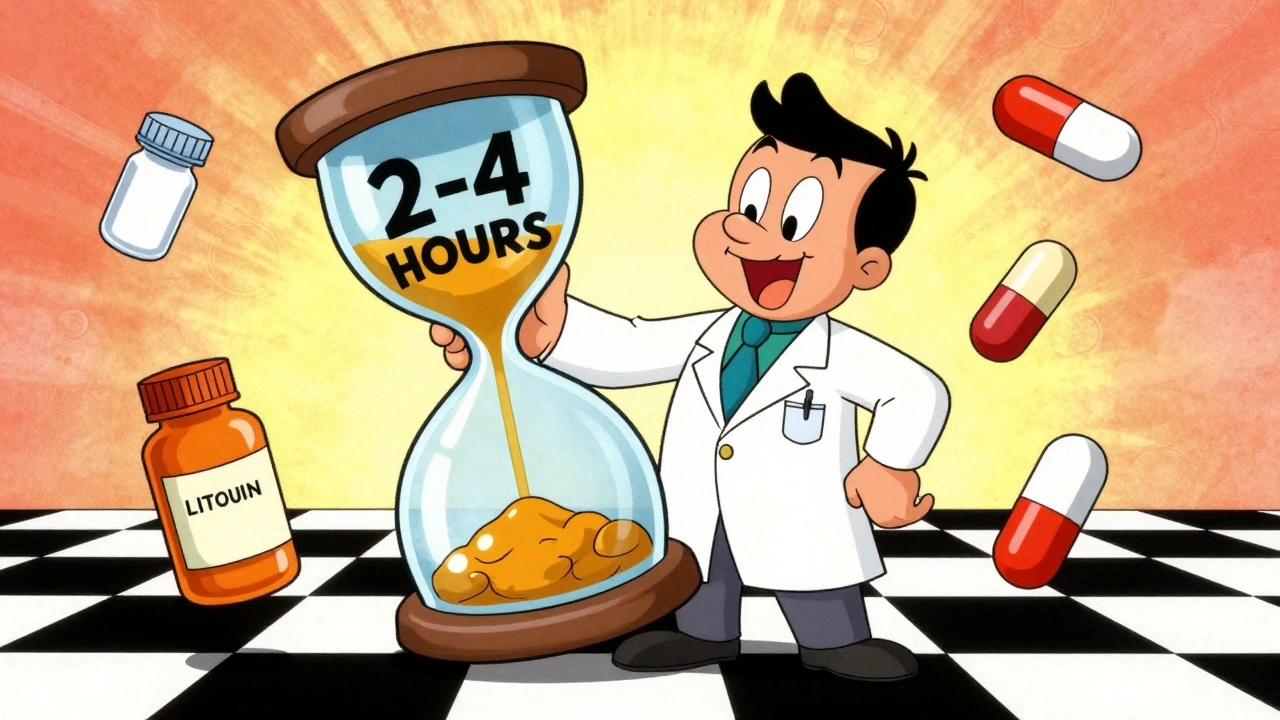
Fiber supplements and medications can clash-but it’s not unavoidable. The fix is simple: space them out. Two to four hours apart is the standard. For critical drugs like thyroid or mood meds, aim for the longer end. Use reminders. Talk to your pharmacist. Stick to a routine. You don’t have to choose between good digestion and effective medication. You just need to time it right.Can I take fiber supplements with my morning coffee?
Yes, as long as you don’t take your medication with it. Coffee doesn’t interfere with fiber absorption. But if you take levothyroxine or another sensitive drug with your coffee, wait at least 30 minutes after your pill before having coffee with fiber. The issue isn’t the coffee-it’s the fiber timing.
Does all fiber affect medications the same way?
No. Soluble fibers like psyllium, pectin, and beta-glucan are more likely to bind to drugs than insoluble fibers like cellulose. But even insoluble fiber can speed up gut transit enough to reduce absorption. For safety, assume all fiber supplements need separation, regardless of type.
Is it safe to take fiber with vitamins or supplements?
It depends. Fiber can reduce absorption of minerals like calcium, iron, and zinc if taken together. If you’re taking a multivitamin with iron or calcium, separate it from fiber by at least two hours. For most other supplements like vitamin D or B12, the risk is low-but spacing them out is still a good habit.
Can I switch to a fiber-rich diet instead of supplements?
Yes, and it’s often better. Whole foods provide a mix of fibers and nutrients without the concentrated doses that cause interactions. If you’re eating plenty of vegetables, legumes, oats, and fruits, you likely don’t need a supplement. But if you’re struggling to hit 21-30 grams daily, supplements can help-just take them at the right time.
What if I’m on a strict medication schedule and can’t wait two hours?
Talk to your doctor. For some people, switching to a different medication or adjusting the dose can help. For others, taking fiber at a completely different time-like mid-afternoon or after lunch-works better than trying to fit it into a tight morning routine. Never skip your fiber or meds without medical advice.