
Getting a generic drug approved by the FDA is not just about proving it works; you have to prove it stays that way. Stability testing is often the silent killer of Abbreviated New Drug Applications (ANDAs). If your product degrades, loses potency, or forms harmful impurities before the expiration date, the FDA will reject it. For manufacturers, this isn't just a scientific hurdle-it’s a massive financial one, accounting for nearly 19% of total development costs.
In 2026, the landscape has shifted. With new draft guidances proposing stricter data requirements and tighter scrutiny on storage conditions, understanding exactly what the regulator wants is critical. This guide breaks down the current rules, the common pitfalls that lead to rejection, and how to structure your studies to pass review efficiently.
The Core Purpose: Why Stability Matters for Generics
At its heart, stability testing answers one question: Does the generic drug maintain its quality throughout its intended shelf life? The U.S. Food and Drug Administration (FDA) requires that every generic drug demonstrate the same high standards of quality, strength, purity, and stability as the brand-name Reference Listed Drug (RLD). This mandate stems from the Hatch-Waxman Act of 1984, which created the modern pathway for generics but insisted on rigorous equivalence.
If a tablet crumbles in humidity or an active ingredient breaks down into toxic compounds over time, the patient is at risk. Stability data provides the evidence needed to set the expiration date and storage instructions on the label. Without robust data, you cannot claim a two-year shelf life. You also cannot guarantee safety. The FDA’s Center for Drug Evaluation and Research (CDER) views this data as the cornerstone of public health protection for off-patent medicines.
Key Regulatory Frameworks You Must Follow
Navigating the paperwork can feel like walking through a maze. However, three main documents dictate the rules:
- ICH Q1A(R2): This is the global standard for stability testing of new drug substances and products. It defines the climate zones, testing frequencies, and acceptable deviations.
- FDA Guidance Q1A(R2): The U.S.-specific adaptation of the ICH guidelines, revised in 2003, which remains the baseline for most submissions.
- 2018 FDA ANDA Stability Q&A: This document is crucial for generics. It clarifies specific expectations for ANDA applicants, addressing common deficiencies found during reviews.
For any manufacturer submitting an ANDA in 2026, these documents are non-negotiable. Ignoring the nuances in the 2018 Q&A is a fast track to a Complete Response Letter (CRL).
Technical Specifications: Batches, Conditions, and Timing
The FDA does not accept shortcuts when it comes to the physical execution of stability studies. Here are the hard numbers you need to hit.
Batch Requirements
You must conduct stability studies on at least three primary batches of the drug product. These batches must be manufactured at a minimum pilot scale that meets current Good Manufacturing Practices (cGMP) under 21 CFR Parts 210 and 211. You cannot test lab-scale samples and expect approval. The batches must represent commercial manufacturing processes.
Storage Conditions
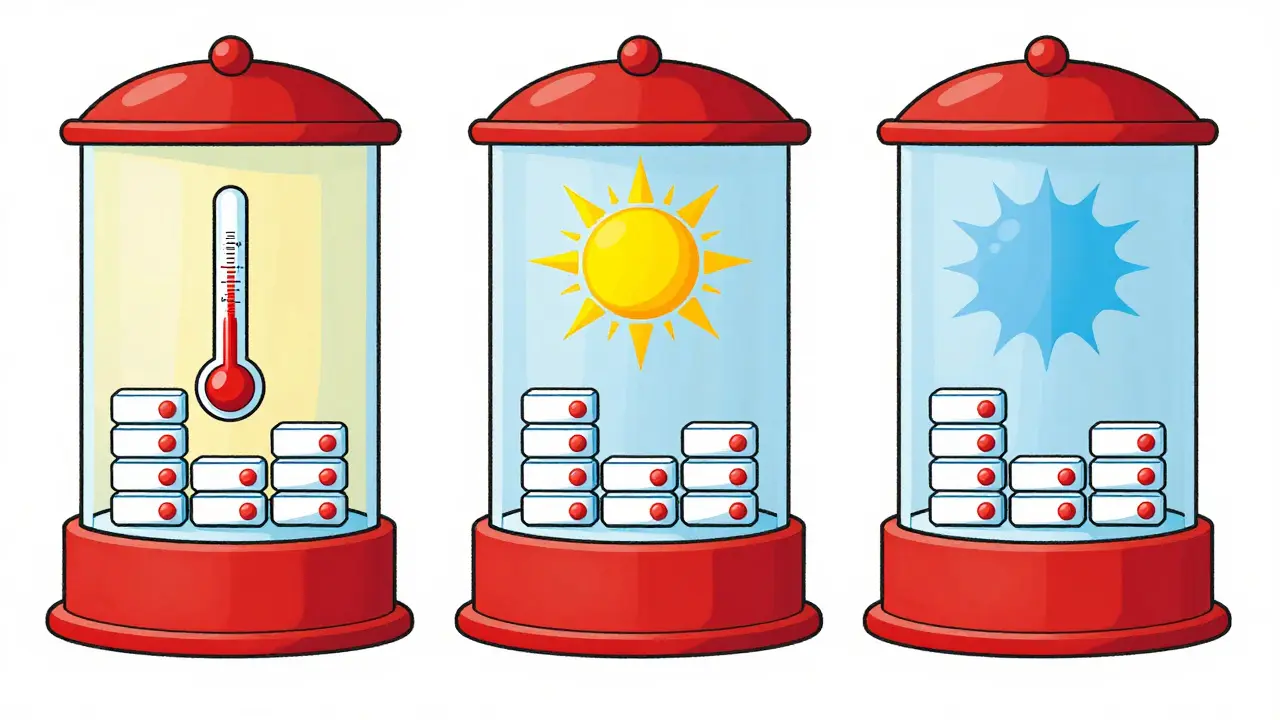
Your testing must cover three distinct environments:
- Long-term storage: Typically 25°C ± 2°C and 60% ± 5% relative humidity. This simulates normal distribution conditions.
- Accelerated storage: 40°C ± 2°C and 75% ± 5% relative humidity. This stresses the product to predict long-term degradation quickly.
- Intermediate storage: Required if significant change occurs during accelerated testing, usually 30°C ± 2°C and 60% ± 5% RH.
Testing Frequency
If you propose a shelf life of at least 12 months, the schedule is strict:
- First year: Test every 3 months.
- Second year: Test every 6 months.
- Thereafter: Test annually through the proposed shelf life.
Data Submission: What Goes Into the ANDA?
You do not need to wait until the full shelf life expires to submit your application. The FDA allows for a staged submission approach, but the initial package must be solid.
For the Completeness Assessment of an ANDA, you must provide:
- A detailed stability protocol.
- Commitments to continue testing.
- Data showing that studies have started.
- Initial results plus one additional time point for both accelerated and long-term studies.
However, for the full scientific review, the bar is higher. The FDA requires 6 months of accelerated data and 6 months of long-term data for pilot-scale batches. Missing even one data point here can delay approval by months. According to recent industry analysis, 98.3% of completeness assessment failures are linked to missing or inadequate protocols.
| Submission Stage | Accelerated Data Required | Long-Term Data Required | Purpose |
|---|---|---|---|
| Completeness Assessment | Initial + 1 Time Point | Initial + 1 Time Point | Verify study design and start |
| Full Scientific Review | 6 Months | 6 Months | Support tentative approval |
| Final Approval | Through Proposed Shelf Life | Through Proposed Shelf Life | Confirm expiration dating |
Common Pitfalls Leading to Rejection
Why do so many applications fail? Dr. Jane Axelrad, former FDA Deputy Director for Generic Drugs, noted that stability data is the single most common reason for Complete Response Letters, accounting for roughly 35% of all deficiency letters. Here are the top culprits:
1. Inadequate Testing Protocols
Many applicants submit vague protocols. The FDA expects detailed methodologies referencing USP chapters <1151> (Pharmaceutical Dosage Forms) and <1010> (Analytical Data). If your protocol doesn’t specify how you handle outliers or define "significant change," it will be rejected.
2. Temperature Excursions
Your stability chambers must be precise. In 2022, FDA inspections found that temperature deviations exceeding ±2°C accounted for 18.4% of invalid stability data. One spike in temperature can ruin months of data. Automated monitoring systems are no longer optional; they are essential.
3. Insufficient Attribute Testing
You must test all attributes susceptible to change. This includes not just potency, but also preservative content, antimicrobial efficacy, and functionality of dose delivery systems. Skipping microbiological tests because "it’s a solid oral dosage" is a frequent error.
4. Container Closure Mismatches
The container closure system used in stability testing must be identical to the one proposed for marketing. If you test in glass bottles but plan to sell in blister packs, the data is useless. Unless you use scientifically justified bracketing or matrixing designs approved by the FDA, each strength and container size needs its own study.
Generics vs. Brand-Name: Key Differences
While the core science is the same, the regulatory burden differs slightly between innovators and generics.
Brand-name drugs must characterize their own degradation pathways from scratch. Generic manufacturers benefit from the existing knowledge of the Reference Listed Drug (RLD). You don’t necessarily need extensive forced degradation studies if the RLD’s pathways are well-known. However, you must demonstrate that your specific formulation follows the same degradation profile. You cannot simply copy the RLD’s expiration date; you must earn it with your own data.
This distinction is vital. Many generic manufacturers assume they can skip certain tests because the brand did them. The FDA disagrees. Your process, your excipients, and your packaging create a unique product that requires unique validation.
Cost and Market Pressures in 2026
The economics of generic stability testing are tough. The U.S. generic market is huge, valued at over $127 billion, but margins are thin. Stability testing alone averages nearly half a million dollars per application. With intense price competition, cutting corners is tempting, but dangerous.
Indian manufacturers, who account for over 40% of U.S. generic approvals, face particular scrutiny. They represent nearly 63% of all stability-related Complete Response Letters. This suggests that resource constraints often lead to protocol errors. Investing in proper infrastructure-like automated chamber monitoring-is not just a compliance issue; it’s a business survival strategy.
Future Outlook: What’s Changing?
The regulatory environment is tightening. The FDA’s June 2025 draft guidance proposes significant changes:
- Mandatory 24-month data: All new ANDAs may soon require 24 months of stability data upfront, up from the current 12-month norm.
- Quality by Design (QbD): Manufacturers will be expected to integrate QbD principles into study design, predicting stability risks early in development.
- Digital Verification: Pilot programs using blockchain for stability data verification are launching in 2026 to prevent data manipulation.
These changes aim to increase confidence in generic products but will raise costs. Industry analysts project a 22% increase in testing costs between 2023 and 2027. Preparing for these shifts now will save you money later.
Practical Steps for Compliance
To ensure your next ANDA passes smoothly, follow this checklist:
- Review the Protocol Early: Conduct a pre-submission review with FDA experts if possible. This reduces deficiency rates by over 40%.
- Automate Monitoring: Install continuous environmental monitoring in all stability chambers. Manual logs are prone to error and skepticism.
- Validate Methods: Ensure all analytical methods are fully validated before starting the study. Invalid methods invalidate the entire study.
- Match Packaging: Use the exact commercial container closure system in your studies.
- Plan for Longevity: Budget for at least 24 months of data collection, even if only 12 are required initially. The trend is moving toward longer requirements.
Stability testing is not just a box to check. It is the proof that your drug is safe and effective for the patient. Treat it with the rigor it deserves, and your approval process will be smoother and faster.
How many batches are required for generic stability testing?
The FDA requires stability studies on at least three primary batches of the drug product. These batches must be manufactured at a minimum pilot scale that complies with cGMP regulations.
What is the difference between accelerated and long-term stability testing?
Long-term testing simulates normal storage conditions (typically 25°C/60% RH) to determine the actual shelf life. Accelerated testing uses harsher conditions (40°C/75% RH) to stress the product and predict potential degradation pathways quickly.
Can I use the stability data from the Reference Listed Drug (RLD)?
No. While you can reference the RLD's degradation pathways, you must conduct your own formal stability studies on your specific formulation and manufacturing process to support your expiration dating claims.
What happens if my stability chamber temperature fluctuates?
Temperature deviations exceeding ±2°C can invalidate your stability data. The FDA frequently cites inadequate chamber monitoring as a reason for rejection. Automated monitoring systems are recommended to prevent this.
How much does stability testing cost for a generic drug?
Stability testing accounts for approximately 18.7% of total ANDA development costs, averaging around $487,500 per application according to recent industry analyses.



Categories