
Imagine taking a pill for your depression, and within an hour, you feel like a new person-energized, focused, calm. But by 4 p.m., the effect vanishes, leaving you exhausted and irritable again. Now imagine another pill, taken once in the morning, that keeps you steady all day without spikes or crashes. That’s the difference between extended-release and immediate-release medications. It’s not just about convenience. It’s about safety, stability, and sometimes, life or death.
How These Two Types Work
Immediate-release (IR) pills are the old-school standard. You swallow them, and the drug dissolves fast-usually within 15 to 30 minutes. Blood levels rise quickly, peak in about an hour, and then drop off within 4 to 8 hours. That’s why you might need to take IR medications three or four times a day. Think of it like turning on a faucet full blast: fast flow, but it runs out fast. Extended-release (ER), also called XR, SR, or CR, works differently. These pills use clever tech-like hydrogel matrices, tiny time-release capsules, or osmotic pumps-to let the drug seep out slowly over 12 to 24 hours. Instead of a spike, you get a steady drip. For example, bupropion ER keeps blood levels between 100-200 ng/mL all day. The same drug in IR form hits 400-600 ng/mL in just two hours, then crashes below therapeutic levels. That’s why taking a full 300mg IR dose can trigger seizures-something ER avoids by design.Why Timing Affects Your Safety
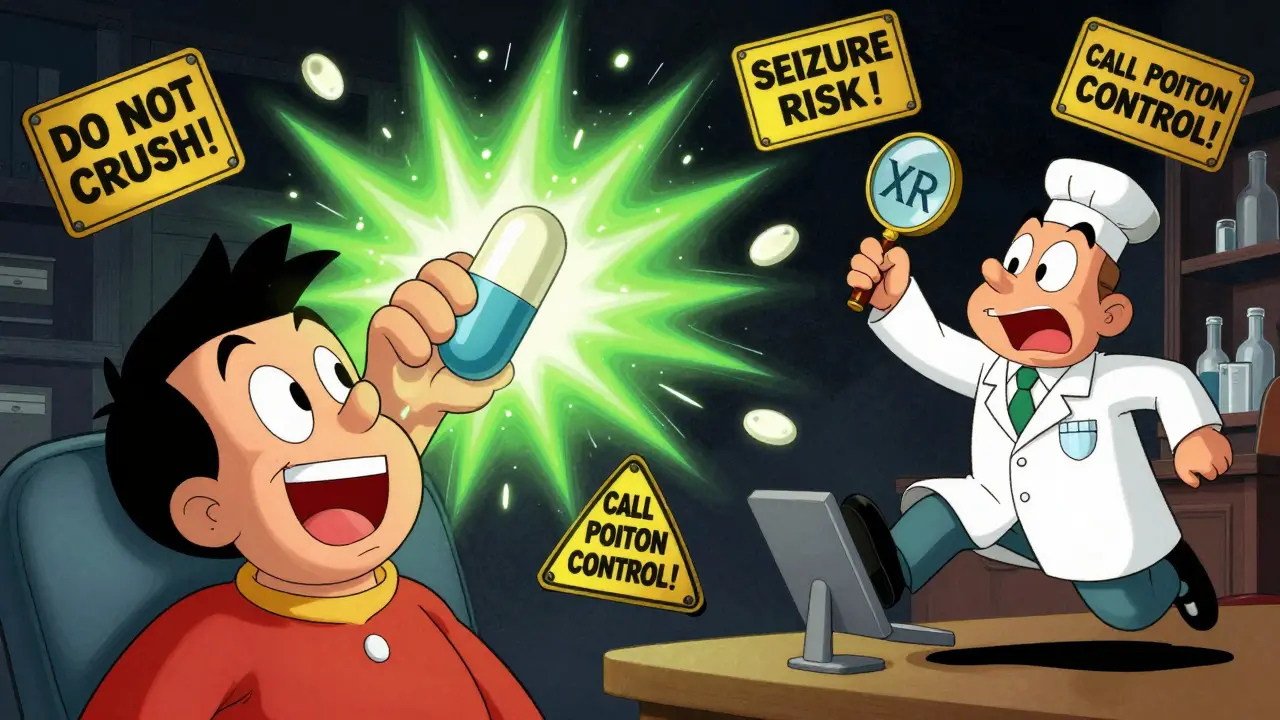
The biggest risk with IR medications isn’t that they don’t work-it’s that they work too hard, too fast. High peak concentrations mean more side effects: dizziness, nausea, heart palpitations, even seizures in extreme cases. A 2021 study showed ER formulations cut peak-to-trough ratios from 3:1 down to 1.5:1. That’s a 50% reduction in dangerous spikes. But ER isn’t risk-free. If you crush, chew, or split an ER tablet, you’re basically turning it into an IR pill-on steroids. The FDA issued a safety warning in 2020 about ER opioids being crushed, leading to fatal overdoses. The same goes for Adderall XR, Concerta, or Venlafaxine XR. Nine out of ten ER pills shouldn’t be altered. If your tablet isn’t scored, don’t break it. Even if it looks like it should, it probably shouldn’t. And here’s something many patients don’t realize: ER meds take longer to kick in. You won’t feel relief for 2-4 hours after swallowing. That’s normal. But if you don’t know that, you might take another dose an hour later, thinking it didn’t work. That’s how people accidentally overdose on ER antidepressants or blood pressure meds. A 2022 GoodRx survey found 41% of patients misunderstood this delay-and 9% ended up with adverse events because of it.When to Choose One Over the Other
For chronic conditions-high blood pressure, depression, ADHD, diabetes-ER is usually the better pick. Why? Because consistency beats chaos. A 2022 JAMA study of 15,000 hypertension patients found 78% stuck with their ER meds over 12 months, compared to just 56% on IR. That’s a 22% jump in adherence. Fewer missed doses mean fewer hospital visits, fewer complications. But for acute problems? IR wins. If you’re in sudden, severe pain, you don’t want to wait three hours for your opioid to kick in. If you’re having a panic attack and need fast relief, an IR benzodiazepine can help within minutes. ER versions of these drugs are useless in emergencies because they’re designed to avoid peaks-not create them. Take Adderall: Adderall IR lasts 4-6 hours, so kids often need a midday dose at school. Adderall XR lasts 10-12 hours, so one pill in the morning covers the whole day. But some adults keep a small IR dose on hand for quick focus boosts before big meetings. One Reddit user put it simply: “XR gives me a smooth ride. IR gives me a rocket boost when I need it.”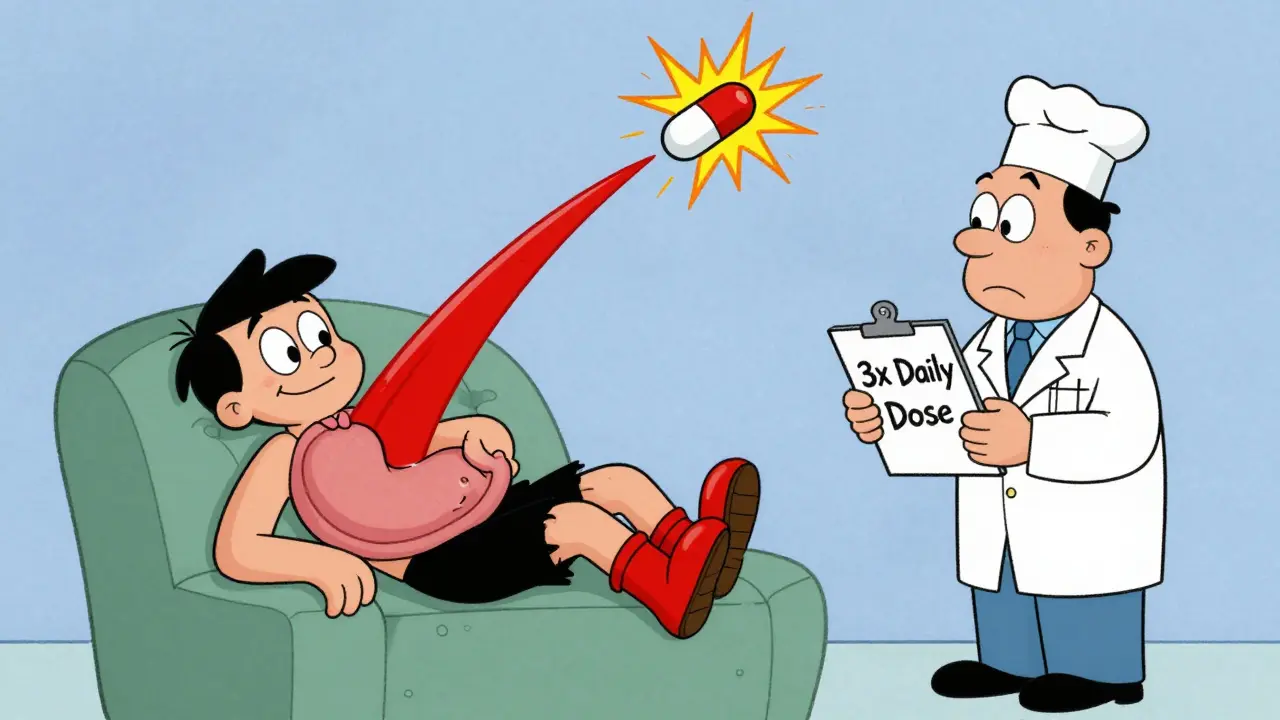
Cost, Compliance, and Hidden Trade-Offs
ER versions usually cost 15-25% more than IR. Adderall XR runs $350-$450 for 30 pills. Adderall IR? $280-$380. That gap matters if you’re paying out of pocket. But the real cost isn’t the price tag-it’s what happens when you skip doses. Missed doses of IR meds can cause withdrawal symptoms, blood pressure spikes, or mood crashes. ER meds reduce that risk by keeping levels steady. Pharmacists see this every day. A 2023 report from ISMP found 23% of ER-related medication errors happened because patients split pills they shouldn’t have. Venlafaxine XR, for example, looks like it should be split-but it’s not. The coating is designed to release slowly. Break it, and you get a full dose all at once. Also, ER meds aren’t always better for everyone. People with gastroparesis (slow stomach emptying) absorb ER drugs unpredictably. The FDA warned in 2023 that these patients can get 30-50% higher peak concentrations, increasing overdose risk. If you have digestive issues, talk to your doctor before switching.What Patients Need to Know
Here’s what you should do if you’re on an ER or IR medication:- Read the label. If it says “do not crush, chew, or split,” don’t. Even if the pill looks easy to break.
- Wait at least 2-4 hours before taking another dose if you don’t feel effects. Patience saves lives.
- Keep a log. Note when you take your pill and when you feel changes. This helps your doctor adjust timing.
- Never mix ER and IR versions unless your doctor says so. Taking both can lead to dangerous stacking.
- If you miss a dose, don’t double up. Skip it and go back to your schedule. ER meds stay in your system longer than you think.
The Future Is Personalized
Scientists are already working on pills that release different drugs at different times-like a “polypill” that gives you aspirin at 8 a.m., statin at noon, and beta-blocker at 8 p.m. MIT researchers are testing 3D-printed tablets that can be customized for each patient’s metabolism. These won’t be mainstream for years, but they’re coming. Meanwhile, abuse-deterrent ER tech is growing. New formulations like Aversion® turn into gel when crushed, making them harder to snort or inject. These are already in some ADHD meds and have cut abuse rates by nearly half.Bottom Line
Extended-release and immediate-release aren’t just different ways to deliver drugs-they’re different strategies for managing your health. ER gives you steady control, fewer doses, and better adherence. IR gives you speed, flexibility, and emergency response. Neither is better overall. The right choice depends on your condition, your lifestyle, and your body’s response. The safest approach? Know which one you’re taking. Understand how it works. Ask your pharmacist if you’re unsure. And never assume a pill is safe to break just because it looks like it should be.Can I split my extended-release pill if it’s scored?
Not always. Even if a pill has a score line, it doesn’t mean it’s safe to split. Some ER pills use layered coatings or osmotic systems that can’t be split without releasing the full dose at once. Always check the prescribing information or ask your pharmacist. If the label says "do not split," don’t do it-even if it looks like you can.
Why does my ER medication take so long to work?
Extended-release pills are designed to release medication slowly over hours, not all at once. It can take 2-4 hours just to reach therapeutic levels, and up to 7-10 days to reach full steady-state concentration. If you don’t feel better after one dose, that’s normal. Taking extra pills because you’re impatient can lead to overdose. Give it time.
Is extended-release always safer than immediate-release?
Not always. ER reduces dangerous peaks and improves adherence, which makes it safer for long-term use. But in emergencies-like sudden pain or acute anxiety-IR is safer because it works fast. ER versions can’t help you when you need immediate relief. The safest option depends on your situation, not the formulation itself.
What happens if I accidentally crush an ER pill?
You may release the entire dose all at once, which can cause a dangerous spike in drug levels. For opioids, this can lead to respiratory failure. For antidepressants like bupropion, it can trigger seizures. If you accidentally crush or chew an ER pill, call poison control immediately and seek medical help. Don’t wait for symptoms to appear.
Can I switch from IR to ER without consulting my doctor?
No. Switching between IR and ER isn’t as simple as swapping one pill for another. Dosing isn’t always 1:1. For example, 20mg of IR Adderall is not the same as 20mg of XR-because XR releases it slower, you might need a higher total dose to get the same effect over time. Only your prescriber can adjust the dose safely based on your needs and how your body responds.